Stamped Concrete vs. Regular Concrete: Which Is Right for You?
If you are planning a new patio or driveway in Salt Lake City, the choice usually comes down to stamped concrete or regular concrete. Homeowners ask us about stamped concrete vs regular concrete almost every time we quote a patio. Stamped concrete wins when looks matter and you want the appearance of stone, brick, or slate at a lower cost than real pavers. Regular concrete wins when you want the lowest upfront cost and the simplest long-term upkeep. Both are the same structural slab underneath; the difference is in the finish, the price, and the maintenance.
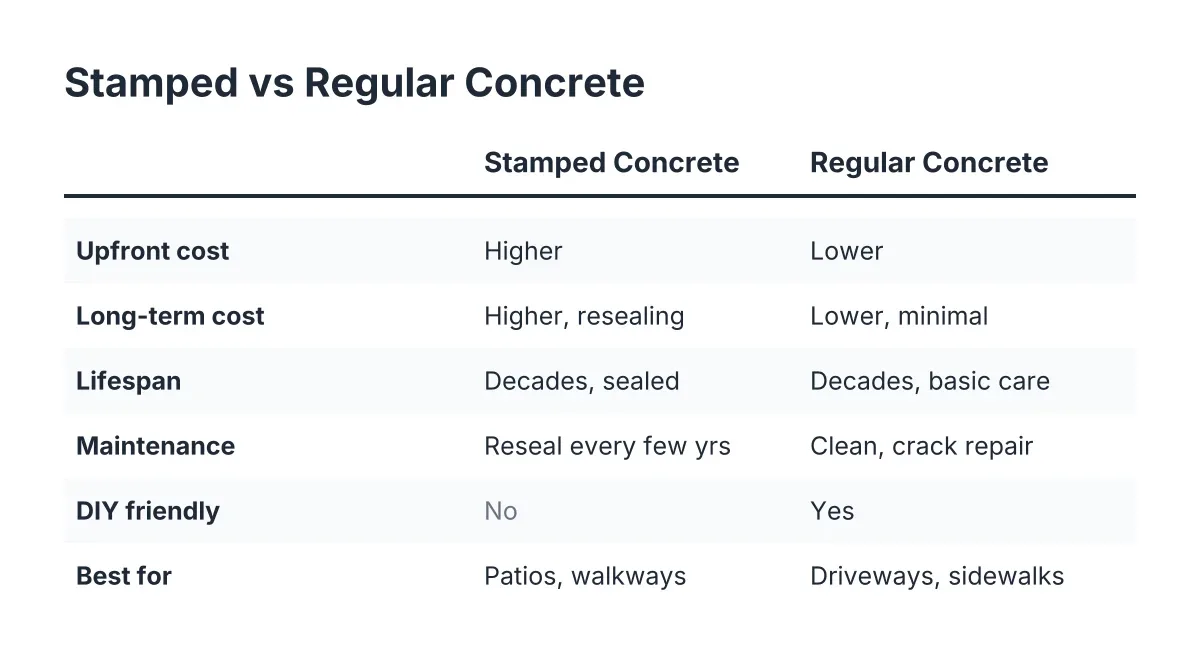
| Criteria | Stamped Concrete | Regular Concrete |
|---|---|---|
| Upfront cost | Higher, due to color, patterns, and extra labor | Lower, standard broom or trowel finish |
| Long-term cost | Higher, needs resealing on a regular schedule | Lower, minimal upkeep beyond crack repair |
| Lifespan | Decades when sealed and maintained | Decades with basic care |
| Maintenance | Reseal every few years, gentle de-icing habits | Occasional cleaning and crack repair |
| Best for | Patios, walkways, and entries where appearance drives the decision | Driveways, sidewalks, and flatwork where function and budget drive the decision |
Stamped Concrete: Strengths and Trade-offs
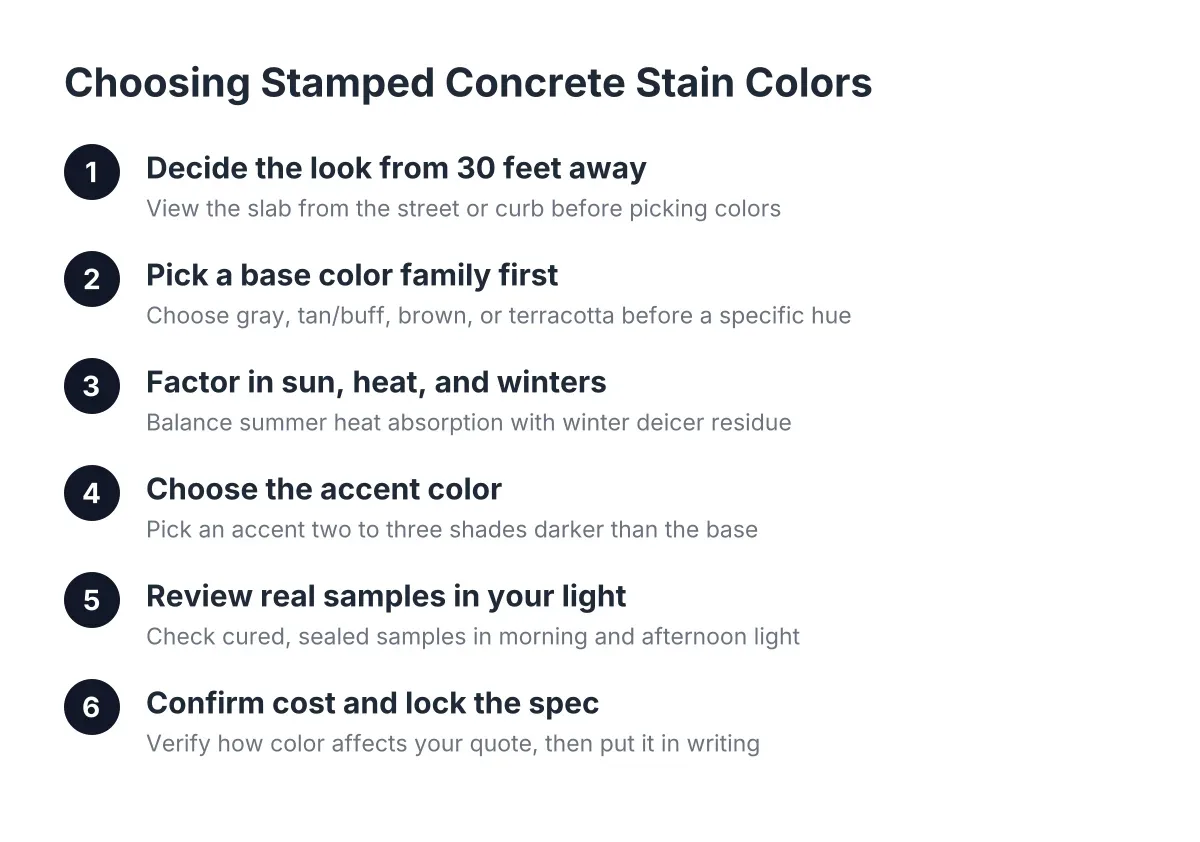
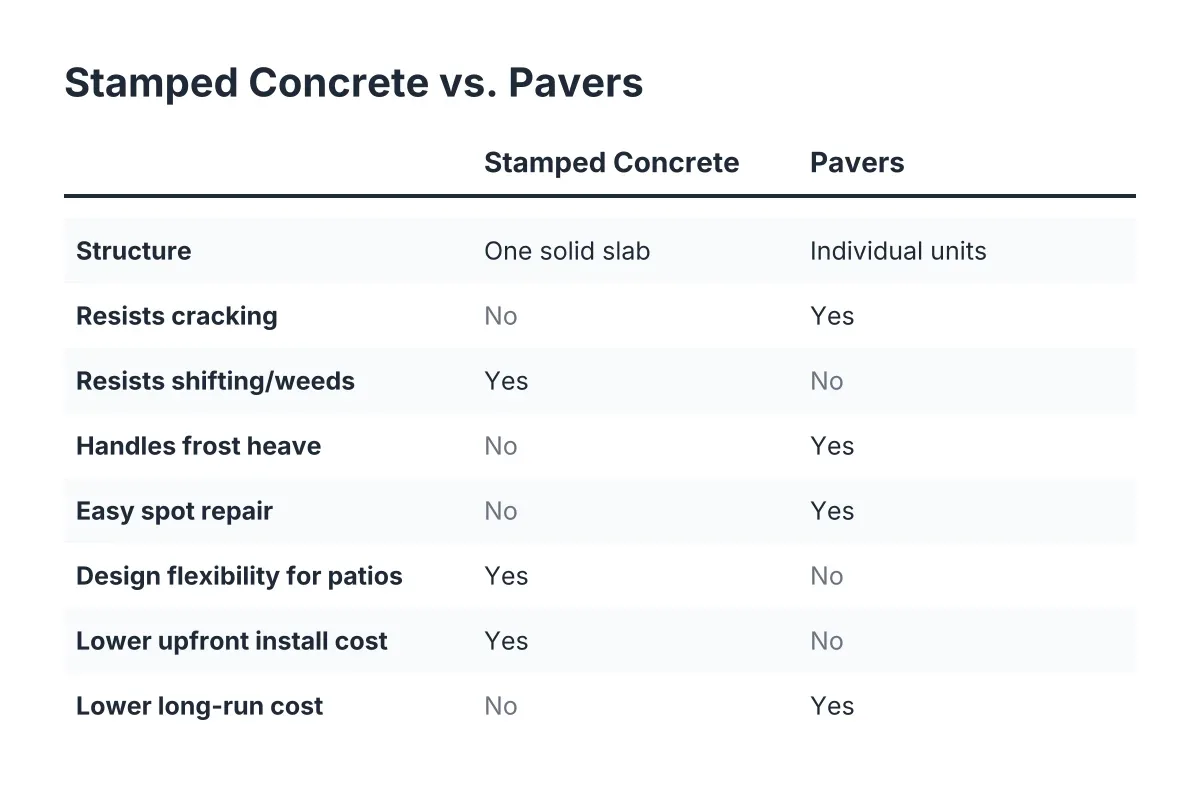
Stamped concrete starts as a normal concrete pour. While the slab is still workable, the crew presses textured stamps into the surface to mimic stone, slate, brick, or wood plank. Color goes in through integral pigment, surface hardeners, or release agents, then a sealer locks in the look. The result reads like a high-end material but costs less than most natural stone or paver installs. You get one solid slab with no joints for weeds to grow through, which is a real advantage over pavers in our climate. If you want to see what the finish options look like, we covered seven patterns that work well on Salt Lake City patios and driveways.
Where it shines: patios, pool decks, front walkways, and porches, anywhere the surface is part of how your home looks. A stamped patio can match your home's stone or brick and raise curb appeal in a way a plain gray slab never will. Done right, it holds up to Wasatch Front freeze-thaw cycles the same way any properly poured, air-entrained slab does. The pattern and color also hide minor stains and wear better than plain gray.
Where it disappoints: it costs more upfront because stamping is skilled, time-sensitive labor, and it demands upkeep. The sealer that protects the color wears down and needs reapplication every few years. Skip that, and sun, snowmelt, and de-icers dull the finish. The sealed surface can also be slick when wet unless the contractor adds a non-slip additive. And if a stamped slab ever cracks badly, matching the pattern and color in a repair is harder than patching plain concrete.
Regular Concrete: Strengths and Trade-offs
Regular concrete is the standard pour you see on most driveways and sidewalks: a broom finish for traction outdoors, or a smooth trowel finish where you want a cleaner look. It is the workhorse of residential flatwork. No stamps, no color, no release agents, which means less labor and a lower price for the same square footage.
Where it shines: budget and simplicity. A broom-finished slab gives good traction in snow and ice, which matters for a Salt Lake City driveway from November through March. Upkeep is minimal: sweep it, rinse it, seal cracks when they appear, and go easy on harsh de-icers. If it ever needs repair or resurfacing, matching plain gray concrete is far easier than matching a stamped pattern. For a big driveway or a long sidewalk run, the savings over stamped work are significant.
Where it disappoints: it looks like concrete. Plain gray flatwork does nothing for curb appeal, and stains, tire marks, and surface wear show more on a uniform surface. You can split the difference with stained or colored concrete without full stamping, but a standard pour will never pass for stone or brick. If appearance is a priority for the space, plain concrete will feel like a compromise every time you look at it.
Stamped Concrete vs Regular Concrete: The Deciding Factors
Cost drivers
Regular concrete costs less upfront, and the gap comes from labor and materials, not the slab itself. Both options share the same cost foundation: slab size, excavation, reinforcement, site access, and base prep. Stamping adds color hardeners, release agents, sealers, and a crew working against the clock while the concrete sets. That extra skill and time is what you pay for. We break down the specific factors in our stamped concrete cost guide rather than quoting numbers that would not match your site.
Lifespan
Expect similar structural lifespans from both; the base slab is the same either way. What differs is how the surface ages. A stamped finish stays sharp only if you reseal it on schedule; neglected, the color fades and the texture wears. Plain concrete ages more forgivingly because there is less finish to lose. In the Salt Lake Valley, both need proper base prep over our clay-and-gravel soils and control joints placed for freeze-thaw movement. The pour quality matters more than the finish type.
Installation
Regular concrete is the simpler install; stamped work demands more skill and tighter timing. A standard pour gets placed, screeded, and broom finished. A stamped pour adds coloring, stamping while the concrete is at the right firmness, release agent cleanup, and sealing. That timing window is why stamping is not a do-it-yourself project and why crew experience matters when you pick a concrete contractor. Either way, a patio or driveway is usually walkable within days and ready for full use within weeks, depending on weather.
Maintenance
Regular concrete asks less of you, year after year. It needs cleaning, crack repair when needed, and restraint with de-icing salts in winter. Stamped concrete adds a resealing cycle, typically every few years, plus the same winter care. Our yearly maintenance checklist for stamped concrete walks through exactly what that upkeep looks like in Salt Lake City. If you know you will not keep up with resealing, that is a strong argument for the plain pour.
Situational fit
Match the finish to the job: stamped for spaces you look at, regular for surfaces you just use. A backyard patio, pool deck, or front entry is where stamping earns its cost, because those surfaces shape how your home feels. A long driveway, a side sidewalk, or utility flatwork rarely justifies the premium, and a broom finish gives better winter traction on a slope. Many Salt Lake City homeowners split the project: stamped patio out back, regular concrete for the driveway.
Which Should You Choose?
Choose Stamped Concrete if:
- Appearance is a top priority for a patio, walkway, or entry
- You want the look of stone, slate, or brick without paver joints
- You will keep up with resealing every few years
- The space is a place you entertain or spend time, not just pass through
- You are comparing against pavers or stone and want a lower-cost route to that look
Choose Regular Concrete if:
- Budget is the deciding factor and you want the most square footage for the money
- The surface is a driveway, sidewalk, or utility slab where function comes first
- You want the lowest-maintenance option and no resealing schedule
- Winter traction on a slope matters, since a broom finish grips better than a sealed stamped surface
- Easy future repair or resurfacing matters more than looks
If you are on the fence, decide by the space. Front entry and patio: stamp it. Driveway and sidewalks: pour it plain. That split gives you the look where it counts and keeps the total project cost in check.
Common Questions
How much does a 20×20 stamped concrete patio cost?
There is no honest flat number, because the price depends on your site. The main drivers are slab size, excavation and base prep, reinforcement, the pattern and color you pick, and how easily a crew can reach the pour area. A 20×20 patio is a common size, so a local concrete contractor can give you a firm quote after seeing the yard. Our stamped and decorative concrete page explains what goes into our estimates.
What is the downside of stamped concrete?
The main downsides are higher upfront cost, a resealing schedule you cannot skip, and a surface that can be slick when wet unless a non-slip additive goes into the sealer. Repairs are also harder to hide, since matching a pattern and color in a patch takes more work than patching plain gray. Still weighing stamped concrete vs regular concrete for your project? The trade-offs matter most on driveways and sloped surfaces.
Can I do stamped concrete myself?
We do not recommend it. Stamping has to happen while the concrete is at the right firmness, and that window is short. Miss it, and you get a blurred pattern or a damaged slab you cannot redo without tearing it out. A plain slab is more forgiving for a skilled DIYer, but stamped work belongs with an experienced crew.
Is stamped concrete as durable as regular concrete?
Yes, structurally. Both start from the same mix, and strength comes from the pour: proper base prep, reinforcement, air entrainment for freeze-thaw, and good curing. The difference is the surface, since a stamped finish needs sealer to protect its color and texture while a broom finish has no decorative layer to lose. In Salt Lake City winters, either one holds up when it is poured right and maintained.
If you need stamped and decorative concrete, Salt Lake Valley Concrete can help.
Prefer to talk it through? Call (385) 433-4634 — a quick call is usually the fastest way to get a straight answer for your situation.