Choosing Concrete Stain Colors for Stamped Surfaces in Salt Lake City, UT
Concrete stain color selection, choosing it well, is the step most people rush when they plan a stamped patio or driveway. The pattern gets all the attention. But color is what you see from the street, what shows dirt or hides it, and what makes a slab feel hot or cool in July. This guide walks homeowners and rental property owners in Salt Lake City, UT through the decision step by step, so you can compare quotes with a clear idea of what you want before a contractor ever shows up.
A quick note on terms. On stamped work, "color" usually comes from two layers: an integral or broadcast base color, plus a darker accent color (often called release) that settles into the texture. Stains come into play when you recolor existing concrete or add depth to new work. The steps below cover both, because choosing the hues works the same way.
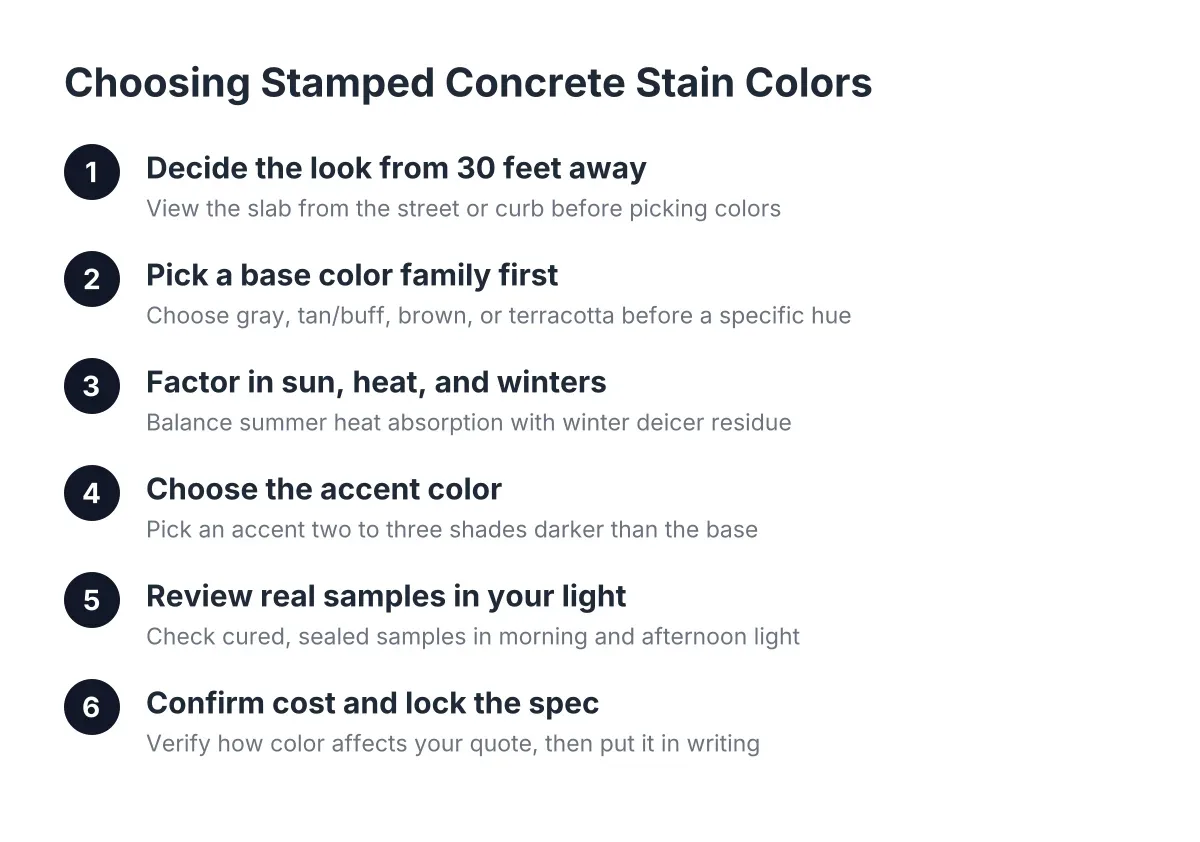
Step 1: Decide What the Concrete Should Look Like From 30 Feet Away
Start with the big picture, not a color chip. Stand where people will actually see the slab: the curb, the back door, the parking area of your fourplex. From that distance, you see one overall tone, not the subtle variation on a sample card.
Ask yourself what the slab should match or echo. Common anchors are the brick or stone on the house, the roof color, and the trim. A stamped patio that picks up a tone already on the building looks planned. One that introduces a brand-new color often looks like an afterthought.
For rental properties, think about the whole portfolio. Suppose you own a duplex in Rose Park and a four-unit building in Millcreek, and both need entry flatwork. Choosing one neutral base color you can repeat at every property keeps future repairs and additions consistent, and it makes touch-up work easier to match years later.
Step 2: Pick a Base Color Family Before a Specific Hue
Narrow to a family first: gray, tan and buff, brown, or terracotta and red. Most stamped concrete in the Salt Lake Valley lands in tans, buffs, and warm grays, because those tones sit well against the mountains, local stone, and the stucco and brick common along the Wasatch Front.
Here is how the main families tend to behave:
- Tans and buffs: The most forgiving choice. They hide dust and water spots, read as natural sandstone, and stay cooler in sun.
- Warm grays: Clean and modern. They pair well with newer builds and gray-toned siding, but light gray can show tire marks on driveways.
- Browns: Rich and natural with wood-look or slate patterns. Darker browns show salt residue and hard-water spotting more than lighter tones.
- Terracotta and reds: Bold and distinctive. They commit you to a look, so make sure the house can carry it for 20 years.
Only after you pick the family should you compare specific hues within it. Jumping straight to one chip out of forty is how people end up second-guessing the whole project.
Step 3: Factor in Sun, Heat, and Salt Lake City Winters
Color is not just cosmetic; it changes how the surface performs. Darker concrete absorbs more sunlight and gets noticeably hotter underfoot than lighter concrete. On a south-facing patio or a pool deck, that matters every summer afternoon. If kids or tenants will walk on it barefoot, lean lighter.
Winter pushes the other direction. Salt Lake City freeze-thaw cycles mean snow, ice melt, and sometimes deicer residue sitting on the slab for months. Very light colors can show that residue and the grime of shoulder season. A mid-tone buff or warm gray is often the practical middle ground: cool enough in summer, forgiving enough in winter.
Also remember that plain gray concrete lightens as it cures and weathers. A fresh pour looks darker than the finished product will. The same is true of many colored slabs, so judge samples against cured examples, not against concrete poured last week.
Step 4: Choose the Accent Color That Brings the Stamp to Life
Stamped concrete gets its depth from a second, darker tone that settles into the grout lines and texture of the pattern. Without it, a stamped slab looks flat, like a rubber mat pressed into one solid color. The usual rule is to pick an accent two to three shades darker than the base, in the same color family.
For example, a buff base with a walnut or chocolate accent reads as natural flagstone. A light gray base with a charcoal accent suits a slate or ashlar pattern. Keep the contrast moderate. Too little and the texture disappears from a distance; too much and the slab looks dirty rather than dimensional.
This is also where staining fits on existing work. If you own a rental with a stamped entry that has faded, a contractor can clean it, apply a tinted stain or color refresh, and reseal it for a fraction of replacement cost. The concrete stain color selection and accent logic applies when recoloring.
Step 5: Review Real Samples in Your Actual Light
Never choose from a screen or a printed brochure alone. Colors shift with light, and Utah sun at 4,200 feet is harsh and bright. A chip that looks warm indoors can wash out on a west-facing driveway at noon.
Ask any concrete contractor you are comparing to provide:
- Physical color charts for the base and release colors they use
- Addresses or photos of past stamped work in those colors, ideally a few years old so you see how the color weathers
- A small sample slab or test area for larger jobs, sealed, so you see the final sheen
Look at samples in morning and afternoon light if you can. Sealer darkens and enriches color, so an unsealed sample will look lighter and chalkier than the finished surface. If a contractor cannot show you cured, sealed examples of the colors you are considering, that is worth noting when you compare bids.
Step 6: Confirm How Color Affects Your Quote
Color choices move the price, and a clear quote will show how. When you compare bids for stamped work in Salt Lake City, UT, ask each contractor to break out the color line items. For context on overall pricing, a typical plain concrete patio around 288 square feet averages about $3,200, or roughly $11 per square foot, according to Concrete Network. Stamping and coloring add labor and materials on top of a base pour, so expect decorative work to price above plain flatwork.
What drives the color portion of the cost:
- Integral color vs. broadcast color: Integral color mixes through the whole truck of concrete and costs more in material, but chips and edge wear show less.
- Number of colors: A base plus one accent is standard. Hand-applied highlights or multiple stain tones add labor hours.
- Stain or recolor work on existing slabs: Prep, cleaning, and sealing drive the price more than the stain itself.
- Sealer type: Color depth depends on the sealer, and resealing every few years is part of the real cost of ownership.
A fair quote names the color system and sealer, not just "stamped and colored concrete." Vague line items are where surprise costs hide.
Protecting Your Budget Through Concrete Stain Color Selection
Making your concrete stain color selection before you collect bids keeps your quotes comparable. If one contractor prices a single integral color and another prices a two-tone system with hand-applied stain accents, you are not comparing the same job. Decide the look first, then ask every bidder to price that exact spec. This is the easiest way for a first-time buyer to spot a lowball bid that quietly dropped the accent color or the quality sealer.
Step 7: Lock the Spec in Writing Before the Pour
Once you have settled on colors, get them documented. The contract or proposal should name the manufacturer, the base color, the accent or release color, the stamp pattern, and the sealer. Color names vary between manufacturers, so "tan" is not a spec; "manufacturer X, buff base, walnut release" is.
In addition, agree on what happens if the cured color varies from the sample. Some variation is normal; concrete is a natural material, and weather on pour day affects the final tone. A professional will explain that honestly rather than promise a perfect match. For complex recoloring of old, previously sealed slabs, or for color-matching an addition to an existing stamped surface, bring in a concrete contractor rather than attempting it yourself; stripping old sealer and blending stain across a cold joint is skilled work that is hard to undo.
Common Questions on Stamped Concrete Stain Colors in Salt Lake City
What is the most popular stamped concrete pattern?
Ashlar slate is the most commonly requested stamped concrete pattern, with random stone and wood plank patterns close behind. For color, ashlar patterns usually pair a buff or gray base with a darker slate-tone accent. Pattern and color should be chosen together, since busy patterns read best with moderate color contrast and simple patterns can carry bolder hues.
How much does it cost to recolor stamped concrete?
Recoloring stamped concrete costs a fraction of replacing the slab, because the structure stays and only the surface is treated. The price depends on slab size, how much cleaning and sealer stripping the surface needs, and whether you want a simple tint refresh or a full two-tone restain. Get the prep steps itemized in any quote; prep is where the labor lives.
Can stamped concrete crack or fade over time?
Stamped concrete can fade at the surface as sealer wears and UV exposure breaks down color, and like all concrete it can crack if the base or joints are wrong. Fading is usually a maintenance issue solved by cleaning and resealing on schedule. Choosing mid-tone colors from the start also hides wear longer than very dark or very pale hues.
The Short Version
Work the decision in order: overall look first, color family second, specific base and accent third, then verify with real cured samples in your own light. Factor in Salt Lake City sun and winter, and remember that lighter tones stay cooler and mid-tones hide the most. Finally, lock the exact color spec in writing so every bid you collect prices the same job. Concrete stain color selection, decided before the quote calls start, is what separates a confident buyer from one guessing at chips in a contractor's truck.
If you need stamped and decorative concrete, Salt Lake Valley Concrete can help.
Prefer to talk it through? Call (385) 433-4634 — a quick call is usually the fastest way to get a straight answer for your situation.