Stamped Concrete Terms Explained: A Plain-English Glossary
If you are researching a stamped patio or driveway in Salt Lake City, the quotes and blog posts can read like a foreign language. This stamped concrete glossary translates the terms a contractor will actually use, in plain English, so you can read an estimate line by line and know what you are paying for. Each entry stands on its own, so you can skim for the word that stumped you and move on. Use it to compare bids, ask sharper questions, and spot gaps in scope before the truck arrives.
- Stamping Mats: the texture tools pressed into wet concrete
- Release Agent: powder or liquid that keeps mats from sticking
- Integral Color: color mixed into the whole batch
- Color Hardener: color worked into the surface only
- Antiquing / Accent Color: the second color that adds depth
- Pattern: the design the mats print, like slate or brick
- Subgrade and Base: the ground and gravel under the slab
- Rebar and Wire Mesh: steel reinforcement inside the slab
- Control Joints: planned cuts that manage cracking
- Curing: the slow hardening that gives concrete strength
- Sealer: the protective coat over the finished surface
- Resealing: the maintenance recoat every few years
- Freeze-Thaw Damage: winter wear from water freezing in the slab
- Spalling: surface flaking or chipping
- Efflorescence: white, chalky residue on the surface
- Overlay / Resurfacing: a new stamped layer over old concrete
- Flatwork: the trade word for ground-level slabs
- Mobilization: the cost of getting crew and equipment to you
Tools and Materials: What Shapes the Stamped Concrete Look
These terms cover the physical stuff, the mats, colors, and coatings that turn a gray slab into something that looks like stone or brick.
Stamping Mats and Tools in the Stamped Concrete Glossary
Stamping mats are flexible rubber tools pressed into fresh concrete to print a texture and pattern, such as slate, cobblestone, or wood plank. Crews lay them in rows while the concrete is still soft, then lift and repeat across the slab. The mats a contractor owns limit which patterns you can pick, so ask to see their options early. If you want ideas, start with these stamped concrete patterns that work for Salt Lake City patios and driveways.
Release Agent
A release agent is a powder or liquid spread on wet concrete so the stamping mats lift off cleanly instead of sticking. Powdered release also leaves behind a second tone that settles into the texture, which is part of the finished color. Liquid release keeps the surface a single color. If your quote mentions "colored release," that is a style choice, not an upcharge mystery.
Integral Color
Integral color is pigment mixed into the entire concrete batch at the plant or truck, so the color runs all the way through the slab. The upside is that chips and wear show the same color underneath. It costs more than plain gray and the shade range is softer than surface colors. A contractor quoting integral color is pricing the whole load of material, not just the top layer.
Color Hardener
Color hardener is a dry pigment and cement blend worked into the top of fresh concrete by hand, coloring and strengthening only the surface. It gives brighter, richer tones than integral color and a tougher wear layer. The tradeoff is that a deep chip can expose gray concrete underneath. Many stamped jobs use color hardener as the main color and a release agent for the accent.
Antiquing / Accent Color
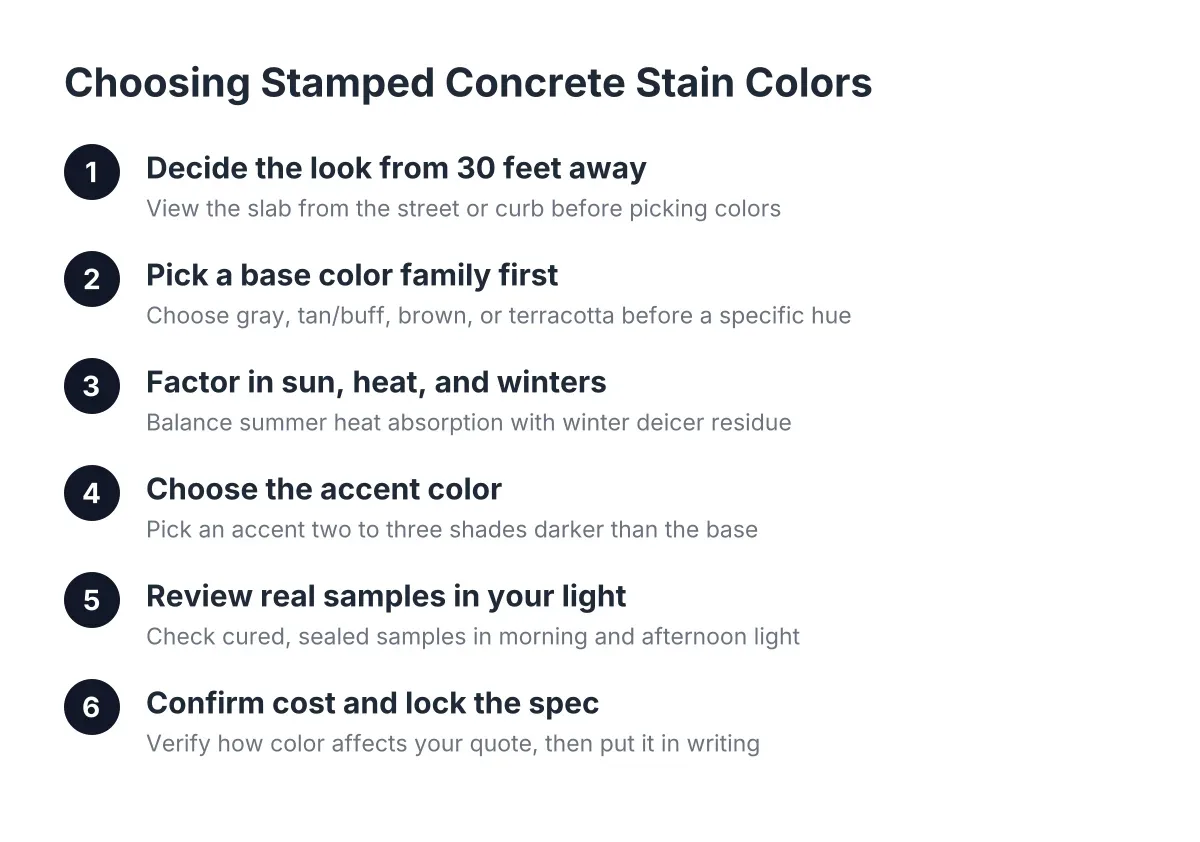
Antiquing means adding a second, darker color that settles into the low spots of the stamped texture to mimic natural stone. Without it, a stamped slab can look flat and uniform. It is applied with powdered release, tinted washes, or stains after the pour. If a bid lists one color only, ask whether the price includes an accent; the answer changes how the finished surface reads.
Pattern
A pattern is the specific design the stamping mats print, such as ashlar slate, random stone, herringbone brick, or wood plank. Pattern choice affects cost mostly through labor; detailed patterns with tight joints take more time and skill to stamp cleanly. It also affects traction, since deeper textures grip better in snow and rain. Pick the pattern before you compare bids so every contractor prices the same job.
Sealer
Sealer is a clear protective coating applied over finished concrete to block water, road salt, and stains, and to bring out the color. On stamped work, sealer is not optional; it is the layer that protects the color and texture you paid for. Film-forming sealers add shine and can get slick when wet, so ask about an anti-slip additive for steps and pool decks. Every serious stamped quote should include sealing as a line item.
Under the Slab: Structure and Process in Stamped Concrete Glossary
This part of the glossary covers what happens before and during the pour. These terms matter most along the Wasatch Front, where clay-and-gravel soils and hard winters punish shortcuts you cannot see.
Subgrade and Base
The subgrade is the native soil under your slab, and the base is the compacted gravel layer placed on top of it before the pour. Together they are the foundation that keeps the slab from settling and cracking. Salt Lake Valley soils shift between clay and gravel, so proper excavation and compaction matter more here than the pattern you choose. If a low bid skips base prep, that is where the savings came from.
Rebar and Wire Mesh
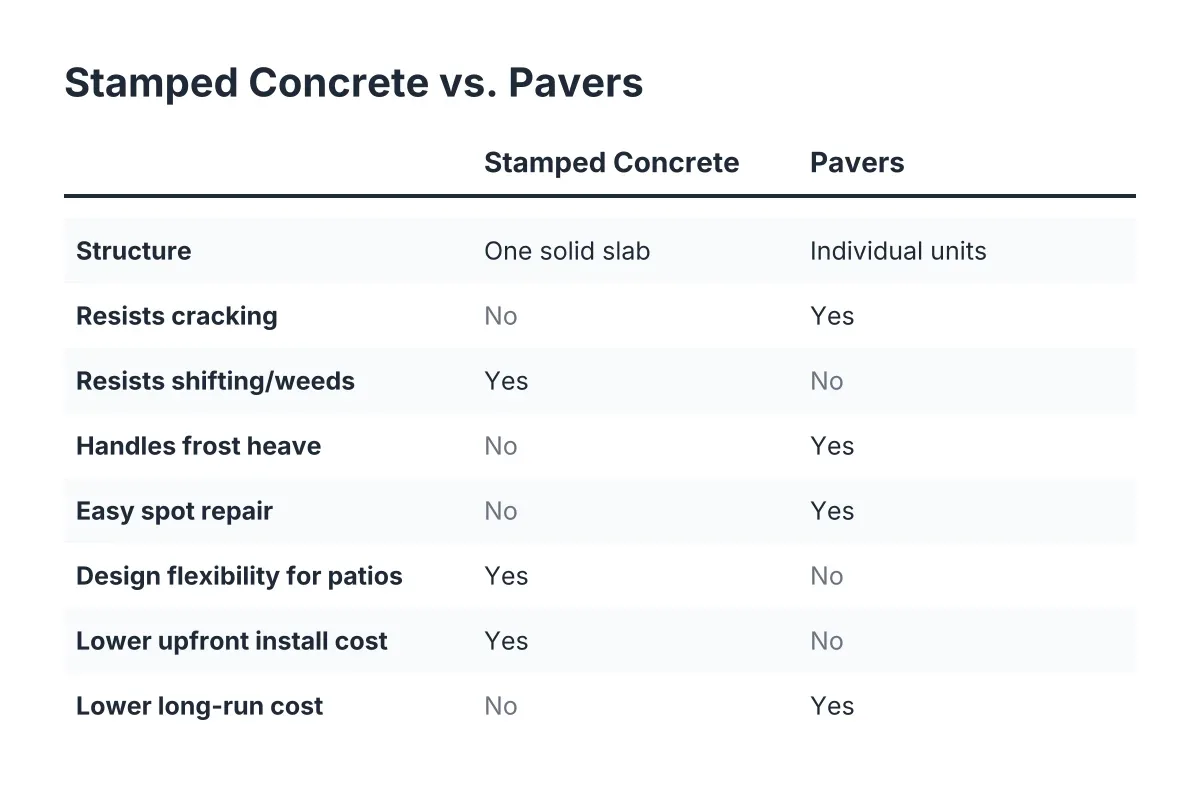
Rebar and wire mesh are steel reinforcements placed inside the slab to hold it together if it cracks. Rebar is steel bar laid in a grid; wire mesh is a welded steel sheet. Reinforcement does not prevent cracks, but it keeps cracked sections from separating or heaving unevenly. It is one of the cost drivers a transparent concrete contractor will spell out in the estimate.
Control Joints
Control joints are shallow, planned grooves cut or tooled into a slab so that when concrete shrinks and cracks, it cracks along those straight lines instead of at random. All concrete cracks; joints decide where. On stamped work, a good crew hides joints along pattern lines so they read as part of the design. A quote that mentions joint layout is a sign the contractor is planning, not just pouring.
Curing
Curing is the slow chemical hardening that happens after the pour, when concrete gains its strength over days and weeks. The first week matters most, and new slabs need protection from foot traffic, vehicles, and hard freezes during that window. Rushing a car onto a fresh driveway is one of the cheapest mistakes to avoid. Your contractor should tell you exactly how long to wait before walking and driving on it.
Flatwork
Flatwork is the trade word for any concrete poured flat on the ground, including driveways, patios, sidewalks, and slabs. If a contractor says they do flatwork, they mean these ground-level pours as opposed to walls or foundations. Stamped concrete is flatwork with a decorative finish added while the surface is still workable, so the structural steps underneath are the same ones a plain gray slab needs. Knowing the word helps you read company service lists; "decorative flatwork" and "stamped patio" describe the same kind of job.
Mobilization
Mobilization is the cost of getting the crew, forms, and equipment to your site and set up before any concrete is poured. It is why small jobs cost more per square foot than large ones; the setup cost spreads over fewer feet. Tight site access, like a backyard with no gate wide enough for a wheelbarrow or pump, raises it. If two bids differ and one site note mentions access, mobilization is often the reason.
Problems, Repairs, and Upkeep
These are the words you will meet when something goes wrong or when it is time for maintenance.
Freeze-Thaw Damage
Freeze-thaw damage is the wear that happens when water soaks into concrete, freezes, expands, and pops small pieces off the surface, over and over through a winter. Salt Lake City winters cycle above and below freezing often, which makes this the main long-term threat to any outdoor slab here. Good drainage, air-entrained concrete, and a maintained sealer are the defenses. For a local, honest look at how decorative slabs hold up, read our guide to stamped concrete durability in Salt Lake's freeze-thaw winters.
Spalling
Spalling is the flaking, chipping, or peeling of a concrete surface, usually caused by freeze-thaw cycles, deicing salts, or a weak finish. On stamped work it shows up as broken texture and exposed gray patches. Light spalling can often be fixed with repair and resurfacing; widespread spalling may point to a deeper problem with the original mix or finishing. Catching it early keeps the fix small.
Efflorescence
Efflorescence is the white, chalky residue that appears when moisture moves through concrete and leaves mineral salts on the surface. It is cosmetic, not structural, but it dulls colored and stamped surfaces. It often shows up on newer slabs and fades with cleaning and time. Persistent efflorescence can signal a moisture or drainage issue worth asking your contractor about.
Resealing
Resealing means cleaning the slab and applying a fresh coat of sealer, typically every few years, to keep water and salt out and the color sharp. It is the single most important maintenance task for stamped surfaces. Skipping it is how color fades and freeze-thaw damage gets a head start. Our yearly stamped concrete maintenance checklist for Salt Lake City walks through the schedule.
Overlay / Resurfacing
An overlay is a thin layer of new material applied over existing concrete, which can be stamped and colored to make an old slab look new. It works when the original slab is structurally sound, with minor surface wear but no major settling or deep cracks. It costs less than tearing out and repouring, so it is worth asking about before you assume full replacement. A contractor should inspect the old slab before promising an overlay will hold.
Using These Terms
With this stamped concrete glossary in hand, you can read a bid line by line and know what base prep, color hardener, and resealing actually mean for your project and its cost. When a contractor mentions joint layout or mobilization, you will know whether it signals care or padding. Ask about anything a quote leaves out; the missing line items are usually the ones that matter most.
Prefer to talk it through? Call (385) 433-4634 — a quick call is usually the fastest way to get a straight answer for your situation.