Stamped Concrete Design Ideas: Borders, Patterns, and Color Combos That Work
If you are gathering bids for a new patio or driveway, stamped concrete design ideas are probably the fun part of your research. The hard part is knowing which ideas hold up in Salt Lake City, which ones add cost, and which ones a contractor will actually quote you fairly. This list covers nine design approaches, borders, patterns, and color combinations, with the trade-offs for each. Use it to walk into your quote calls with specifics instead of a vague "we want something nice."
A quick note before the list. Every design choice below affects price in a predictable way: more colors mean more labor, borders mean more edge work, and complex patterns mean more stamping time. When a contractor's bid is higher than another, the design scope is often the reason, not padding. Ask each bidder to price the same design so you are comparing the same job.
1. Ashlar Slate Pattern With a Plain Broom-Finished Border
Ashlar slate is a running pattern of rectangular stones in mixed sizes, and it is one of the most requested stamp patterns for patios and driveways. Framing it with a 12 to 18 inch band of plain broom-finished concrete does two things at once. The border gives the stamped field a clean, deliberate edge, and the broom texture adds slip resistance right where people step on and off the slab.
This combination also helps your budget. The border section skips the stamping labor, so a crew can often pour and finish it faster than a fully stamped slab of the same size. For a comparison shopper, it is a smart first design to request in every bid because most concrete contractors know it well and can price it accurately.
2. Seamless Texture With Cut Joints for a Flagstone Look
A seamless texture skin presses a stone surface into the concrete without defined joint lines. The crew then saw-cuts control joints in a pattern, which creates the look of large flagstone pieces. The result reads as natural stone from the street but costs less in stamping labor than a deep-grooved pattern.
In addition, cut joints do real structural work. Concrete in the Salt Lake Valley goes through hard freeze-thaw cycles every winter, and well-placed joints give the slab planned places to crack instead of random ones. A design that puts the joints where the pattern wants them anyway is a practical choice here, not just a decorative one.
3. Herringbone Brick With a Contrasting Soldier-Course Border
Herringbone brick is a classic stamped pattern for walkways and driveway aprons. Pair it with a soldier-course border, a single row of "bricks" laid perpendicular to the field, in a darker release color. The contrast makes the pattern pop and hides the transition where the stamp mats meet the edge.
However, know the trade-off. Brick patterns have many joint lines, which means more detail work and more hand-touching at edges and around obstacles. Expect it to bid higher per square foot than ashlar slate on the same footprint. If one quote for herringbone comes in well above an ashlar quote, that gap can be legitimate.
4. Two-Tone Color: Integral Base Color Plus Antiquing Release
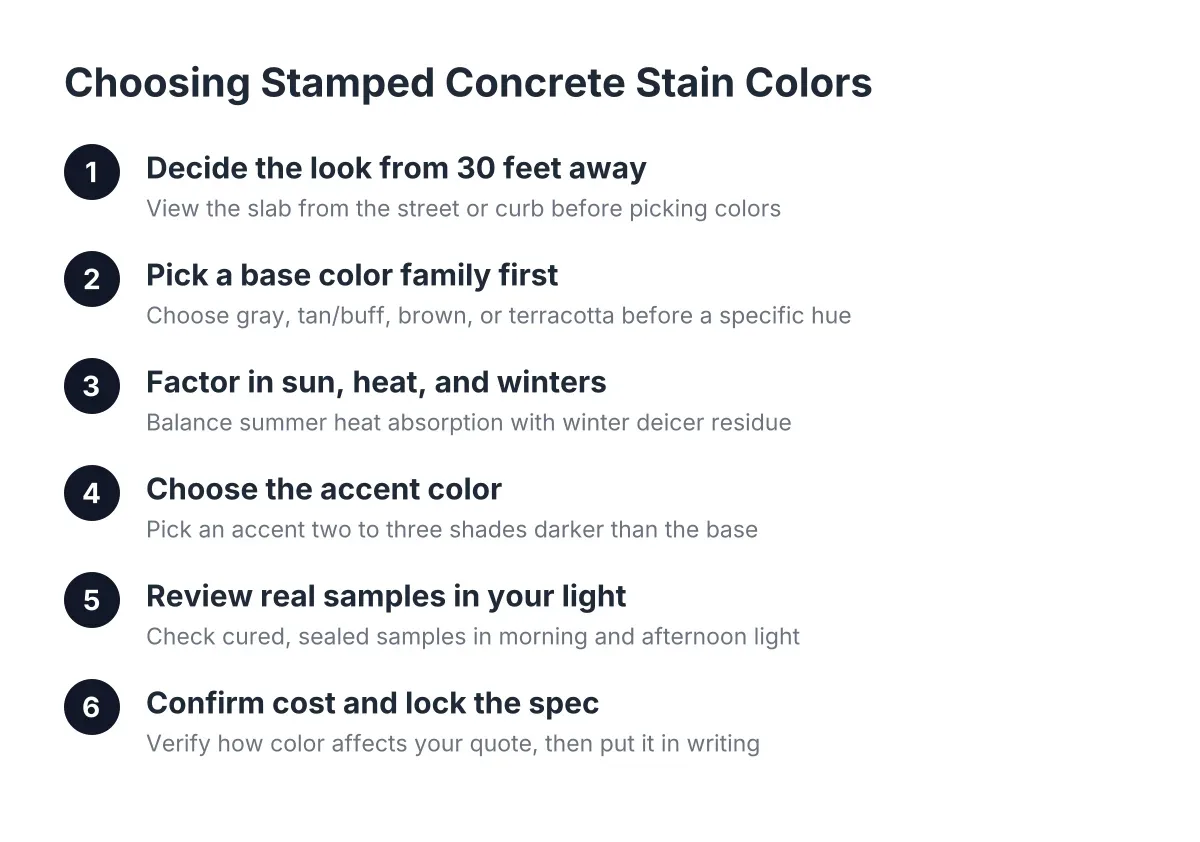
Most stamped concrete color examples you see online use two colors, not one. The base color is mixed into the concrete itself, and a powdered release agent in a darker tone settles into the stamped grooves. The combination gives the surface depth, like real stone with shadowed joints.
For Salt Lake City, earth tones work with most home exteriors: a tan or buff base with a walnut or charcoal release, or a gray base with a slate release. When you collect bids, ask each contractor to name both the base color and the release color in writing. "Stamped, tan" is not a spec; "integral buff base, walnut release, ashlar slate" is, and it keeps every bid on the same job.
Why Lighter Base Colors Enhance Stamped Concrete Design Ideas
Lighter concrete reflects more sunlight and stays cooler underfoot than darker concrete. On a south-facing patio in July, that difference matters to bare feet. Dark charcoal fields look sharp in photos, but many contractors steer homeowners away from them for patios and pool decks for exactly this reason. Save the dark tones for the border, where nobody stands for long.
5. Random Stone Pattern for Sloped or Irregular Yards
Random stone and fieldstone patterns have no repeating grid, which makes them forgiving on lots that are not square. If your yard slopes toward the house or the patio wraps around a corner, a random pattern hides the awkward geometry that a grid pattern would highlight.
This matters along the Wasatch Front, where lots on the benches often slope and drainage has to be planned, not assumed. A good contractor will talk about grade and runoff before they talk about stamp mats. If a bidder jumps straight to pattern selection without walking the slope, that is a signal worth noting.
6. Stamped Border Around a Plain Concrete Field
Flip the usual design. Instead of stamping the whole slab, pour a standard broom-finished or smooth-troweled field and stamp only a decorative border around it. You get a custom look at a fraction of the stamping labor, since the crew stamps 15 to 20 percent of the surface instead of all of it.
For example, suppose a homeowner in Sugar House wants a 20×20 patio but the full-stamp bids strain the budget. In that scenario, a broom-finished field with an 18 inch stamped slate border in a contrasting color could trim the decorative labor substantially while still looking intentional. It is a useful fallback design to ask every bidder to price as an alternate.
7. Wood Plank Stamps for Covered Patios and Porches
Wood plank stamps mimic the grain and board lines of lumber without the rot, splinters, or staining schedule of a real deck. They suit covered patios, porches, and the transition zones between house and yard. Paired with a gray-brown base and a darker release dragged along the "grain," the effect is convincing at normal viewing distance.
One caution: plank patterns show wear in high-traffic lines more than busy stone patterns do, because the long straight boards give your eye a reference line. They also need the same resealing schedule as any stamped surface. Under a roof, where sun and snow exposure drop, they age better.
8. Mixed Finishes: Stamped Field, Exposed Band, Smooth Steps
Some of the best stamped patio design ideas combine finishes instead of picking one. A common layout is a stamped field, a band of exposed aggregate or broom finish at the perimeter, and smooth-troweled step treads with hand-tooled edges. Each finish does a job: the stamp carries the look, the band adds traction, and the smooth treads read clearly as steps.
Mixed finishes raise the labor count, since the crew manages multiple textures in one pour window. Therefore, expect this to sit at the higher end of your bids. According to Concrete Network, a typical plain concrete patio of about 288 square feet averages about $11 per square foot; stamped work and mixed finishes add decorative labor on top of that baseline, which is why decorative bids run higher than plain flatwork.
9. Driveway Designs: Keep the Field Simple, Spend on the Apron
Stamped concrete driveway design ideas follow a different rule than patios: the field takes tire traffic, snow shovels, and ice melt, so simpler is more durable. A smart layout stamps the apron and borders, where guests see the detail, and keeps the drive lanes in a plain or lightly textured finish that is easier to maintain and cheaper to repair.
Driveways are also where reinforcement and base prep matter most. Clay-and-gravel soils in the valley move with moisture and frost, so the sub-base, thickness, and joint plan under your pattern matter more than the pattern itself. A bid that itemizes excavation, base, and reinforcement is telling you something a pattern-only bid is not.
How to Compare Bids on Stamped Concrete Design Ideas
The fastest way to compare contractors on decorative work is to make every bidder price the identical design. Specify the pattern, both colors, the border treatment, and the sealer, then ask each contractor to quote that exact scope. Price gaps that remain after that are about the contractor, not the design.
Here is a checklist to bring to each estimate:
- Pattern name and layout (ashlar slate, herringbone, random stone, wood plank)
- Base color and release color, named specifically
- Border type, width, and finish
- Joint plan: where control joints go and how they fit the pattern
- Sub-base prep, slab thickness, and reinforcement
- Sealer type and the recommended resealing schedule
- Site access, and whether excavation or haul-off is included
In addition, ask to see photos of each contractor's past stamped work in the specific pattern and color combo you want. Stamping is a skill trade; two crews can use the same mats and get different results. Seeing a finished job in your pattern tells you more than any brochure.
One Honest Trade-Off Before You Decide
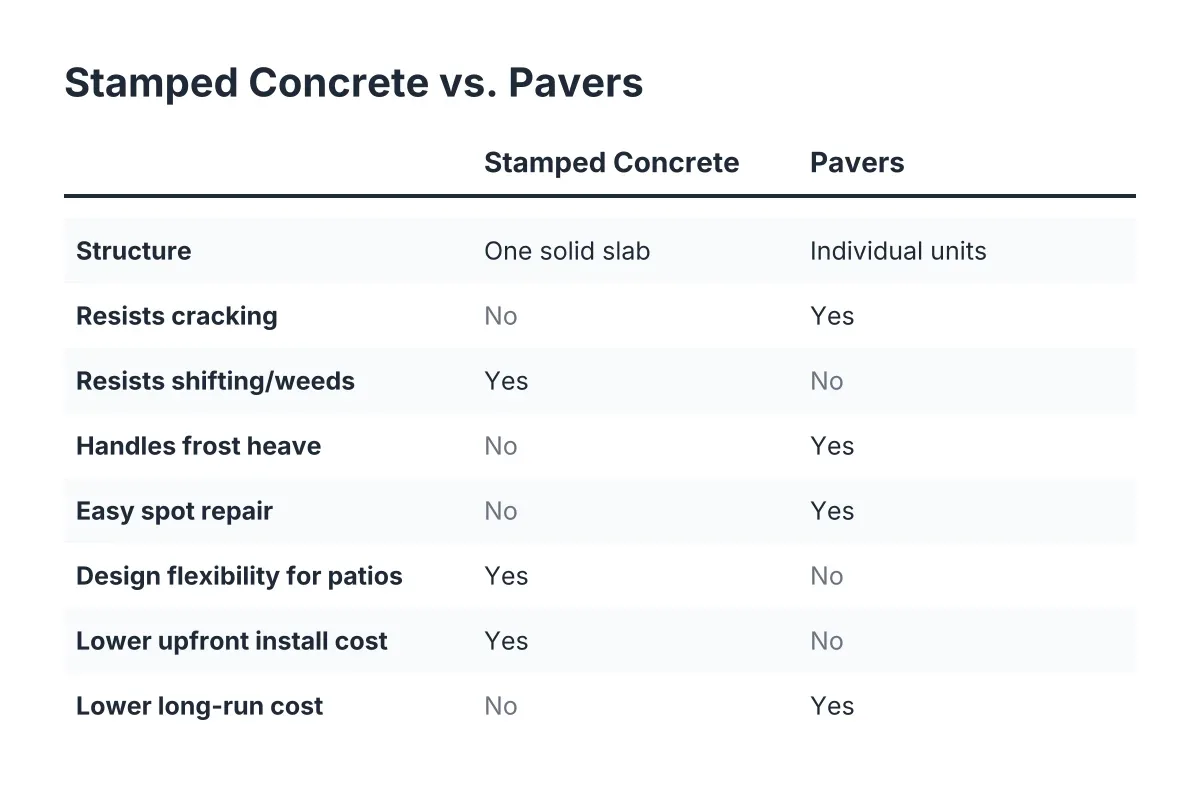
Stamped concrete needs periodic resealing to keep its color and protect the surface from freeze-thaw damage and deicing salts. If you want a zero-maintenance surface, a plain broom finish or a smooth trowel finish with cut joints is the more honest choice, and both can still look clean and deliberate. Decorative work rewards owners who will keep up the sealer.
Also, complex designs on difficult sites deserve a professional's eyes before you lock in a plan. Steep grades, poor drainage, or old fill soil can change what design is practical, and a site visit catches problems a Pinterest board cannot. Gather your stamped concrete design ideas first, then let the quotes and site walks tell you which ones fit your lot and your budget in 2026.
Prefer to talk it through? Call (385) 433-4634 — a quick call is usually the fastest way to get a straight answer for your situation.