Stamped Concrete Maintenance: What Owners Need to Do Yearly in Salt Lake City
Stamped concrete maintenance is what owners can control after the pour is done. The pattern and color were set the day the crew finished. Whether that surface still looks good ten winters from now depends on a short list of tasks you repeat every year. This guide walks through those tasks in order, built for Salt Lake City conditions: freeze-thaw winters, clay and gravel soils along the Wasatch Front, and months of deicer on every driveway. Proper stamped concrete yearly maintenance protects both the aesthetic appeal and structural integrity of the surface.
The steps below assume your slab is already in place and cured. Follow them once a year, usually in late spring or early fall, and you will catch problems while they are still cheap to fix.
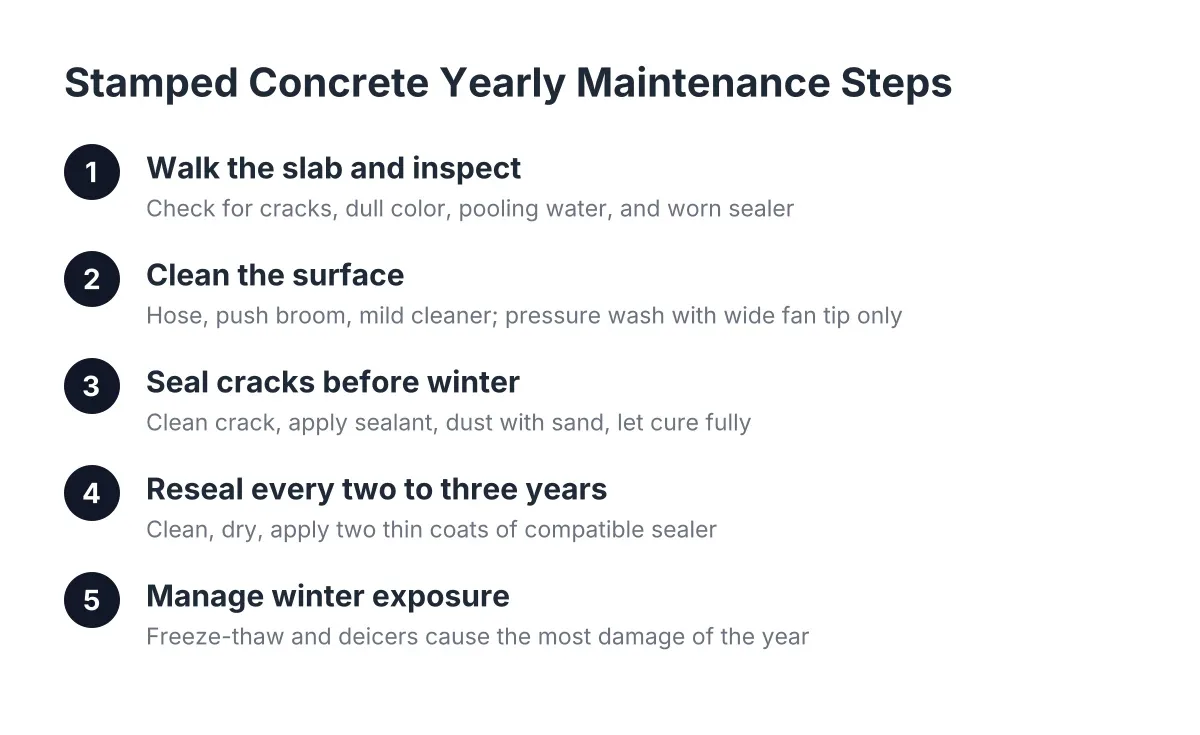
Step 1: Walk the Slab and Write Down What You See
Start with a slow inspection before you clean anything. Walk the whole surface in good light and look for four things: hairline cracks, dull or chalky color, low spots where water pools, and areas where the sealer has worn through.
The sealer check is the one most owners miss. Pour a cup of water on a high-traffic spot. If it beads up, the sealer is still working there. If it soaks in and darkens the concrete, that area is unprotected and water is getting into the surface.
Take photos with your phone and date them. Next year's walk-through becomes a comparison, not a guess. A crack that grew a quarter inch over one winter tells you something a single snapshot cannot. For this routine to work, you need to see change over time instead of reacting to whatever looks bad today.
Mark anything questionable with chalk so you can find it again after cleaning.
Step 2: Clean the Surface the Right Way
Clean stamped concrete with a garden hose, a push broom, and a mild cleaner made for concrete. Work in sections and rinse thoroughly. The grooves in a stamped pattern trap dirt, leaves, and lawn fertilizer, and all of it dulls the color if it sits.
Is It Okay to Pressure Wash Stamped Concrete?
Yes, you can pressure wash stamped concrete, but use a wide fan tip, moderate pressure, and keep the wand moving at least a foot off the surface. A narrow tip held close will strip sealer, etch the surface, and cut lines into the color. If your washer has adjustable pressure, start low and only increase it if the dirt will not lift.
After washing, let the slab dry for a day or two before any sealing work. Sealer applied over trapped moisture turns cloudy and can peel.
Step 3: Seal Cracks Before Winter Does More Damage
Hairline cracks in stamped concrete are common and usually cosmetic. What turns them into a real problem is water. Along the Wasatch Front, water gets into a crack in November, freezes, expands, and pries the crack wider. By March it is bigger. Repeat that for three winters and a cosmetic line becomes a structural one. Sealing cracks also keeps water from working under the slab, where it softens the base and sets up settling.
Here is how to seal a crack so the repair lasts:
- Clean both sides of the crack down to bare concrete. A nylon cup brush on a drill removes old sealant and loose material so the new sealant can bond. Skipping this step is the main reason crack repairs fail early.
- Apply an exterior-grade concrete crack sealant about a quarter to half an inch thick. Keep it slightly below the surrounding surface, not flush with the top.
- Dust a light coat of dry sand over the fresh sealant. It blends the repair into the texture and keeps leaves and bugs from sticking while it dries.
- Let it cure fully before you reseal the slab. Sealant that gets coated too soon can pull away from the concrete within the first year.
One honest limit: crack sealing handles movement cracks and surface cracks. If a section has sunk, rocks when you step on it, or shows spider cracking spread across the whole surface, sealant is a band-aid. That pattern of damage usually points to replacement or resurfacing, and it is worth having a concrete contractor look at it before you spend a weekend on repairs that will not hold.
Step 4: Reseal on a Two-to-Three-Year Cycle
Resealing is the single biggest factor in how stamped concrete ages. The sealer is what holds the color, sheds water, and resists deicer. Plan on resealing a stamped concrete driveway or patio every two to three years in the Salt Lake Valley; high-traffic driveways land at the short end, covered patios at the long end. Your water-bead test from Step 1 tells you which end you are on this year.
Routine Maintenance for Stamped Concrete Yearly and Beyond
Resealing stamped concrete means cleaning the slab, letting it dry completely, and rolling or spraying on a thin coat of compatible sealer in dry weather between about 50 and 85 degrees. Two thin coats beat one thick coat. Thick sealer traps moisture, turns white, and peels in sheets.
A few rules keep this from going wrong:
- Match the new sealer to the old one. Solvent-based over water-based, or the reverse, can cause bubbling and peeling. If you do not know what is on the slab, ask the contractor who poured it or test a hidden corner.
- Add a slip-resistant additive to the sealer. Sealed stamped surfaces get slick when wet, and in a Salt Lake City winter that matters on a sloped driveway.
- Keep cars off a resealed driveway for about three days, foot traffic off for one.
This is also the step where some owners of stamped concrete decide maintenance belongs to a pro. If your slab has peeling sealer that needs to be stripped first, or the color has faded enough to need a tinted sealer or recoloring, the prep work gets technical fast and a bad coat is expensive to undo.
Step 5: Manage Winter, Because Winter Is the Test
Everything above protects the slab. Winter is what attacks it. Freeze-thaw cycles and deicing salts do more damage to concrete in this valley than the other nine months combined.
Three habits get a stamped slab through a Wasatch Front winter:
- Use sand for traction instead of deicer wherever you can. If you must melt ice, avoid products with ammonium sulfate or ammonium nitrate, which chemically attack concrete. Skip all deicer on concrete poured within the last year.
- Shovel with a plastic-edged shovel, not steel. Steel blades chip the stamped texture at the pattern lines.
- Keep downspouts and snowmelt draining away from the slab. Water that pools on or beside the concrete during a thaw is the water that freezes in it that night.
Stamped Concrete Yearly Maintenance Costs Owners, Roughly
Maintenance on stamped concrete costs a fraction of what the surface cost to install. Cleaning is hose water and an afternoon. Crack sealant runs the price of a few tubes or a bucket. The real line item is resealing, and even hiring that out every few years is minor next to replacing a failed decorative surface.
For scale, suppose a homeowner in Sugar House has a 600-square-foot stamped patio and driveway apron. In that scenario, a DIY reseal might mean roughly a hundred to a couple hundred dollars in sealer and supplies every third year, while hiring it out might run a few hundred to around a thousand depending on prep. Those are illustrative estimates, not quotes; stripping failed sealer or recoloring changes the math. Compare either number to full replacement. A plain concrete driveway averages about $6,400 according to HomeAdvisor, and stamped work costs more than plain flatwork because of the labor in the pattern and color. Maintenance is the cheap side of that ledger.
Note that concrete stamp rental exists for new pours, not for maintenance. You cannot re-stamp a cured slab, which is exactly why protecting the texture you have is worth the yearly routine.
The Yearly Checklist in One Place
Put this on the calendar for late spring or early fall:
- Walk the slab, photograph it, and water-test the sealer.
- Wash it with mild cleaner; pressure wash only with a fan tip and light pressure.
- Clean and seal any cracks, sand the sealant, and let it cure fully.
- Reseal if water soaks in, on roughly a two-to-three-year cycle.
- Before winter: stock sand, retire the steel shovel, and check drainage.
Do these five things each year and a stamped surface in Salt Lake City stays a feature instead of becoming next decade's repair estimate. Skip them for a few winters and you join the owners searching for crack repair instead.
If you need stamped and decorative concrete, Salt Lake Valley Concrete can help.
Prefer to talk it through? Call (385) 433-4634 — a quick call is usually the fastest way to get a straight answer for your situation.