7 Stamped Concrete Patterns That Work for Salt Lake City Patios and Driveways
If your patio or driveway is cracked, sunken, or just tired-looking, a replacement pour is your chance to get more than plain gray back. Stamped concrete patterns let a new slab look like slate, flagstone, brick, or wood plank at a lower cost than the real material. The catch is that not every pattern works equally well for every surface, and some choices matter more here along the Wasatch Front, where hard freeze-thaw winters and clay-and-gravel soils stress every slab. This list walks through seven patterns and finishes, what each one does well, and what to watch out for before you commit.
First, a quick definition for anyone starting from scratch. Stamped concrete is a regular concrete pour that gets textured with rubber mats while the surface is still soft, then colored and sealed. The strength underneath is the same as any slab; the pattern is only in the top layer. That means the prep work, the base, and the reinforcement matter just as much as the design on top. If your old slab cracked because of poor base prep or drainage, the pattern you pick will not fix that. The new pour has to solve the underlying problem first.
1. Ashlar Slate Stamped Concrete Patterns: The Choice Most Homeowners End Up Making
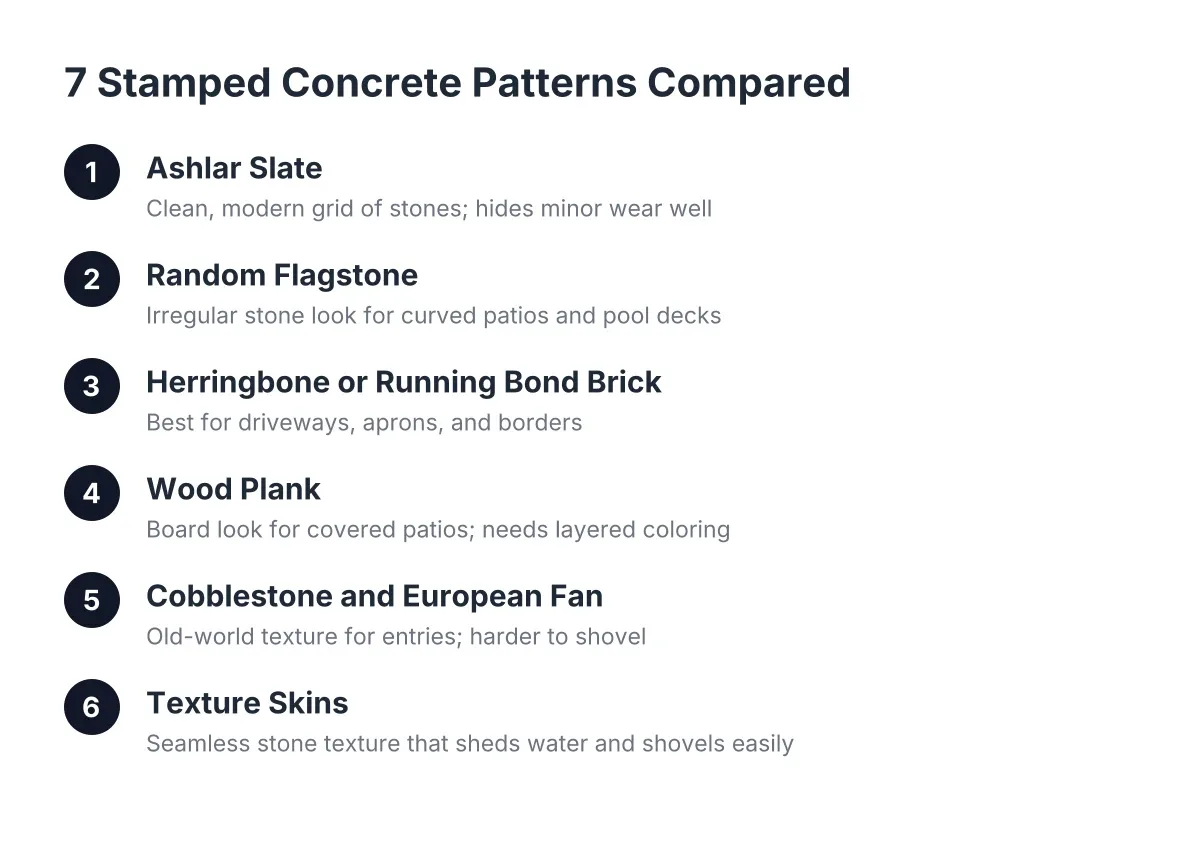
Ashlar slate stamps a grid of rectangular stones in varied sizes with a natural slate texture. It reads as clean and modern without looking busy, which is why it shows up on so many patios and front walkways. If you want a safe choice that will still look current when you sell the house in five years, this is the one most concrete contractors suggest first.
It also hides minor surface wear better than smooth finishes. The varied texture breaks up light, so small scuffs and seal wear are harder to spot. For a replacement patio where the old slab looked bad fast, that forgiveness matters.
2. Random Flagstone: Natural Look, Fewer Straight Lines
Flagstone stamps mimic irregular, hand-laid stone with curved joints and no repeating grid. The random layout works well on curved patios, pool decks, and garden paths where straight-line patterns would fight the shape of the space. It pairs with earth-tone stamped concrete colors like buff, sandstone, and gray-brown.
One practical note: the deeper the joint lines in the stamp, the more texture you get, and the more places water can sit. In a Salt Lake City winter, standing water in deep joints goes through freeze-thaw cycles. A good crew slopes the slab so water drains off instead of pooling in the pattern.
3. Herringbone or Running Bond Brick: Best for Driveways and Borders
Brick patterns stamp uniform rectangles in a herringbone or offset running-bond layout. They look sharp on driveways, driveway aprons, and as a border band around a plainer field. Many homeowners use a brick border with a broom-finished or ashlar center, which cuts cost because the crew stamps less area.
Suppose a homeowner in Sugar House is replacing a cracked 1970s driveway before listing the house. A full stamped driveway may stretch the budget, but a stamped brick border with a standard broom-finish field upgrades curb appeal for a fraction of the decorative cost. That border-plus-field approach is one of the most common stamped concrete patio ideas we see adapted to driveways.
4. Wood Plank: The Trend Pattern, With a Caveat
Wood plank stamps create the look of boards, complete with grain texture, without the rot and splinters of a real deck. It suits covered patios and modern homes, and it photographs well, which is partly why it keeps trending. Paired with gray or weathered-brown coloring, it can pass for reclaimed wood from a few feet away.
The caveat is that the look depends heavily on the coloring work. Wood plank needs layered color, usually a base color plus a release or antiquing color, to sell the grain. Done flat in one tone, it looks like concrete with lines in it. This is a pattern where the crew's finishing skill shows more than the stamp itself.
5. Cobblestone and European Fan: Old-World Texture for Entries
Cobblestone stamps small rounded stones in rows or fan-shaped arcs. The heavy texture suits entry walkways, courtyards, and accent bands where people walk slowly and the detail gets noticed. On a long driveway, the same texture can feel busy and makes snow shoveling harder, since the blade catches on every joint.
That shoveling point deserves weight here. Along the Wasatch Front, you will clear snow off this surface for months each year. Deeper, more aggressive stamped concrete patterns look great in July and fight your shovel in January. If you clear snow by hand, lean toward shallower textures like ashlar slate or seamless slate skins.
6. Texture Skins: Stone Texture Without Joint Lines
Texture skins, sometimes called seamless stamps, add stone or slate texture across the whole surface with no joint pattern at all. The crew then saw-cuts control joints in a clean grid, which gives a large-format modern tile look. Because there are no deep grout lines, these finishes shed water well and shovel easily, which makes them a strong fit for Utah winters.
This option also plays well with scoring and stained or colored concrete. A scored grid with two alternating color tones can look like oversized pavers without any stamp mats touching the slab. It is a quieter look than full stamping, and it costs less in labor.
7. Broom Finish With Decorative Borders: The Budget-Smart Hybrid
A broom finish is not a stamp, but it belongs on this list because it is the honest budget answer. Dragging a broom across fresh concrete leaves a fine texture that improves traction when the surface is wet or icy, which matters on sloped Salt Lake City driveways. Brooming each panel in a different direction even creates a subtle checkerboard effect, since the texture catches sunlight differently panel to panel.
Pair a broomed field with a stamped or colored border and cut control joints in a decorative grid, and you get a paver-like look at a plain-flatwork price. For context on base costs, a typical concrete patio around 288 square feet averages about $11 per square foot according to Concrete Network, before any decorative upgrades. Stamping, coloring, and sealing add to that, so hybrids like this stretch the budget furthest.
How to Match Stamped Concrete Patterns to Your Project
Choosing among stamped concrete patterns comes down to three questions: where the slab is, how you will maintain it, and what the house looks like. Driveways favor shallower textures that shovel cleanly and resist tire wear. Patios can handle deeper, more decorative stamps. Walkways and entries are where small-scale detail like cobblestone earns its keep.
Here is a quick matching guide:
- Driveway: ashlar slate, texture skin, or broomed field with a stamped border
- Patio: flagstone, ashlar slate, or wood plank under a covered area
- Walkway or entry: cobblestone, brick running bond, or European fan
- Pool deck: light-colored texture skin or shallow slate, for traction and heat
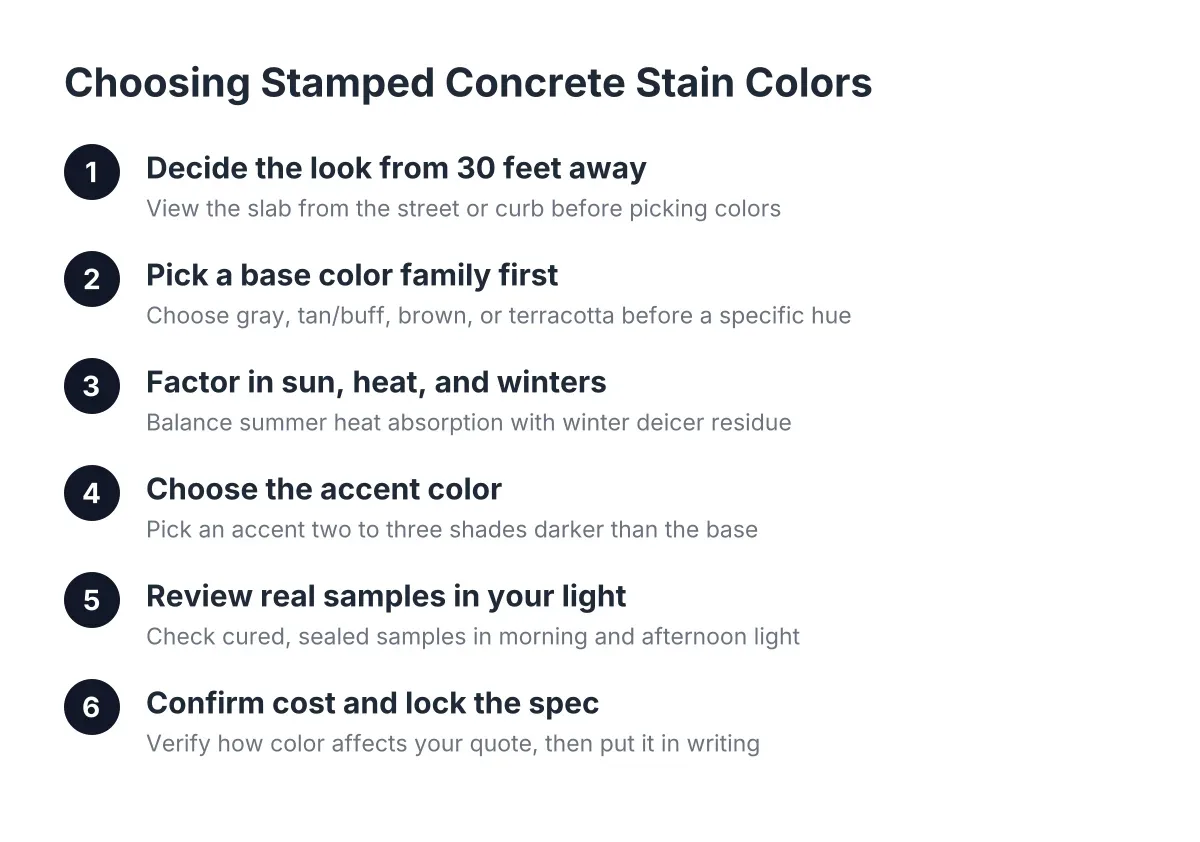
Color deserves one warning. Dark charcoal and deep brown look sharp in photos, but dark concrete absorbs heat and gets uncomfortably hot in direct summer sun. For patios and pool decks where bare feet are common, lighter tans, buffs, and grays stay cooler and hide dust better.
What Is the Downside of Stamped Concrete?
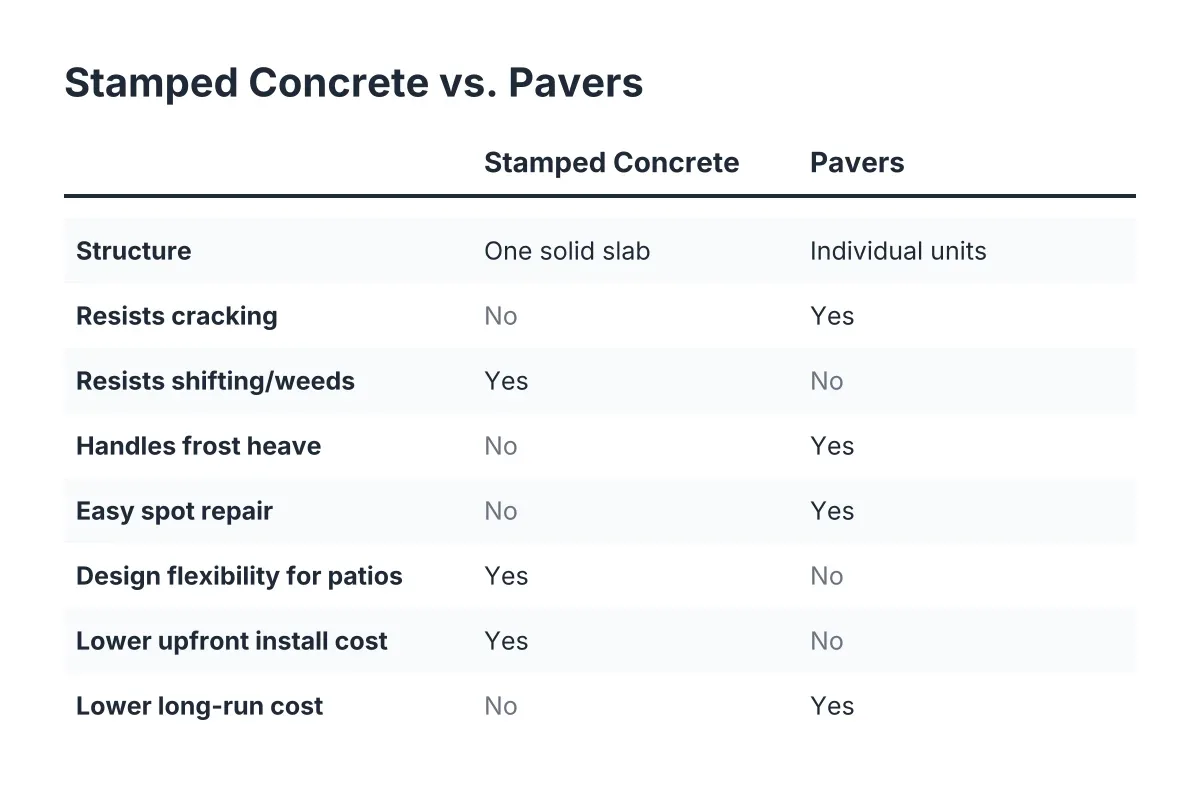
The main downsides of stamped concrete are that it needs resealing every few years, it can crack like any slab if the base or joints are done poorly, and repairs are harder to hide than on plain concrete. A patch in the middle of a pattern rarely matches the original stamp and color exactly. None of these are deal-breakers, but you should know them before you pour.
For someone replacing a cracked slab, that last point matters most. If your old concrete failed because of soil movement or drainage, fix that first. Expansive clay soils in parts of the Salt Lake Valley move with moisture, and no pattern survives a bad base. A solid gravel base, proper reinforcement, well-placed control joints, and slope away from the house do more for longevity than any design choice.
Resealing is the recurring cost. Sealer protects the color and blocks water from working into the surface during freeze-thaw cycles. Skip it for enough winters and the color fades, the surface pits, and recoloring becomes its own project. Plan on resealing as routine maintenance, the way you would plan on staining a deck.
Can You Do Stamped Concrete Yourself?
Stamping concrete yourself is possible in theory but risky in practice, because the work happens against a clock. Once the truck pours, you get one window while the concrete is workable to place color, align the mats, stamp with even pressure, and fix mistakes. Miss the window and the pattern sets wrong permanently.
Plain flatwork forgives small errors; stamping does not. A misaligned mat or a panel stamped too late shows forever, and grinding out a bad stamp job costs more than hiring it done right. In addition, decorative pours usually need a larger crew than a standard slab, since stamping has to keep pace with the set. This is one of the few home projects where the honest answer is to hire a concrete contractor, and where it pays to ask any bidder for photos of their past stamp work, not just their flatwork.
One more trade-off worth stating plainly: if your existing slab is structurally sound and the problem is only surface appearance, resurfacing or an overlay with stamped texture may cost less than full replacement. Whether your slab qualifies depends on crack depth, base condition, and settling, which is a judgment call best made by a professional looking at the actual concrete, not a photo.
The Short Version
Patterns are the fun part, but they are the last decision, not the first. Get the base, drainage, reinforcement, and joints right, then pick a pattern that fits the surface and the Utah winter you will shovel it through. For most Salt Lake City replacement projects in 2026, that points to ashlar slate or a texture skin for driveways, flagstone or wood plank for patios, and a broomed field with a stamped border when the budget is tight. Choose with snow, sun, and resale in mind, and the new slab will look intentional for years instead of dated in two.
If you need concrete driveways, Salt Lake Valley Concrete can help.
Prefer to talk it through? Call (385) 433-4634 — a quick call is usually the fastest way to get a straight answer for your situation.