Can You Seal Stamped Concrete Yourself? A DIY vs. Pro Guide for Salt Lake City
Can you seal stamped concrete yourself? Yes, in many cases you can, and DIY stamped concrete sealing is not optional if you want your patio or driveway to survive Salt Lake City winters. Unsealed stamped concrete fades, picks up stains, and lets water into the surface. When that water freezes along the Wasatch Front, the pattern and color take the damage first. The real question is whether your slab is a good candidate for a DIY job or one that needs a concrete contractor. This guide walks you through the decision, then the steps to do it right if you take it on yourself.
Here is the short version. If your stamped concrete is in good shape, clean, and was sealed within the last few years, resealing it is a reasonable weekend project. If it is cracked, flaking, turning white, or has never been sealed since the original pour, the job gets harder fast. Rental property owners with walkways and shared patios should also weigh liability; a slick, over-sealed walkway is a trip-and-fall problem waiting for a tenant.
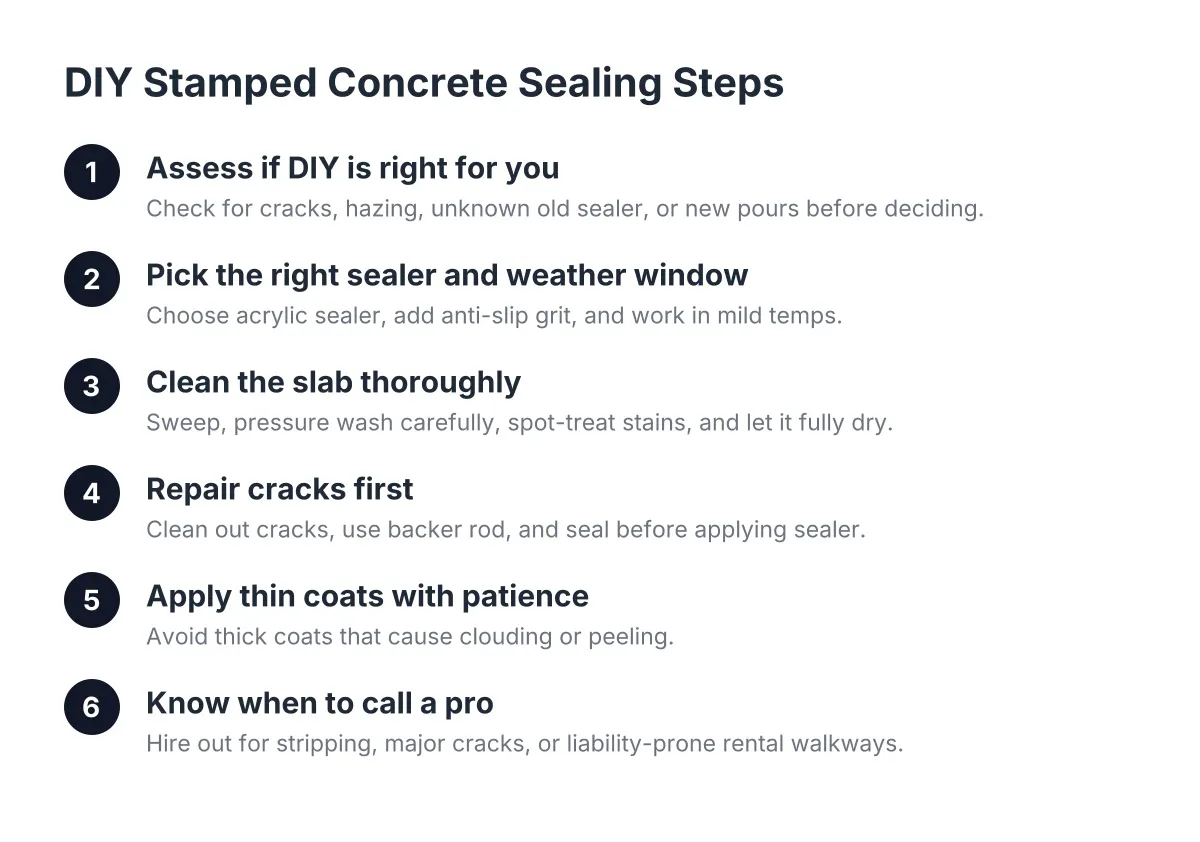
Step 1: Should You Handle DIY Stamped Concrete Sealing Yourself?
Can you seal stamped concrete without hiring a pro? You can if the surface is sound, the old sealer is compatible with the new one, and you can work in the right weather window. Skip the DIY route if the slab has active cracks, white hazing, bubbling sealer, or color loss, because those problems need diagnosis before more sealer goes on.
Run through this checklist before you buy anything:
- Surface condition. Hairline shrinkage cracks are normal. Wide cracks, spalling (flaking surface), or sunken sections mean repair comes first, not sealer. Sealer poured over an unprepared crack sinks in, fails to bond, and peels early.
- Existing sealer. Most stamped concrete wears a solvent-based or water-based acrylic. Putting the wrong type over the old coat causes clouding and peeling. If you do not know what is on the slab, test a small hidden spot or ask a concrete contractor.
- White or cloudy patches. That is usually moisture trapped under old sealer, or sealer applied too thick. More sealer makes it worse. This is a strip-and-reseal situation, which is a professional job in most cases.
- Age of the pour. New stamped concrete needs to cure before its first seal. Many installers seal shortly after stamping with a cure-and-seal product; if yours did not, the first coat is best left to whoever poured the slab.
For a landlord, add one more filter: foot traffic. Suppose you own a fourplex in Salt Lake City with a stamped concrete walkway to all four doors. You cannot block that path for two days of prep, sealing, and curing without planning around tenants. A pro crew that strips, repairs, and reseals in one scheduled visit may cost more than a few buckets of sealer, but it shortens the closure and reduces the odds of a slippery, over-coated surface that becomes your liability in January.
Step 2: Pick the Right Sealer and the Right Weather Window
Choose a sealer made for decorative concrete, almost always an acrylic, and match it to what is already on the slab. Solvent-based acrylics deepen color and give the wet look most owners expect from stamped concrete patio designs. Water-based acrylics have lower fumes and a more matte finish. Either way, buy a product labeled for exterior stamped or decorative concrete, not a bare-concrete driveway sealer.
Two add-ons matter in the Salt Lake Valley:
- Anti-slip additive. A fine grit mixed into the sealer. Stamped concrete gets slick when sealed, and slicker still under snowmelt. For any rental walkway or pool deck, treat this as required, not optional.
- Compatible tint, if recoloring. If the color has faded, tinted sealers and concrete stain colors can bring it back. Matching stained concrete floor colors or an original integral color is finicky work; test a hidden area first, and consider a pro if the slab is highly visible.
Weather decides your schedule. What temperature can you seal stamped concrete at? Most acrylic sealers want moderate temperatures, in rough terms a mild spring or fall day, with a dry slab and no rain in the near forecast. Hot direct sun is as bad as cold; sealer applied to a baking slab can bubble and flash-dry with a poor finish. Along the Wasatch Front, that usually means late spring or early fall, working in the morning before the surface heats up.
Step 3: Clean the Slab Like the Sealer Depends on It, Because It Does
Sealer bonds to concrete, not to dirt. Every early sealer failure traces back to prep more often than product. First, clear the slab completely. Next, sweep it, then wash it.
Can you pressure wash sealed stamped concrete? Yes, carefully. Use a wide fan tip, keep the wand moving, and hold it off the surface so you clean the texture without cutting into the old sealer or the stamped pattern. Spot-treat oil stains with a degreaser. If a parking-area slab has deep, stubborn staining that washing will not touch, a professional cleaning before sealing is money well spent.
Then let it dry. Fully. Moisture trapped under fresh sealer is the number one cause of that white, blushed look. Depending on weather, give the slab a day or more of dry time after washing. A slab that looks dry on top can still hold moisture in the stamped grooves and joints.
Step 4: Repair Cracks Before Any Sealer Goes Down
However tempting it is to let sealer "fill" a crack, it will not. Cracks need their own repair first, and the prep is the whole job. Clean all dirt and dust out of the crack with a wire or nylon brush, then vacuum or blow it out. Crack sealant needs a clean surface to bond; skip this and the repair fails within a season or two.
A few rules make the repair last:
- Fill deep cracks with backer rod first, so the sealant sits at the right depth instead of sinking.
- Keep the sealant slightly below the surrounding surface, not mounded flush to the top, in a layer about a quarter to a half inch thick.
- Self-leveling sealants flow toward any opening, so dam off the open ends of a crack with tape or extra backer rod, or the material runs out the end.
- A light dusting of dry sand over the fresh sealant blends it visually and keeps leaves and bugs off while it cures.
Sealing cracks matters beyond looks. Water that gets under a slab is what heaves and sinks concrete in freeze-thaw country, and the clay-and-gravel soils common around Salt Lake City hold that water against the slab. DIY stamped concrete sealing requires closing cracks first, as this is cheap insurance against the expensive problem later. That said, if cracks are wide, growing each winter, or one side of the slab has dropped, stop. That points to a base or drainage problem that resealing will not fix, and it is worth a repair-versus-replace opinion from a concrete contractor before you spend a weekend on sealer.
Step 5: Apply Thin Coats with Patience and Care
Thin is the entire secret. Two thin coats beat one thick coat every time. Thick sealer traps solvents and moisture, turns white, stays tacky, and peels. Use a 3/8-inch nap roller or a sprayer rated for your sealer, work in sections, and back-roll puddles out of the stamped grout lines where sealer loves to pool.
For example, here is an illustrative weekend for a homeowner with a 400-square-foot stamped patio. Saturday morning: clean and spot-degrease, then let it dry through Sunday. Monday morning, before the sun hits the slab: first thin coat with anti-slip grit mixed in, done in under two hours. Wait for it to dry to the touch per the label, then roll the second thin coat at a right angle to the first. When doing DIY stamped concrete sealing, light foot traffic that evening at the earliest is appropriate; keep cars, planters, and furniture off for several days.
Resist the urge to recoat every year. Most exterior stamped concrete in a climate like Salt Lake City's needs resealing on a multi-year cycle, sooner for driveways that see tires, salt, and snowplow scrape. Resealing a surface that does not need it just builds thickness, and thickness is what fails.
Step 6: Know When the Answer to "Can You Seal Stamped Concrete Yourself" Is No
Some jobs look like a resealing project and are actually something else. Hand the work to a professional when you see any of these:
- Peeling, bubbling, or widespread white haze. The old sealer has to be chemically stripped before anything new goes on. Stripping solvent-based sealer off textured stamped concrete is messy, slow work with real safety considerations.
- Faded or blotchy color you want restored. Recoloring with tinted sealer or stain takes an experienced hand to avoid a patchy result on a prominent patio or entry.
- Structural symptoms. Growing cracks, sunken sections, or pooling water mean the problem is under the slab, not on top of it.
- Rental and multifamily surfaces. Walkways, stairs, and shared patios carry trip-and-slip liability. A documented professional job, with slip-resistant additive and proper cure time, is easier to stand behind if an insurer or city inspector ever asks.
One related question comes up often: can you paint over sealed stamped concrete? You can, but paint on top of sealer is a short-term fix that usually peels, and it buries the decorative finish you paid for. Tinted sealer or stain is the better path for color problems.
The Honest Bottom Line for Salt Lake City Owners
As of 2026, a straightforward reseal of sound, clean stamped concrete is a legitimate DIY job for a careful homeowner: clean, dry, repair, two thin coats, done. The trade-off is time and risk. Get the prep, product match, or thickness wrong and you create a stripping job that costs more than hiring it out the first time would have.
For the landlord managing several slabs across a small portfolio, the math usually tips toward a professional on a set resealing cycle, with crack repair handled in the same visit. For the homeowner with one patio in decent shape, a dry week and some patience will get it done. Either way, sealing is the single cheapest thing you can do to keep a decorative slab from becoming next winter's crack repair project.
If you need stamped and decorative concrete, Salt Lake Valley Concrete can help.
Prefer to talk it through? Call (385) 433-4634 — a quick call is usually the fastest way to get a straight answer for your situation.