Concrete Patio vs. Pavers: Durability, Maintenance, and Total Cost Compared
If you are getting quotes for a backyard patio in Salt Lake City, the first fork in the road is a poured concrete slab or pavers. The honest answer on concrete patio pavers durability is that both can last decades here, and both can fail early, depending on the base work, drainage, and winters along the Wasatch Front. This article walks through eight comparison points so you can read your quotes with clear eyes, know what questions to ask each concrete contractor, and understand the total cost over the life of the patio, not just the install price.
One note before the list: the words "pavers" and "concrete" get tangled online. Most pavers are themselves made of concrete, cast in molds at a factory. So the real comparison is a poured concrete slab versus individual concrete paver units set on a compacted base. That distinction matters for every point below.
1. Durability Starts Below the Surface, Not With the Material
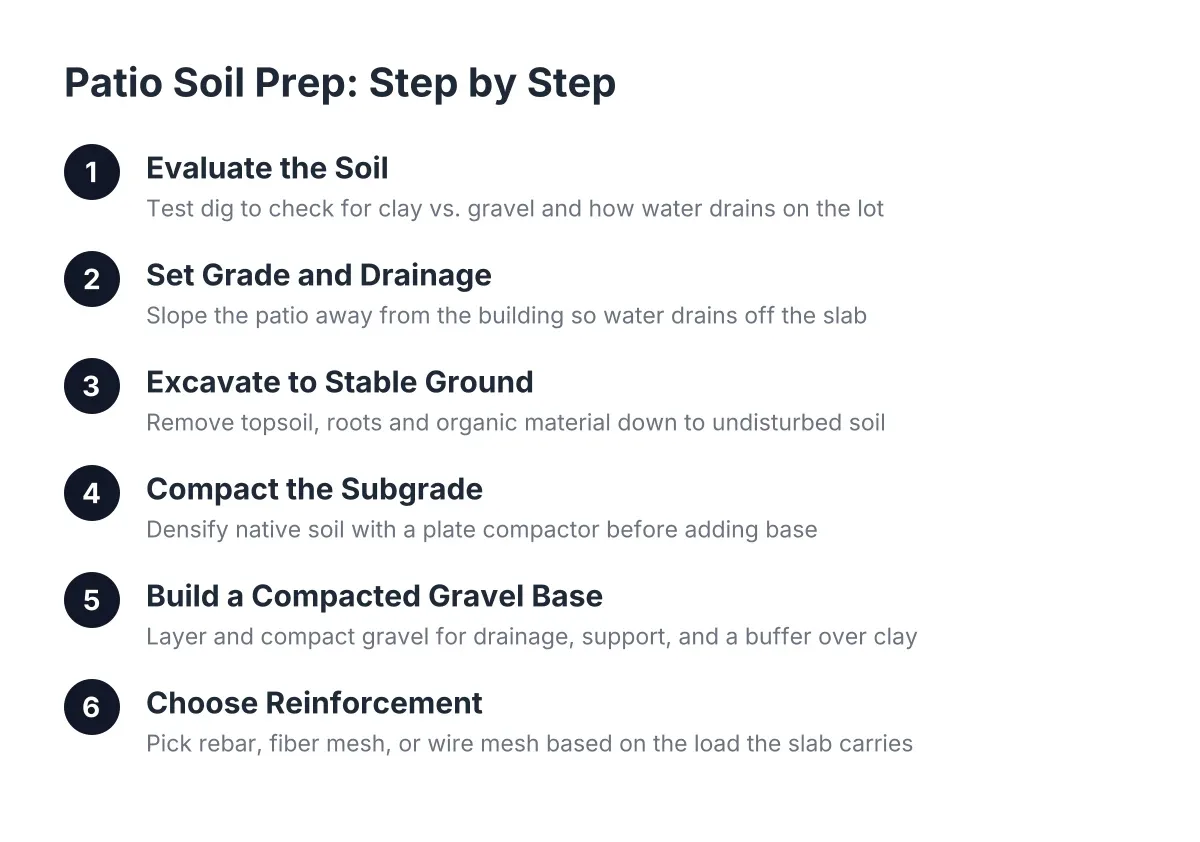
Both a poured slab and pavers sit on a compacted gravel base, and in the Salt Lake Valley that base does more for longevity than the surface material does. Our clay-and-gravel soils shift with moisture, and repeated freeze-thaw cycles each winter push and pull on anything sitting on top. A slab poured over a poorly compacted base will crack; pavers set on a thin or uneven base will heave and dip.
When you compare bids, ask each contractor how deep they excavate, what base material they use, and how they compact it. A low quote that skips base prep is not a deal. It is a patio with a short life, whichever material you pick.
2. Concrete Patio Pavers Durability in Freeze-Thaw Winters
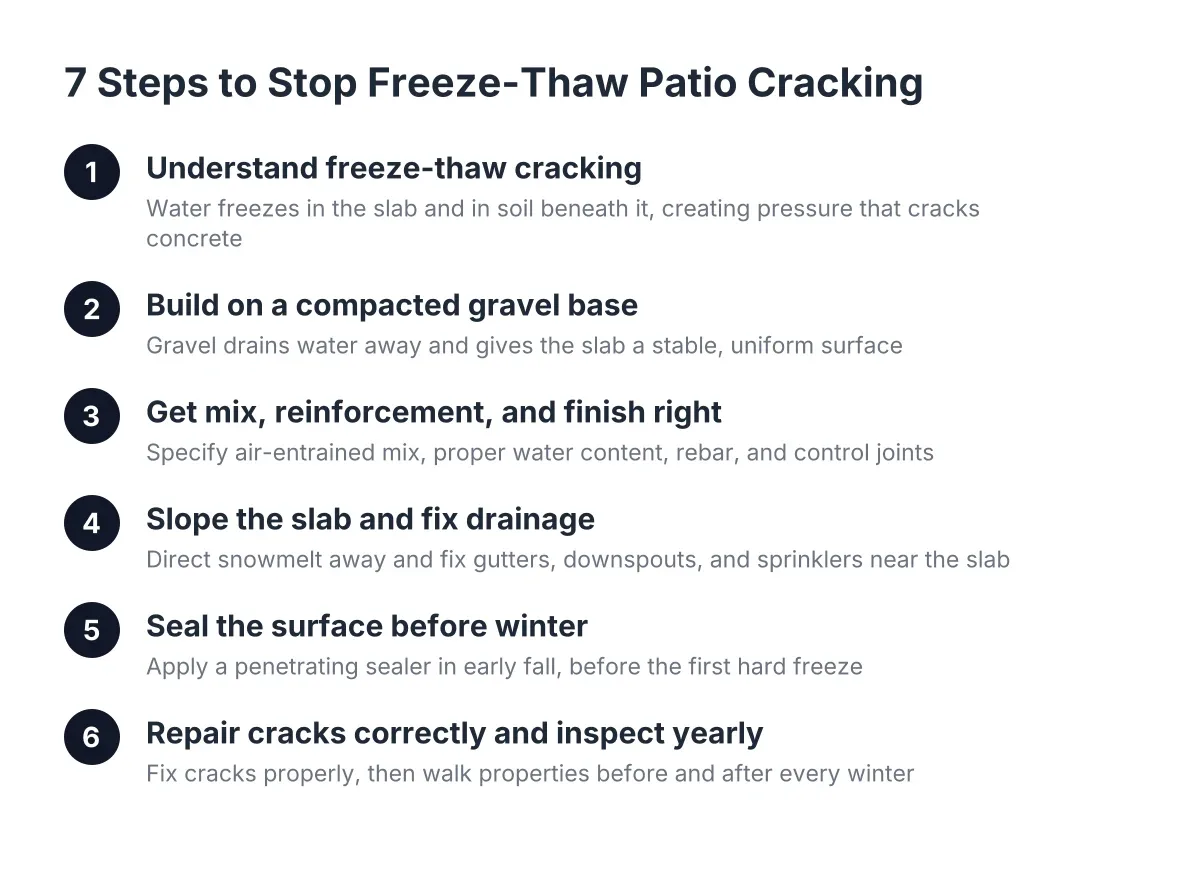
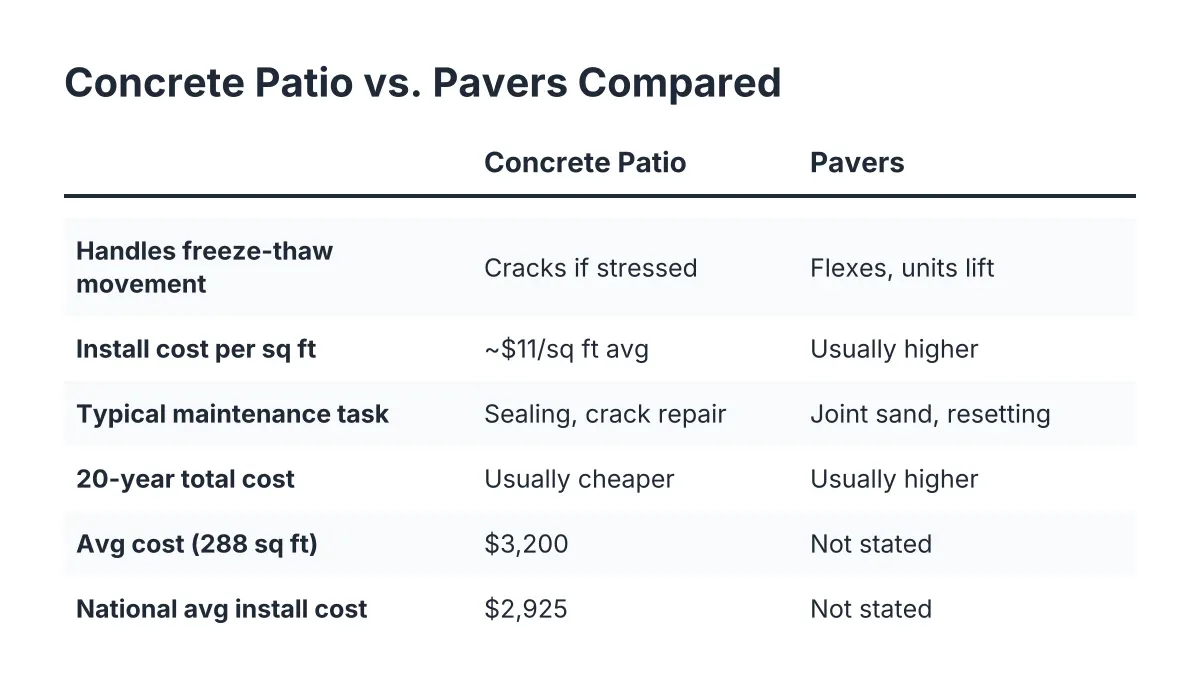
Pavers handle freeze-thaw stress differently than a slab. Because each unit is small and the joints between them flex, pavers can tolerate minor ground movement without cracking. When the ground heaves, individual pavers lift or settle instead of breaking. That flexibility is the strongest durability argument for pavers in a climate like Salt Lake City's.
The trade-off is that the same movement that spares the paver creates uneven surfaces. A paver that lifts a half inch at a walkway edge is a trip hazard, which matters a lot if you own rental property and carry liability exposure. Heaved pavers need to be pulled, re-leveled, and reset, which is a real maintenance task even though no material "broke."
3. How a Poured Slab Handles the Same Conditions
A properly built slab fights movement instead of flexing with it. That means a compacted gravel base, control joints cut at the right spacing, reinforcement, and a finish that sheds water instead of pooling it. Many contractors reinforce patio slabs with rebar or fiberglass rebar plus fiber mesh mixed into the concrete, since fiber mesh adds crack resistance at modest cost.
However, concrete is honest about one thing: slabs crack. Control joints exist to tell the crack where to go. A hairline crack inside a joint is normal aging; a wide, offset crack usually points to base or drainage problems. The durability of concrete patio pavers and slabs alike depends on proper base preparation and drainage, so for a small, lightly loaded patio, ask each bidder what reinforcement they include and why.
4. Maintenance: Joints and Resetting vs. Sealing and Crack Repair
This is where the two options diverge over 20 years. Here is the short version of what each one asks of you:
- Pavers: refill joint sand as it washes out, pull weeds that root in the joints, reset units that heave or settle, and replace any that chip or spall. Joint fill between pavers can also be grass, mulch, or pebbles on informal layouts, and each option has its own upkeep.
- Poured slab: reseal every few years depending on sun and snowmelt exposure, address hairline cracks early with crack repair, and keep deicing salts off the surface the first winter.
Neither option is maintenance-free. Pavers spread the work into many small tasks; a slab concentrates it into occasional sealing and the rare repair. For a landlord with several properties, that difference shapes how you schedule upkeep across a portfolio.
5. Install Cost: Pavers Usually Run Higher Per Square Foot
As of 2026, a poured concrete patio is typically the lower-cost install of the two. A professionally installed concrete patio costs an average of $2,925 nationwide, according to Lawn Love. According to Concrete Network, a typical patio around 288 square feet averages about $3,200, or roughly $11 per square foot. Pavers usually cost more because the units themselves cost more and setting them is labor-intensive, piece by piece.
Exact pricing in Salt Lake City depends on slab size, excavation depth, reinforcement, finish type, and how easily a crew can get equipment to your backyard. Those same factors drive paver bids too. One cost tip if you lean toward pavers: local paver suppliers often beat big box store per-unit pricing, so ask your contractor where the material is coming from.
6. Total Cost Over 20 Years Looks Different Than Install Cost
A comparison shopper should run both numbers. Suppose a homeowner in Sugar House gets two bids for a 300 square foot patio: a poured slab at the lower price and pavers at a noticeably higher one. Over 20 years, the slab owner pays for periodic sealing and maybe a crack repair or resurfacing job. The paver owner pays for joint sand, occasional resets after hard winters, and replacement units.
In that scenario, the slab usually stays cheaper over its life, but the gap narrows if the paver patio only ever needs minor resets. The budget-killer for either option is the same: a failed base that forces a full tear-out. Patching and resurfacing a damaged slab costs far less than demolishing and replacing it, so catching problems early protects the slab's cost advantage.
7. Design Range: Stamped and Decorative Concrete Closes the Looks Gap
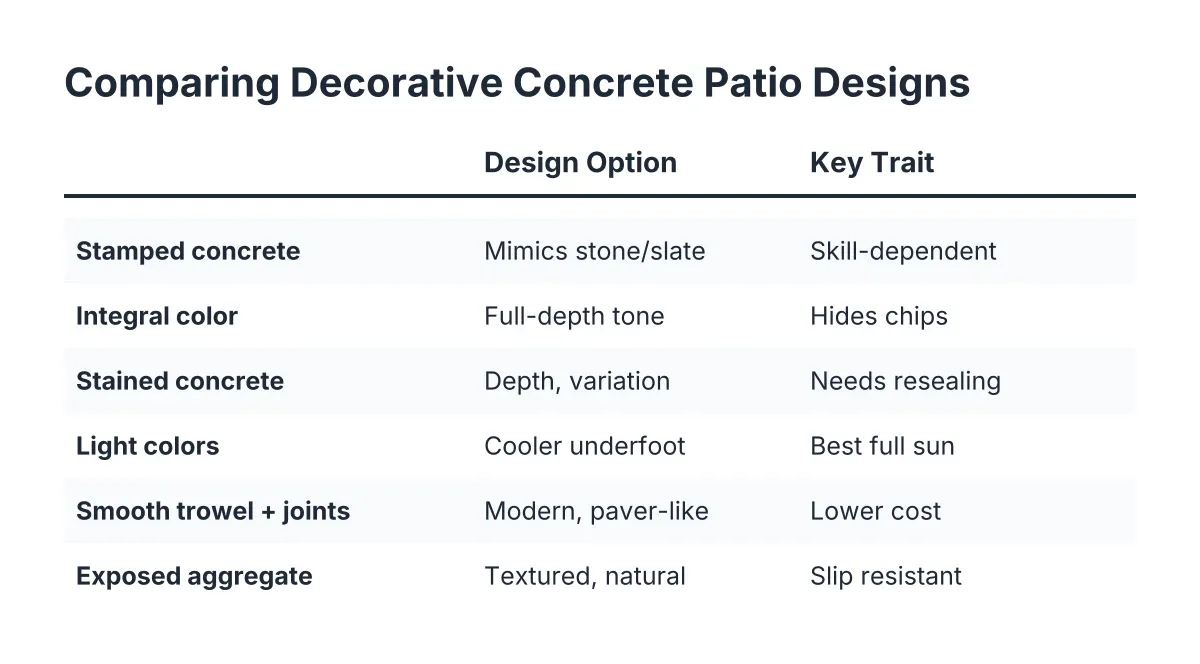
The classic argument for pavers is appearance, but that gap has closed. Stamped concrete can mimic flagstone, slate, brick, and cobble patterns in one continuous pour, and stained or colored concrete gives you a wide palette without joint lines. Decorative concrete patios can also combine borders, scoring patterns, and multiple colors in a single layout.
One practical design note for our sun: lighter colors reflect more heat and stay cooler underfoot than dark finishes. Homeowners often ask for charcoal or deep gray patios without realizing how hot they get in July. If bare feet will cross that patio from a back door or a pool, lean lighter.
8. Repair Costs When Something Does Go Wrong
Repairs favor pavers for small, isolated problems and favor slabs for surface-wide ones. A single cracked paver gets swapped out in minutes if matching units are still available; a localized slab crack needs crack repair that remains visible even when done well. On the other hand, a slab with widespread surface wear can be resurfaced as one job, while a paver patio with dozens of heaved units needs piece-by-piece resetting.
For rental property owners, the liability math matters more than the aesthetics. A heaved paver edge or an offset slab crack at a unit entry is a trip hazard either way. Whichever surface you own, walk it each spring after snowmelt and fix vertical offsets before a tenant or an inspector finds them.
9. The Durability Question Your Quotes Should Actually Answer
Concrete patio pavers durability and poured slab durability both come down to the same three line items in a bid: excavation depth, base compaction, and drainage plan. A bid that names all three tells you the contractor builds for Wasatch Front conditions. A bid that only lists square footage and a finish is telling you what the patio looks like on day one, not what it looks like in year ten.
Therefore, ask every bidder these questions and compare the answers side by side:
- How deep do you excavate, and what goes in the base?
- How do you compact the base, and in how many lifts?
- Where does water go when snow melts against the house?
- What reinforcement is included, and is it rebar, fiber mesh, or both?
- For a slab, where will control joints go? For pavers, what edge restraint holds the field in place?
So Which One Should You Pour?
For most Salt Lake City backyards, a poured slab wins on install cost, long-term cost, and low-touch maintenance, especially with stamped or colored finishes covering the design side. Pavers win when you expect ground movement you cannot fully control, want piece-by-piece repairability, or prefer their look enough to pay for it and keep up with the joints.
One honest limitation: if your yard has steep grade changes, visible drainage problems, or a history of heaving walks and steps, have a contractor or an engineer look at the site before you commit to either surface. No material choice outruns bad soil conditions or standing water. Get your bids, ask the base and drainage questions above, and the durability answer for your specific yard will be clear before you sign anything.
If you need concrete patios, Salt Lake Valley Concrete can help.
Prefer to talk it through? Call (385) 433-4634 — a quick call is usually the fastest way to get a straight answer for your situation.