Concrete Patios Terms Explained: A Plain-English Glossary
If you are getting quotes for a patio in Salt Lake City, the jargon piles up fast. This concrete patios glossary breaks down the terms you will see in estimates and hear on site visits, in plain English. Use it to read a quote line by line, ask sharper questions, and spot a thin bid before you sign anything. Every definition stands on its own, so you can skim straight to the word that confused you.
- Slab: the flat concrete itself
- Flatwork: the trade's word for horizontal concrete
- Subgrade: the soil under your patio
- Base (gravel base): the compacted layer between soil and concrete
- Forms: the temporary frame that shapes the pour
- Rebar: steel bars that reinforce the slab
- Wire mesh: a steel grid alternative to rebar
- PSI (concrete strength): how strong the mix is
- Control joints: planned grooves that manage cracking
- Expansion joint: a gap that lets concrete move
- Broom finish: the standard non-slip surface texture
- Stamped concrete: patterns pressed into fresh concrete
- Stained and colored concrete: ways to add color
- Sealer: the protective coat on finished concrete
- Curing: the slow hardening after the pour
- Freeze-thaw cycle: winter's main attack on concrete
- Spalling: surface flaking and chipping
- Resurfacing: a new top layer over old concrete
- Site access: how easily crews and trucks reach the work
What Is Under and Inside Your Patio — Concrete Patios Glossary Terms
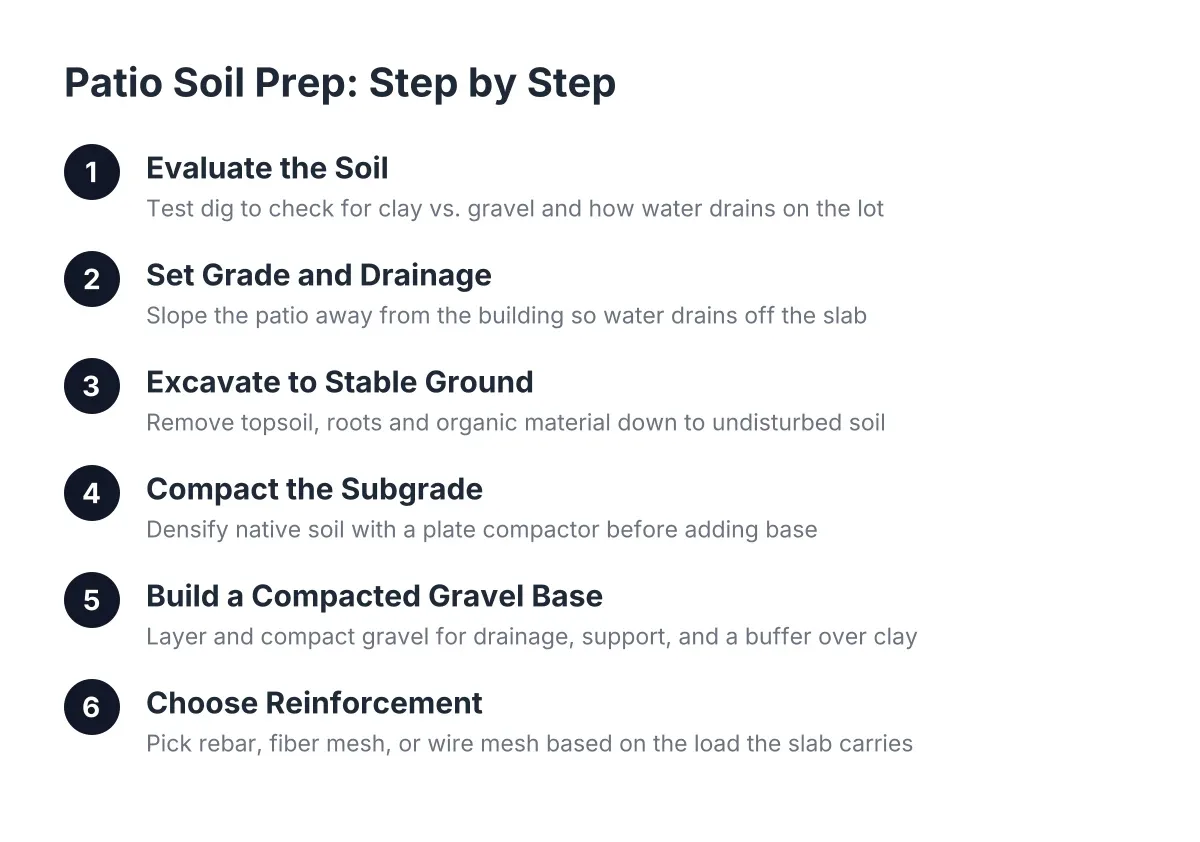
Most of what decides whether a patio lasts happens before and below the surface. These terms cover the parts you never see once the pour is done.
Slab
A slab is the flat, poured section of concrete that forms your patio, driveway, or garage floor. When a concrete contractor talks about "the slab," they mean the whole poured piece, including its thickness. Slab size and thickness are two of the biggest drivers of cost, because they set how much concrete and labor the job needs. If a quote does not state slab thickness, ask.
Flatwork
Flatwork means any concrete poured flat and level, such as patios, sidewalks, and driveways. It separates this kind of work from vertical concrete like walls and foundations. A contractor who does flatwork every week has the finishing skills a patio needs, because flat surfaces show every mistake. The term on a quote just tells you the category of work, not anything about quality.
Subgrade
The subgrade is the native soil your patio sits on after the topsoil and grass are removed. Along the Wasatch Front, soils mix clay and gravel, and clay swells when wet and shrinks when dry. A weak or poorly prepared subgrade is a common reason patios crack or settle. A contractor who talks about compacting or correcting the subgrade is addressing the problem most failures start with.
Base (Gravel Base)
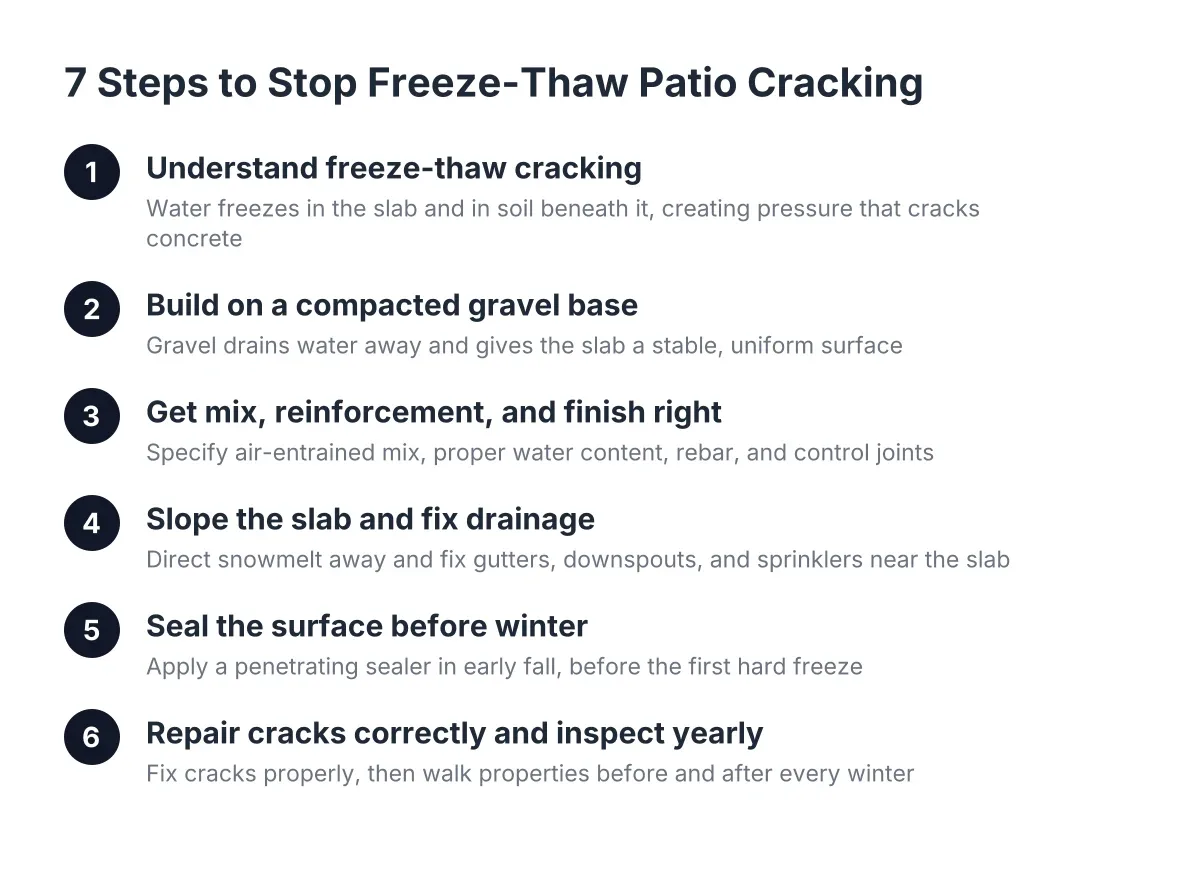
A gravel base is a layer of crushed rock compacted between the soil and the concrete. It spreads the slab's weight, drains water away, and gives the concrete a stable, even platform. In Salt Lake City, where snowmelt and spring moisture move through the ground, a good base matters as much as the concrete above it. If a bid skips the base to hit a lower price, the savings usually show up later as cracks.
Forms
Forms are the temporary wood or metal frames that hold wet concrete in the shape of your patio. Crews set them to the exact outline, height, and slope of the finished slab, then strip them off after the concrete sets. Curved or complex patio shapes take more form work, which adds labor. Setting forms with the right slope is also how a crew makes water drain away from your house.
Rebar
Rebar is steel reinforcing bar laid in a grid inside the slab before the pour. Concrete is strong when squeezed but weak when pulled, and rebar adds the pulling strength that holds a cracked slab together. In an area with freeze-thaw winters and shifting clay soils, reinforcement is cheap insurance. A quote should say whether the slab gets rebar, wire mesh, or nothing.
Wire Mesh
Wire mesh is a welded grid of steel wire placed in the slab as a lighter alternative to rebar. It helps hold small cracks tight so they do not spread or separate. Mesh costs less than rebar but offers less strength, so contractors often reserve it for lighter-duty slabs like patios and sidewalks. Either option beats an unreinforced slab; the right choice depends on the soil and the load.
PSI (Concrete Strength)
PSI stands for pounds per square inch, and it measures how much pressure the cured concrete can take. A higher PSI mix uses more cement, costs more, and handles weather and weight better. Your contractor picks the mix strength based on the job and the climate, and cold-winter areas typically call for stronger, air-entrained mixes. If a quote lists a PSI number, that tells you which mix you are paying for.
Joints, Finishes, and Looks — Concrete Patios Glossary for Surfaces
This part of the concrete patios glossary covers what you actually see: the texture, the color, and those grooves cut across the surface. Finish type is one of the main levers in patio pricing, which the patio cost breakdown explains line by line.
Control Joints
Control joints are shallow grooves cut or tooled into a slab to tell it where to crack. Concrete shrinks as it cures, and it will crack somewhere; joints steer that crack into a straight, hidden line instead of a random one across the middle of your patio. Crews either tool them in while the concrete is fresh or saw them in after. Proper joint spacing is a sign the crew plans for shrinkage instead of hoping.
Expansion Joint
An expansion joint is a full-depth gap, usually filled with a flexible material, that lets a slab move without pushing against whatever sits next to it. You will see them where a patio meets the house foundation, steps, or a sidewalk. Without them, seasonal movement can crack the slab or the structure beside it. In a freeze-thaw climate, this small detail protects both the patio and your foundation.
Broom Finish
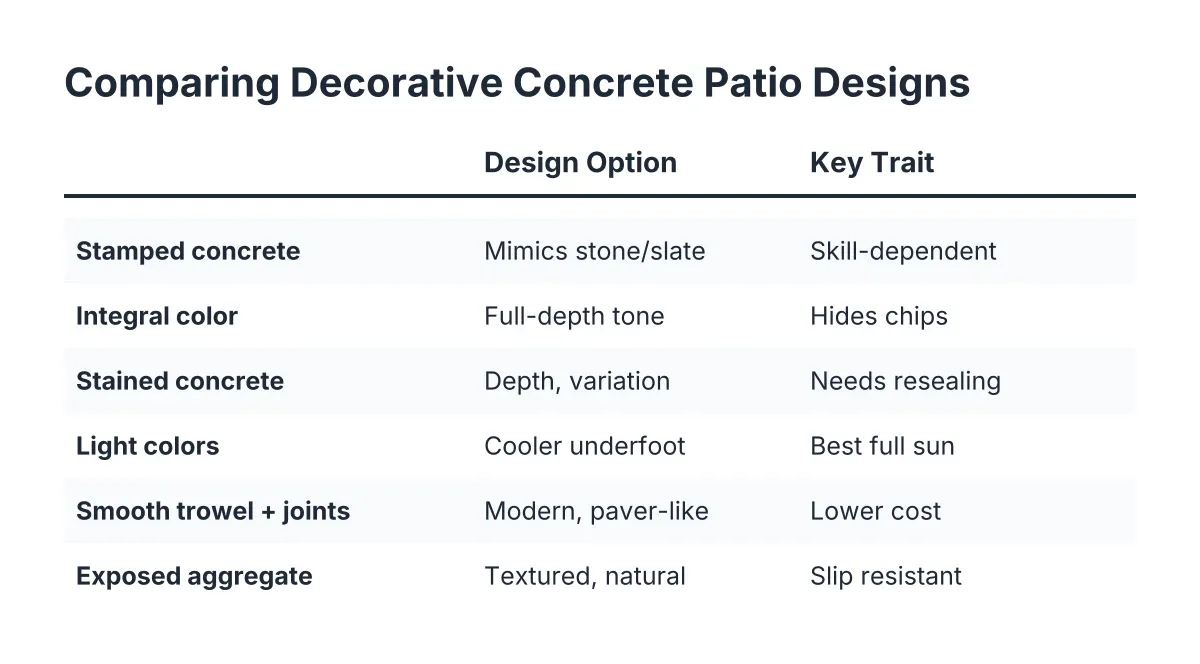
A broom finish is a surface texture made by dragging a broom across fresh concrete, leaving fine lines that add grip. It is the standard, lowest-cost finish for patios and sidewalks, and the texture keeps the surface from turning slick when wet or icy. For a Salt Lake City patio that sees snow, that traction is a practical feature, not just a look. Decorative finishes cost more because they take more steps and skill.
Stamped Concrete
Stamped concrete is fresh concrete pressed with patterned mats to mimic stone, brick, slate, or wood. It gives you a high-end look at a lower cost than laying real stone pavers piece by piece. Stamping adds labor, color, and usually sealer to the job, so expect it on the higher end of patio pricing. Done well, it is hard to tell from the real material at a glance.
Stained and Colored Concrete
Stained and colored concrete means concrete given color through pigment mixed into the batch, color applied to the surface, or a stain that reacts with the cured slab. Integral color runs through the whole slab, so chips are less visible; stains create rich, varied tones on the surface. Color is a common upgrade on concrete patios because it lifts the look without changing the structure. Any colored surface outdoors should be sealed to protect the finish.
Sealer
A sealer is a protective coating applied to cured concrete to block water, stains, and deicing salts. On an outdoor slab in a freeze-thaw climate, sealer slows the damage that water causes when it soaks in and then freezes. Decorative and colored patios rely on sealer to keep their color from fading. Ask your contractor whether sealing is included in the quote and how often it should be reapplied.
Weather, Damage, and Repair
Utah winters are hard on outdoor concrete. These terms explain how damage happens and what the repair options actually mean.
Curing
Curing is the chemical hardening process concrete goes through after the pour, and it takes weeks, not hours. Concrete does not dry; it reacts with water, and keeping it moist and at a stable temperature during the first days makes it stronger for life. Your contractor will tell you when you can walk on the new patio and when it can take furniture or heavy loads. Rushing a cure, or pouring in the wrong weather, weakens the slab permanently.
Freeze-Thaw Cycle
A freeze-thaw cycle happens when water inside concrete freezes, expands, and then melts, over and over through winter. Each cycle pushes on the concrete from the inside, and along the Wasatch Front those cycles repeat all season. This is why local contractors care about air-entrained mixes, drainage, slope, and sealer. A bid written for a mild climate will not hold up here.
Spalling
Spalling is the flaking, pitting, or chipping of a concrete surface, usually caused by freeze-thaw damage or deicing salts. It starts as a cosmetic problem but exposes the interior of the slab to more water, which speeds up the damage. Catching spalling early opens up cheaper fixes like resurfacing instead of replacement. If your current patio shows it, mention it when you call for an estimate.
Resurfacing
Resurfacing means applying a new, thin layer of concrete or overlay over an existing slab to renew the surface. It can fix spalling, discoloration, and minor cracking at a lower cost than tearing out and repouring. Resurfacing only works if the slab underneath is structurally sound; a sunken or badly cracked slab needs repair or replacement first. A good contractor will tell you honestly which side of that line your patio is on, as covered on our concrete patios service page.
Site Access
Site access describes how easily trucks, equipment, and crews can reach the spot where the patio goes. A backyard behind a narrow gate may force crews to wheelbarrow or pump concrete instead of pouring straight from the truck, which adds labor. Access is one of the cost factors contractors weigh alongside slab size, excavation, reinforcement, and finish. Walk your contractor through the path to the site during the estimate so the quote reflects reality.
Using These Terms
With this concrete patios glossary in hand, you can read an estimate line by line and know what each item buys you. Ask about the base, the reinforcement, the joints, and the finish, and you will hear fast whether a contractor plans for Salt Lake winters or just for the pour date. Clear questions get you clear quotes, and clear quotes get you a patio that lasts.
If you need concrete patios, Salt Lake Valley Concrete can help.
Prefer to talk it through? Call (385) 433-4634 — a quick call is usually the fastest way to get a straight answer for your situation.