Why Concrete Patios Crack in Freeze-Thaw Winters: 7 Steps to Prevent It
Salt Lake City winters are hard on slabs. If you want to understand why concrete patios crack in freeze-thaw weather, the short version is this: water gets into or under the slab, freezes, expands, and pushes the concrete until something gives. The good news is that most of that damage is preventable, especially when you understand freeze-thaw patio cracking and how to prevent it. This guide walks through the steps that keep a patio solid through Wasatch Front winters, whether you are planning a new pour with your builder or managing patios and walkways across several rental properties.
Follow these steps in order. The early ones matter most if you are pouring new concrete. The later ones apply to every slab you already own.
Step 1: Understanding Freeze-Thaw Patio Cracking in Concrete
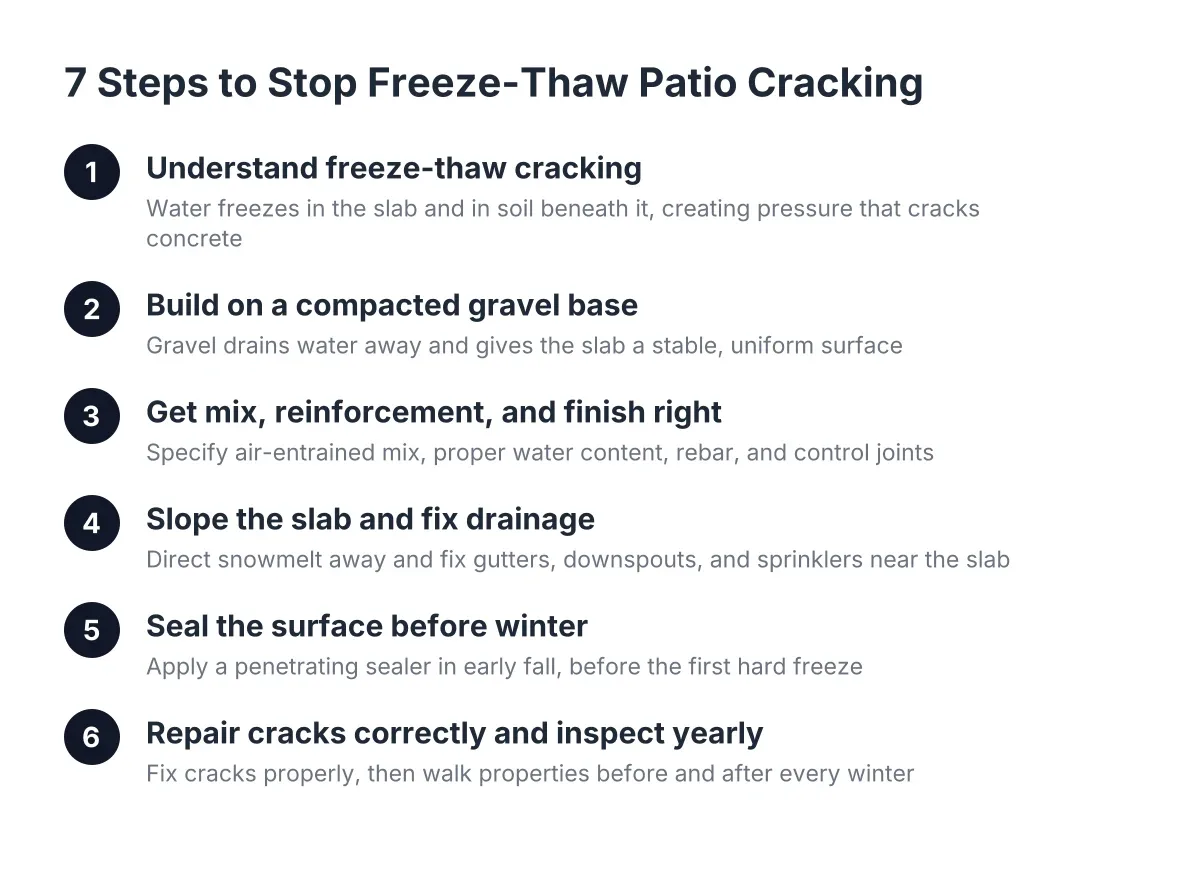
Concrete patios crack after a freeze because water expands when it turns to ice. That expansion happens in two places: inside the concrete itself, and in the soil underneath the slab. Both create pressure the concrete cannot absorb, and the result is cracking, scaling, or heaving.
Inside the slab, moisture soaks into the surface through pores and small cracks. When temperatures drop overnight, that trapped water freezes and pushes outward. Repeat that cycle dozens of times in a Salt Lake City winter and the surface starts to flake and spall. The process accelerates when the concrete lacks air entrainment to absorb that expansion.
Under the slab, the problem is worse. The Salt Lake Valley has clay-heavy soils in many neighborhoods, and clay holds water. When saturated soil freezes, it swells and lifts the slab unevenly. When it thaws, the slab settles back, often not in the same position. That movement is what turns a hairline crack into a tripping hazard by spring, and prevents the ground from remaining stable beneath the patio.
Knowing these two failure paths tells you what prevention looks like: keep water out of the concrete, and keep water away from the base beneath it.
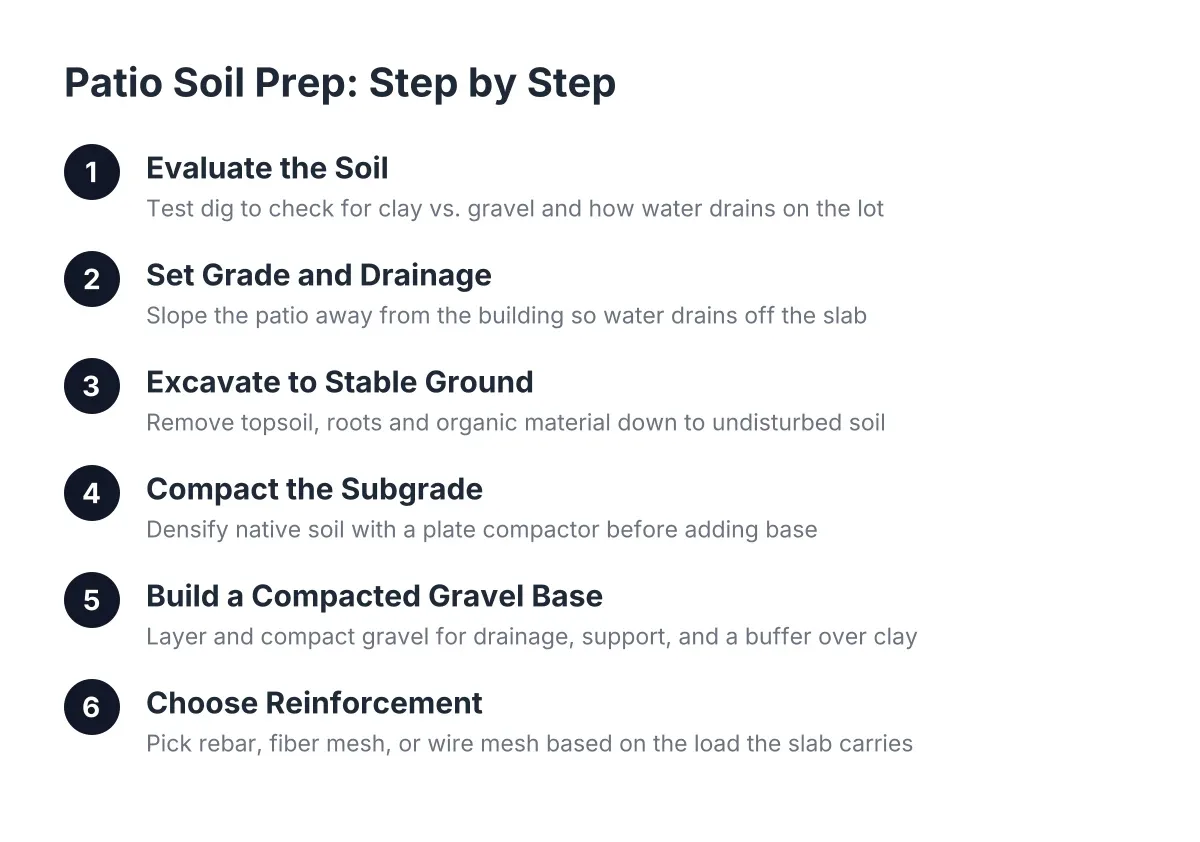
Step 2: Build on a Compacted Gravel Base
If you are pouring new, the base is the single most important decision you will make. A compacted gravel base under the slab does two jobs. It drains water away from the underside of the concrete, and it gives the slab a stable, uniform surface to rest on.
Concrete poured directly on native clay soil is a gamble along the Wasatch Front. The clay holds moisture, swells when it freezes, and shrinks when it dries. A gravel base breaks that cycle because water passes through it instead of sitting against the slab.
For a new construction or major addition project, confirm with your concrete contractor that the scope includes excavation, gravel, and mechanical compaction, not just the pour. If you are bundling a garage slab, driveway, and patio into one project, the base prep is where corners get cut when a bid comes in suspiciously low. Ask what base depth and compaction method the bid assumes, and get it in writing.
Step 3: Get the Mix, Reinforcement, and Finish Right for Cold Weather
A patio built for freeze-thaw country needs three things specified before the truck arrives:
- An air-entrained mix. Air entrainment adds microscopic air pockets throughout the concrete. When water inside the slab freezes and expands, those pockets give the ice somewhere to go instead of fracturing the concrete around it.
- A workable, not watery, mix. A good mix keeps the paste and aggregate blended without separating. Adding extra water on site makes the pour easier but weakens the finished slab, and a weaker surface scales faster under freeze-thaw stress.
- Reinforcement and control joints. Rebar or wire mesh holds cracks tight if they form. Control joints, cut or tooled at planned intervals, give the slab a place to crack on purpose, in a straight line, instead of wherever stress builds up.
These are specification questions, not upgrades. A concrete contractor who works in Salt Lake City should bring them up without being asked. If a bid does not mention air entrainment or joint spacing, ask why.
Step 4: Slope the Slab and Fix Drainage Around It
Water that cannot reach the slab cannot freeze under it. The patio itself should slope away from the house so snowmelt runs off instead of pooling. Just as important is everything around the slab.
Walk the property and check:
- Gutters that overflow and dump water along the patio edge
- Downspouts that discharge next to the slab instead of several feet away
- Low spots in the yard that pool snowmelt against the concrete
- Sprinkler heads that spray the slab edge all summer, keeping the soil saturated going into winter
Therefore, before you spend money on sealing or crack repair, fix the drainage first. A repaired crack or releveled section will not stay stable if a clogged gutter keeps feeding water to the soil beneath it. This is the step most property managers skip, and it is the reason the same walkway sections fail again two winters later.
Step 5: Seal the Surface Before Winter
A penetrating concrete sealer blocks the surface moisture that drives freeze-thaw scaling. For concrete patios in the Salt Lake Valley, sealing on a schedule is cheap insurance compared to resurfacing a spalled slab. New concrete should cure fully before its first sealing; after that, plan to reseal every few years depending on exposure and wear.
Timing and conditions matter more than product choice. Sealers applied to hot concrete in direct sun can bubble and cure poorly, which leaves a blotchy finish and weak protection. Early fall, with moderate temperatures and dry weather ahead, is the practical window in Salt Lake City. The goal is a sealed surface before the first hard freeze, not after.
In addition, skip the rock salt once winter arrives. Deicing salts increase the number of freeze-thaw cycles the surface endures and accelerate scaling, especially on concrete less than a year old. Sand gives traction without the chemical damage.
Step 6: Repair Cracks Correctly, Not Just Quickly
Every exterior slab eventually cracks somewhere. What determines whether concrete patios crack worse each freeze season is how those first cracks get handled. A crack left open is a funnel that delivers water straight to the base, where the next freeze widens it.
However, the repair method depends on the crack:
- Hairline cracks need to be opened up and widened before filling. It feels backward, making the crack look worse first, but sealant applied over an unprepared hairline crack cannot bond and fails early.
- Larger structural cracks get cut with a V-notch blade to remove loose concrete and create clean sides for the sealant to grip.
- Wide gaps should get a backer rod plus a flexible sealant, not solid concrete fill. Slabs move with the seasons; a rigid patch cracks again, while a flexible joint absorbs the movement.
Cure time matters too. Sealant that gets recoated or trafficked before it fully cures can pull away from the concrete within the first year, and you are back where you started.
One honest limitation: crack repair is a maintenance tool, not a rescue. When spider cracking spreads across the whole surface, or sections have heaved more than a releveling can correct, replacement is usually the better spend than chasing repairs. That call is worth a professional assessment, since base failure is not visible from the surface.
Step 7: Walk Your Properties Before and After Every Winter
For anyone managing concrete across multiple rental properties, prevention is a calendar item. Suppose a property manager oversees four fourplexes in Salt Lake City. An illustrative routine looks like this: each October, walk every patio, sidewalk, and parking area, photograph any crack or lifted edge, and get hazards sealed or ground down before snow hides them. Each April, repeat the walk and compare photos to see what moved over the winter.
That one-hour walk per property does three things. It catches small cracks while they are still a sealant job instead of a replacement. It documents conditions for ownership and liability purposes, which matters when a tenant reports a trip hazard. And it lets you batch repairs across properties into one scheduled visit instead of three emergency calls.
As a benchmark for budgeting, a professionally installed concrete patio costs an average of $2,925 nationwide, according to Lawn Love, and a typical 288-square-foot patio runs about $11 per square foot, according to Concrete Network. Salt Lake City pricing varies with excavation, access, and finish, but those figures show the stakes: a few seasons of skipped sealing and drainage fixes can cost you a full replacement.
The Bottom Line on Freeze-Thaw Patio Cracking and Damage
Freeze-thaw damage is water damage on a schedule. Build on compacted gravel, specify an air-entrained mix with proper joints, slope and drain water away, seal before winter, and repair cracks with the right prep and materials. Do those things and a patio in Salt Lake City should shrug off winters that destroy a slab poured on bare clay with no joints and no sealer. The work is not complicated; it just has to happen before the freeze, not after.
If you need concrete patios, Salt Lake Valley Concrete can help.
Prefer to talk it through? Call (385) 433-4634 — a quick call is usually the fastest way to get a straight answer for your situation.