Concrete Driveway Contractors Terms Explained: A Plain-English Glossary
If you are getting quotes for a new driveway in Salt Lake City, the paperwork can read like a foreign language. This concrete driveway contractors glossary turns the jargon into plain English so you can read an estimate line by line, ask sharper questions, and spot a thin bid before you sign it. Each entry starts with a one-sentence definition you can use on its own, then explains why the term matters to your project and your price. Thirty seconds per term, no sales pitch.
- Flatwork: any flat poured concrete, like driveways and patios
- Slab: the poured concrete pad itself
- Subgrade: the native soil under everything
- Sub-base: the gravel layer under the slab
- Excavation: digging out soil to make room
- Formwork: the temporary frame that shapes the pour
- Rebar: steel bars that reinforce the slab
- Wire mesh: a steel grid alternative to rebar
- Control joints: planned grooves that manage cracking
- Expansion joints: gaps that let the slab move
- Curing: the slow hardening after the pour
- Broom finish: a textured, slip-resistant surface
- Stamped concrete: patterned, decorative concrete
- Resurfacing: a new top layer over old concrete
- Freeze-thaw cycle: winter stress that cracks slabs
- Air entrainment: tiny bubbles that fight freeze damage
- Spalling: surface flaking and chipping
- Site access: how easily trucks reach your pour
The Parts of a Driveway Project
These are the words that describe what actually gets built, from the dirt up. Most confusion in a concrete driveway contractors glossary starts here, because half of what you pay for ends up buried under the finished slab.
Concrete Driveway Contractors' Vocabulary for Flatwork
Flatwork is any concrete poured on a flat, horizontal surface, including driveways, patios, sidewalks, and garage floors. If a concrete contractor says they do flatwork, driveways are squarely in their wheelhouse. It is a useful word to know because many estimates group all the flat pours on your property under this one line. Ask the contractor to break flatwork out by area so you can compare bids fairly.
Slab
A slab is the poured concrete pad itself, the part you see and drive on. Slab size, measured in square feet, is one of the biggest drivers of your total cost. Thickness matters too; driveways carry vehicle weight, so they are poured thicker than a typical sidewalk. When a quote lists slab dimensions and thickness, you can check that two bids are pricing the same amount of concrete.
Subgrade
The subgrade is the native soil sitting under your driveway after it has been dug out and compacted. A weak or shifting subgrade is the most common reason driveways crack early, no matter how good the concrete on top is. Along the Wasatch Front, clay and gravel soils expand and shrink with moisture, which makes subgrade prep more important here than in many places. There is more on how clay and gravel soil drives driveway costs in the Salt Lake Valley if you want the full picture.
Sub-base
A sub-base is the layer of compacted gravel placed between the soil and the slab. It spreads the load, helps water drain away, and gives the concrete a stable, even surface to sit on. A bid that skips or skimps on the sub-base will look cheaper on paper and cost you in cracks later. Ask every contractor what sub-base material and depth their quote includes.
Excavation
Excavation means digging out soil, old concrete, or old asphalt to make room for the new driveway and its gravel base. It is often a separate line on your estimate because the amount of digging varies by site. Removing a cracked old driveway, hauling away the debris, and cutting into a slope all add excavation work. If a quote does not mention excavation or demolition at all, ask what happens to the old surface.
Formwork
Formwork is the temporary wood or metal frame that holds wet concrete in shape until it hardens. The forms set your driveway's edges, curves, and slope, so sloppy formwork means a sloppy final shape. Good contractors spend real time setting and checking forms before a single truck arrives. It is a labor item you rarely see itemized, but it is built into the price of a careful pour.
Strength, Joints, and Cracking
Concrete cracks; that is not a sales line, it is physics. These terms describe how concrete driveway contractors manage and control where and how it cracks instead of pretending it will not.
Rebar
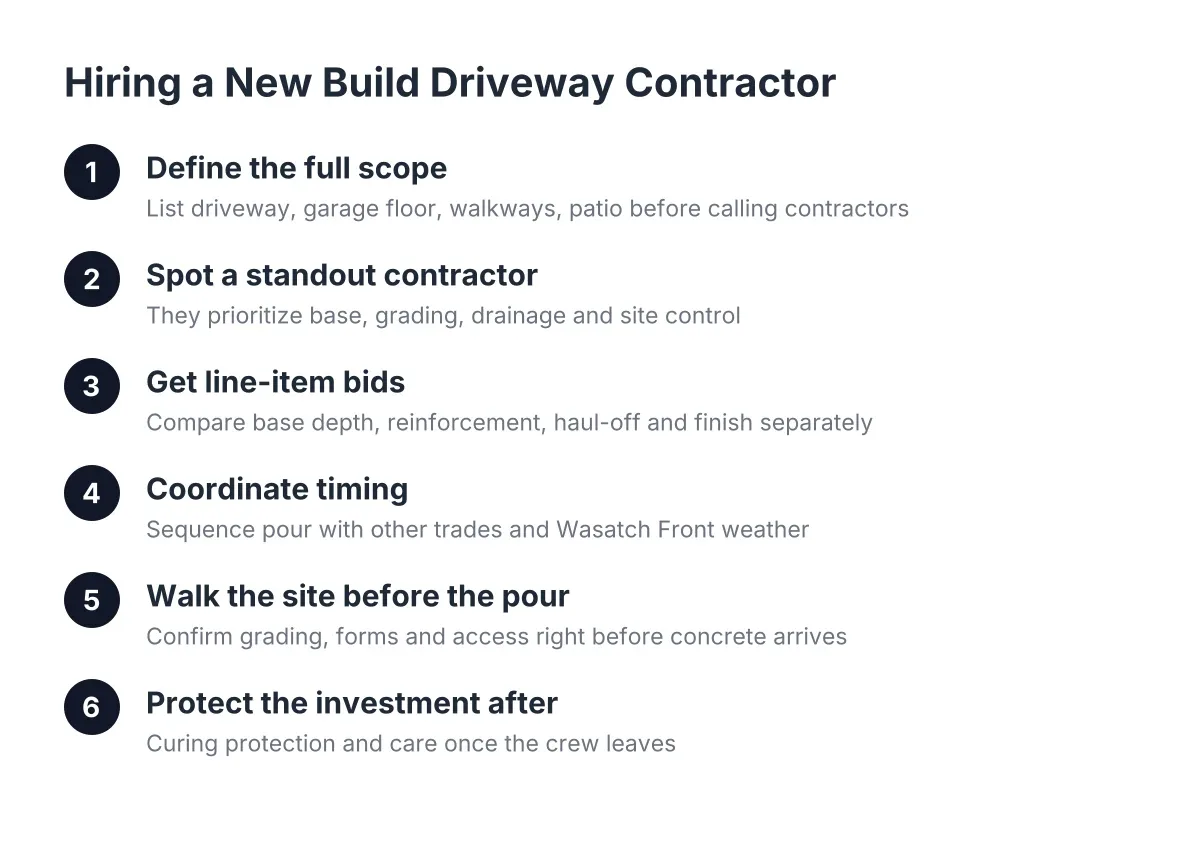
Rebar is steel reinforcing bar laid in a grid inside the slab before the concrete is poured. It does not stop cracks from forming, but it holds the slab together so cracks stay hairline instead of becoming shifting, uneven plates. Reinforcement is one of the main cost factors in a driveway quote, along with slab size and finish. If one bid includes rebar and another does not, you are not comparing the same driveway.
Wire mesh
Wire mesh is a welded grid of steel wire used as a lighter alternative to rebar inside a slab. It serves the same basic purpose, holding cracked sections together, but with thinner steel. Which option fits depends on slab thickness, soil, and expected loads. The key is that your quote names the reinforcement, not just the word "reinforced."
Control joints
Control joints are shallow grooves cut or tooled into a slab to tell it where to crack. Concrete shrinks as it cures, so cracks are coming either way; joints steer them into straight, planned lines instead of random spiderwebs. They are the grid lines you see on most sidewalks and driveways. If a finished driveway has no joints, the cracks will choose their own path.
Expansion joints
An expansion joint is a flexible gap, often filled with fiber or foam material, that lets a slab move without pushing against whatever sits next to it. You will see them where a driveway meets a garage floor, sidewalk, or foundation. They matter in Salt Lake City because slabs expand and contract through hot summers and hard winters. Without them, two slabs can grind against each other and break.
Curing
Curing is the slow chemical hardening of concrete after the pour, during which it gains most of its strength. It is not the same as drying; concrete needs to hold moisture for days to cure well. A contractor who talks about curing time, and asks you to keep cars off the new slab for a stated period, is protecting your investment. Rushing this step is how new driveways end up weak and dusty on top.
Finishes and Fixes
Finish choices change the look and the price. These terms cover the surface you will see every day, plus the repair words you will meet if an older driveway is failing.
Broom finish
A broom finish is the standard driveway surface made by dragging a broom across fresh concrete to leave fine texture lines. The texture gives tires and shoes grip, which matters on snowy Salt Lake mornings. It is usually the least expensive finish, which is why most quotes assume it unless you ask for something else. Any upgrade from broom finish shows up in the price.
Glossary Terms for Stamped Concrete and Driveway Contractors
Stamped concrete is fresh concrete pressed with patterned mats to mimic stone, brick, or tile. Combined with stained or colored concrete, it gives a decorative look without laying individual pavers. Stamping takes more labor, materials, and timing skill, so expect it to cost more than a plain broom finish. The concrete driveway cost guide walks through how finish type stacks up against the other price drivers.
Resurfacing
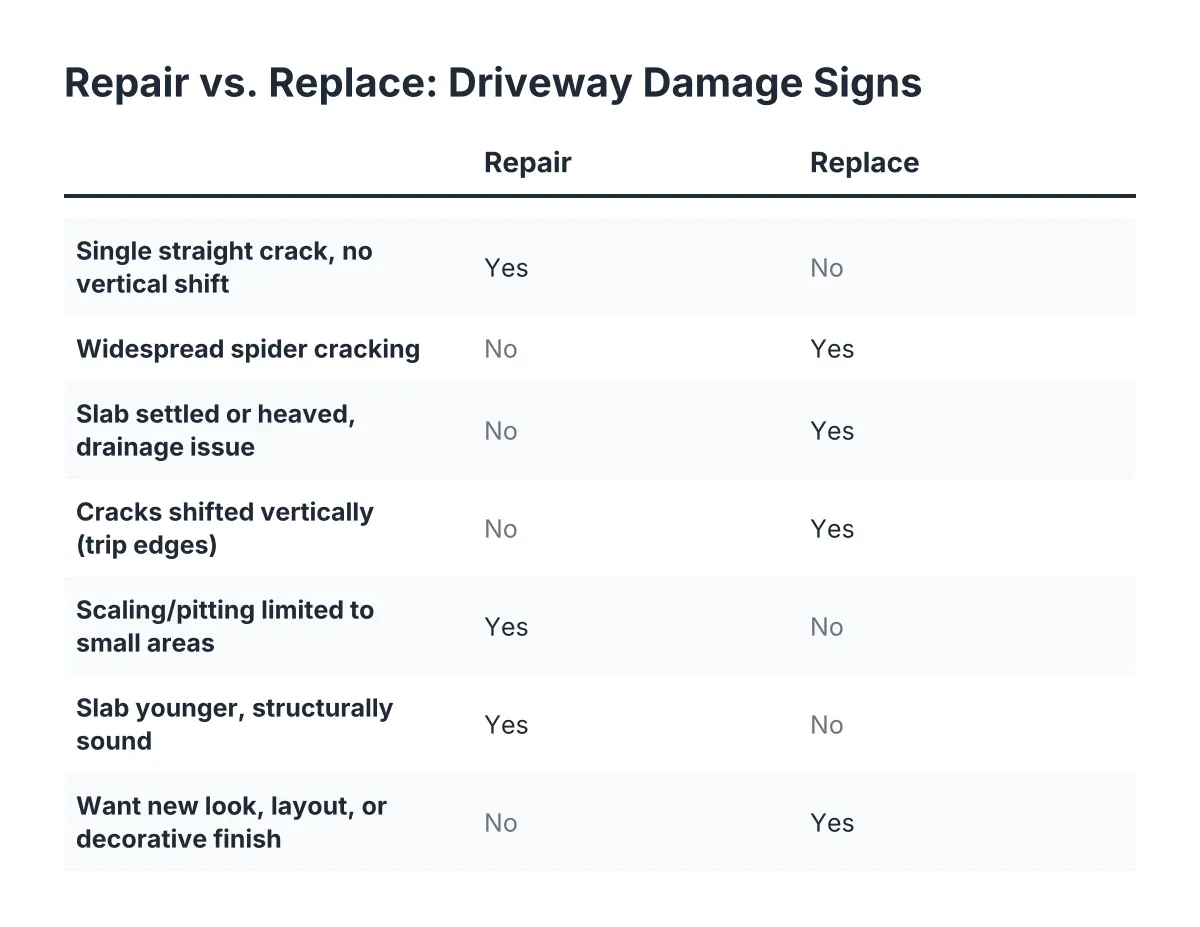
Resurfacing means applying a new, thin layer of concrete or overlay material over an existing slab to renew its surface. It can make a worn but structurally sound driveway look close to new for less than a full replacement. The catch: resurfacing only works if the slab underneath is stable. A contractor who inspects the old slab before recommending resurfacing or replacement is giving you a straighter answer than one who quotes sight unseen.
Freeze-thaw cycle
A freeze-thaw cycle is one round of water freezing inside concrete's tiny pores, expanding, then melting again. Each cycle pries at the surface, and Wasatch Front winters deliver them over and over. Freeze-thaw stress is why mix design, sealing, and drainage come up so often in local quotes. A contractor who never mentions winter conditions may not be building for this climate.
Air entrainment
Air entrainment means mixing microscopic air bubbles into the concrete so freezing water has room to expand without breaking the surface. It is the standard defense against freeze-thaw damage in cold climates. You will not see the bubbles, but you may see "air-entrained mix" on a quote or delivery ticket. In Salt Lake City, it is worth asking whether the mix is air entrained; the right answer is yes for outdoor flatwork.
Spalling
Spalling is the flaking, chipping, or pitting of a concrete surface, usually from freeze-thaw damage or deicing salts. Light spalling is cosmetic and often a candidate for resurfacing; deep spalling can signal a slab that needs crack repair or replacement. If your current driveway is shedding its top layer, spalling is the word to use when you call. Naming the problem gets you a more specific answer.
Site access
Site access describes how easily concrete trucks and equipment can reach the pour. A driveway the truck can back right up to costs less to pour than one behind a fence, up a slope, or down a tight lane, because hard access means wheelbarrows, pumps, or extra labor. It is one of the quiet price drivers, alongside slab size, excavation, reinforcement, and finish. Mention access issues up front so your driveway estimate reflects reality, not a surprise change order.
Using These Terms
What this concrete driveway contractors glossary gives you is a working vocabulary: you can now read a quote line by line and know what subgrade prep, reinforcement, and finish each bid actually includes. When two estimates differ, you can ask why, in the contractor's own language. That one skill saves more money than any coupon.
If you need concrete driveways, Salt Lake Valley Concrete can help.
Prefer to talk it through? Call (385) 433-4634 — a quick call is usually the fastest way to get a straight answer for your situation.