Why Clay and Gravel Soil Drives Driveway Costs Higher in Salt Lake Valley
If two driveway bids in Salt Lake City come back far apart, the ground underneath is often the reason. Clay gravel soil drives much of the cost of a concrete driveway along the Wasatch Front, and most homeowners never see that part of the bid explained. Understanding clay soil driveway costs is essential because clay holds water, swells when wet, and shrinks when dry. Gravel pockets drain fast in one spot and not at all three feet away. Pour a slab on that mix without the right prep and the ground does the cracking for you.
This guide walks through how to evaluate your own site, read a bid, and judge the concrete driveway construction details that matter before anyone pours a yard of concrete. It is written for homeowners upgrading a driveway for curb appeal, but the same steps apply if you manage an HOA or commercial property with shared drives and flatwork flagged in a reserve study.
Step 1: Learn What Your Soil Is Doing Under the Driveway
Start with the problem, because the problem is not the concrete. In the Salt Lake Valley, lots often sit on a shifting blend of clay and gravel left behind by old lakebed and mountain runoff. Clay expands when it soaks up spring snowmelt, then contracts through a dry summer. Gravel seams drain unevenly, so one corner of your driveway can sit on firm ground while another corner sits on a sponge.
Add winter and the problem compounds. Freeze-thaw cycles push moisture in the soil up and down, and a slab poured on unprepared clay rides that movement like a raft. The result shows up as spider cracking spread across the surface, settled corners near the garage, and slabs that tilt toward the house instead of away from it.
Therefore, the first thing to understand is this: a cracked driveway in Salt Lake City is usually a soil story, not a concrete story. The visible damage is the last chapter.
Step 2: Walk Your Existing Driveway and Read the Damage
Before you call anyone, spend ten minutes reading what your current driveway is telling you. The pattern of damage points to the cause, and knowing the cause helps you judge whether a contractor's plan addresses it.
Look for these signs:
- Spider cracking across large areas. A web of fine cracks spread over the whole surface points to base failure underneath, and it is the common reason a contractor recommends full replacement instead of patching.
- One corner or edge that dropped. Localized settling usually means a soft clay pocket or poor compaction in that spot.
- Cracks that heave in winter and settle in summer. That seasonal movement is the clay and freeze-thaw cycle working together.
- Water pooling on the slab or along its edges. Standing water feeds the clay below and accelerates every other problem on this list.
- Stains that pressure washing cannot remove. Persistent, severe staining is a surface issue, not a structural one, but if washing cannot fix it, resurfacing or decorative overlay may be worth pricing alongside repair.
For example, say a homeowner in Sugar House has a 25-year-old gray driveway with spider cracking across the lower half and a corner that sinks a little more each spring. In that scenario, a new stamped or colored surface poured over the same failed base would crack along the same lines within a few winters. The base has to be rebuilt first.
Step 3: How Clay and Soil Impact Driveway Cost
Clay and gravel soil drives driveway costs up in three specific ways: deeper excavation, more base material, and heavier reinforcement. A bid built for Salt Lake Valley ground includes all three, and each one adds labor, trucking, and material that a bid written for stable soil would skip.
Here is where the money goes:
- Excavation depth. Expansive clay near the surface often has to come out and leave the site, which means machine time and haul-off fees.
- Compacted gravel base. In freeze-thaw climates, a compacted gravel base under the slab is essential to keep the concrete from riding soil movement. Angular drainage rock works better than smooth, pebble-style gravel because it locks together and embeds into the concrete above it.
- Reinforcement. Rebar or mesh does not stop the ground from moving, but it holds the slab together so small cracks stay small.
- Drainage planning. Grading the slab to shed snowmelt away from the house, and giving water a channel to escape at the edges, keeps the clay below from soaking and swelling.
In addition, the concrete mix itself matters. A mix with smaller aggregate, such as pea gravel, consolidates well and finishes to a harder, smoother surface, which matters more on a stamped or decorative driveway where the finish is the whole point.
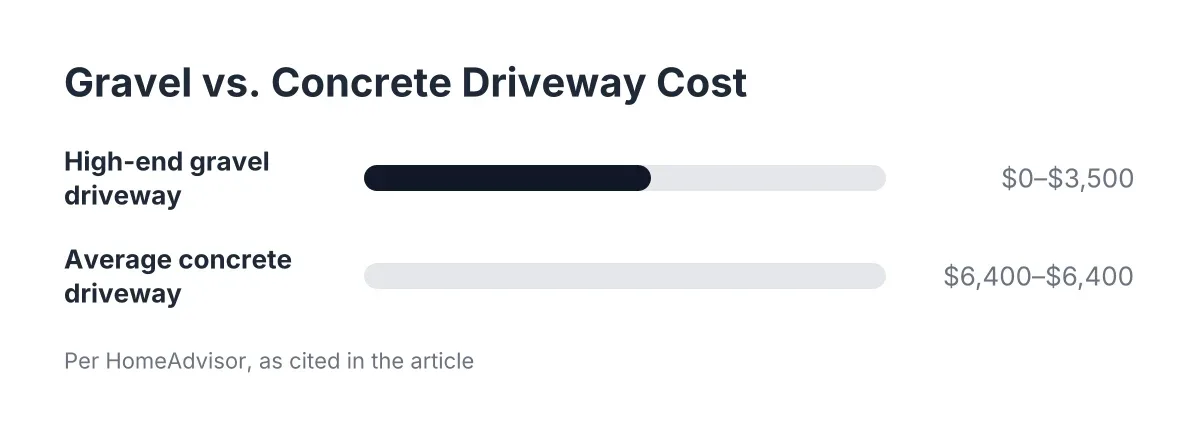
For context on the gap between surface options, a high-end gravel driveway tops out around $3,500 while a concrete driveway averages closer to $6,400, according to HomeAdvisor. The concrete costs more upfront, but on clay-heavy ground a loose gravel drive washes, ruts, and migrates every spring. A properly based concrete slab does not.
Step 4: Compare Bids on Site Prep, Not Price Per Foot
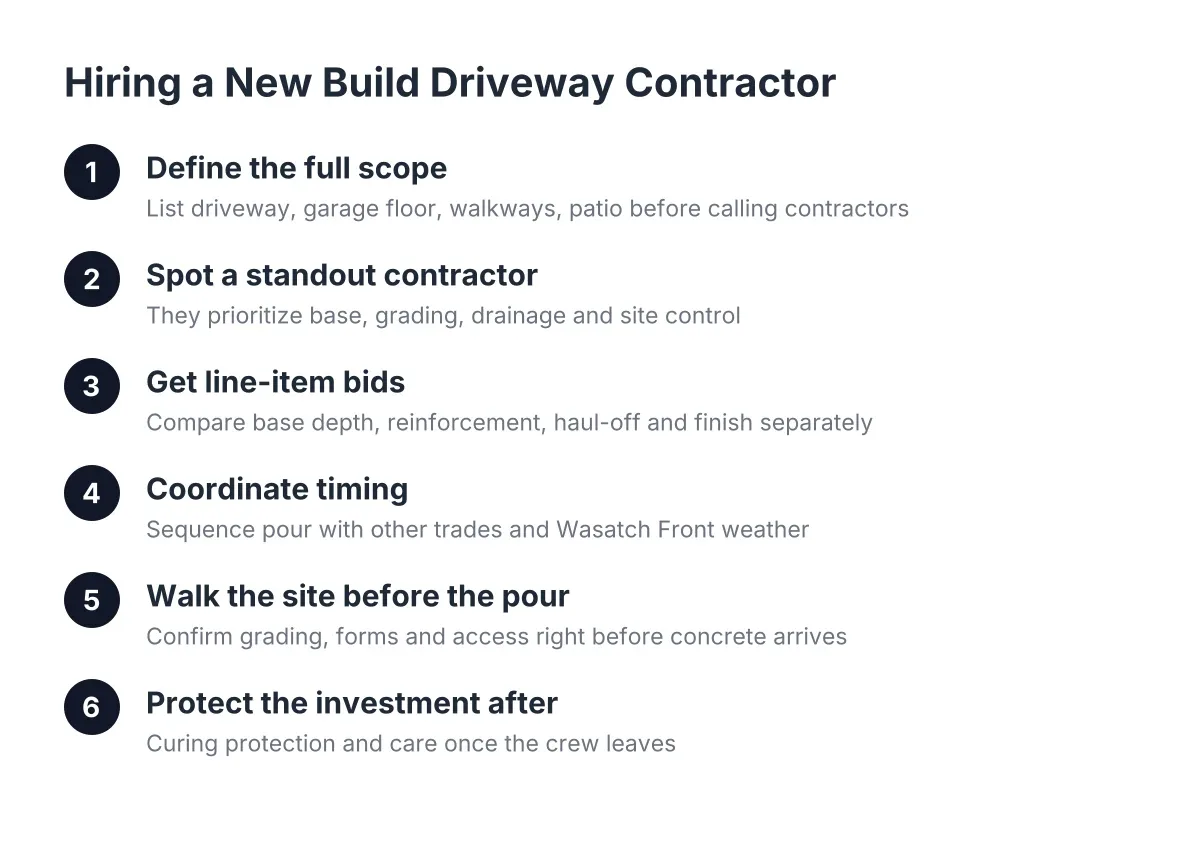
Next, when the bids arrive, resist the urge to sort them by bottom line. Two residential concrete driveway contractors can quote the same square footage and arrive at numbers thousands of dollars apart, and the cheaper bid is often cheaper because it skips the ground work that Salt Lake Valley soil demands.
Ask every bidder the same questions and compare the answers side by side:
- How deep will you excavate, and what happens to the clay you remove?
- What base material goes back in, how thick, and how will it be compacted?
- What reinforcement goes in the slab, and where?
- How will the finished driveway shed water, especially during spring snowmelt?
- How thick is the slab at the driving surface, and what is the concrete mix?
A contractor who answers in specifics is bidding your site. A contractor who answers in generalities is bidding an average site, and your lot on Wasatch Front clay is not average. The best concrete driveway contractors in this valley lead with soil and drainage before they ever talk about finish options, because they have torn out enough failed slabs to know which chapter of the story comes first.
However, note one honest trade-off: thorough site prep is the part of the job you never see again. You are paying real money for gravel and compaction that get buried on day two. The payoff arrives ten winters later, when the slab still sits flat.
Step 5: Plan Decorative Finishes Around the Base, Not Instead of It
If you are the homeowner replacing the plain gray slab every neighbor has, this step matters most. Stamped concrete, stained and colored concrete, and exposed aggregate all perform well through Utah winters when the base below them is right. When the base is wrong, a fake-looking stamp pattern is the least of your problems; the pattern cracks apart along the soil's fault lines.
Therefore, treat the decorative layer as the reward for doing Steps 1 through 4 correctly. A few practical points for Salt Lake City conditions in 2026:
- Integral color, mixed through the whole slab, hides wear better than surface-only color on a driveway that sees tires and road salt.
- A quality sealer, reapplied on schedule, is what protects stamped and stained finishes from salt and freeze-thaw, not the color itself.
- Exposed aggregate hides the fine dusting and salt scarring that show on smooth gray finishes, which makes it a practical pick for driveways.
A stamped driveway costs more than plain gray because stamping adds labor, color, release agents, and sealing on top of the identical base work. The base cost does not change with the finish. That is worth remembering when a decorative bid looks high next to a plain flatwork bid; compare the prep line items, not just the totals.
Step 6: Sequence the Project So You Can Still Use Your Property
Finally, ask how the job will be staged, because clay gravel soil drives the schedule too. Wet clay cannot be compacted properly, so experienced crews work around spring moisture and plan excavation when the ground cooperates.
Sequencing also protects access. On a combined driveway and patio replacement, crews often finish excavation and base work across the whole site first, then remove the final section of the old concrete apron last, right before the pour. Leaving that apron in place keeps a usable access point for equipment and vehicles through the job, and it protects any adjacent asphalt from repeated machine traffic. For an HOA manager coordinating a shared drive serving dozens of units, that staging question belongs in the bid review, not on demolition day.
One caution applies to every step above. If your site shows deep settling, movement near a foundation, or drainage you cannot trace, bring in a professional evaluation before committing to a design. Some lots along the Wasatch benches need engineering input that no general guide can replace.
The Short Version
The ground under Salt Lake Valley driveways moves, and the cost of building a driveway that outlasts that movement lives in the parts you never see: excavation, compacted base, reinforcement, and drainage. Read your existing slab's damage, make every bidder explain their site prep in specifics, and judge quotes by what goes under the concrete. Get that right, and the stamped or colored finish on top stays looking custom for decades instead of cracking back to the same old gray problem.
If you need concrete driveways, Salt Lake Valley Concrete can help.
Prefer to talk it through? Call (385) 433-4634 — a quick call is usually the fastest way to get a straight answer for your situation.