How to Prevent Freeze-Thaw Cracks and Salt Damage in Salt Lake Driveways
Freeze-thaw cycles and salt damage are the two biggest reasons concrete driveways fail early along the Wasatch Front. Water soaks into the slab, freezes overnight, expands, and pries the concrete apart. Then de-icing salt speeds up the surface damage and pushes more moisture into the slab. The good news: most of this damage is preventable through proper freeze-thaw driveway prevention. This guide walks you through the steps, in order, from how your driveway gets poured to how you treat it every winter.
This matters whether you own one home or a handful of rentals. For a homeowner upgrading to a stamped or colored driveway, freeze-thaw damage ruins the finish you paid extra for. For a landlord, a heaved or spalled driveway becomes a trip hazard and a liability question. The steps are the same either way.
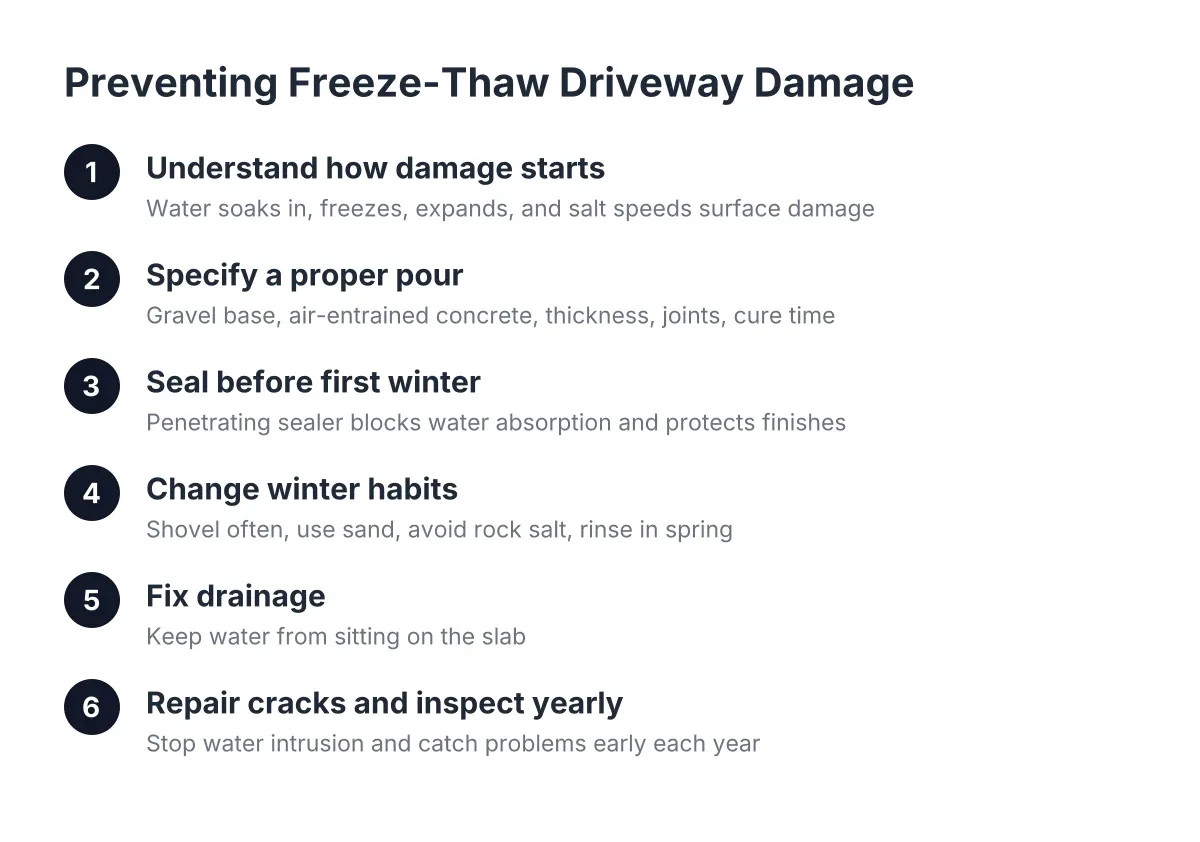
Step 1: How Freeze-Thaw and Salt Damage Start on Driveways
Concrete is porous. It absorbs water from snowmelt, rain, and runoff. When temperatures drop below freezing, that trapped water expands. Salt Lake winters often swing above freezing during the day and below it at night, so a single slab can go through dozens of freeze-thaw cycles each season.
Each cycle puts pressure on the concrete from the inside. Over time that pressure shows up as surface flaking (called spalling), pitting, and hairline cracks that widen year after year.
Salt makes it worse in two ways. First, de-icing salt melts snow into water, which then refreezes deeper in the slab when the temperature drops again. Second, salt draws moisture into the concrete and can chemically attack the surface, especially on concrete poured within the last year. That is why a driveway salted heavily in its first winter often shows pitting by spring.
Know what you are looking at before you act:
- Hairline surface cracks: common, usually sealable
- Spalling or flaking: the top layer is breaking off, often from salt plus freeze-thaw
- Spider cracking across the whole surface: a sign the slab may need replacement, not patching
- Heaving or sunken sections: usually a base or drainage problem under the slab
Step 2: Freeze-Thaw Driveway Prevention Starts With Proper Pour Specifications
Freeze-thaw resistance starts the day the concrete goes in. If you are replacing an old driveway, this is your one chance to build in protection you cannot add later. Proper freeze-thaw driveway prevention begins with site preparation and material selection before the concrete is poured.
Ask your contractor about these specifics:
- A compacted gravel base. In freeze-thaw climates, a well-compacted gravel base under the slab is essential. It drains water away from the underside of the concrete and reduces movement and cracking. This matters even more in the Salt Lake Valley, where clay and gravel soils shift with moisture.
- Air-entrained concrete. This mix has microscopic air pockets that give freezing water room to expand without cracking the slab. It is the standard for exterior concrete in cold climates.
- Proper thickness and reinforcement. Driveways carry vehicle loads, so thickness and rebar or mesh matter more than they do on a walkway.
- Control joints in the right places. Concrete will crack; joints tell it where to crack so the lines stay clean and the slab stays intact.
- Adequate cure time before winter. New concrete needs time to gain strength before it faces freezing weather or any de-icer.
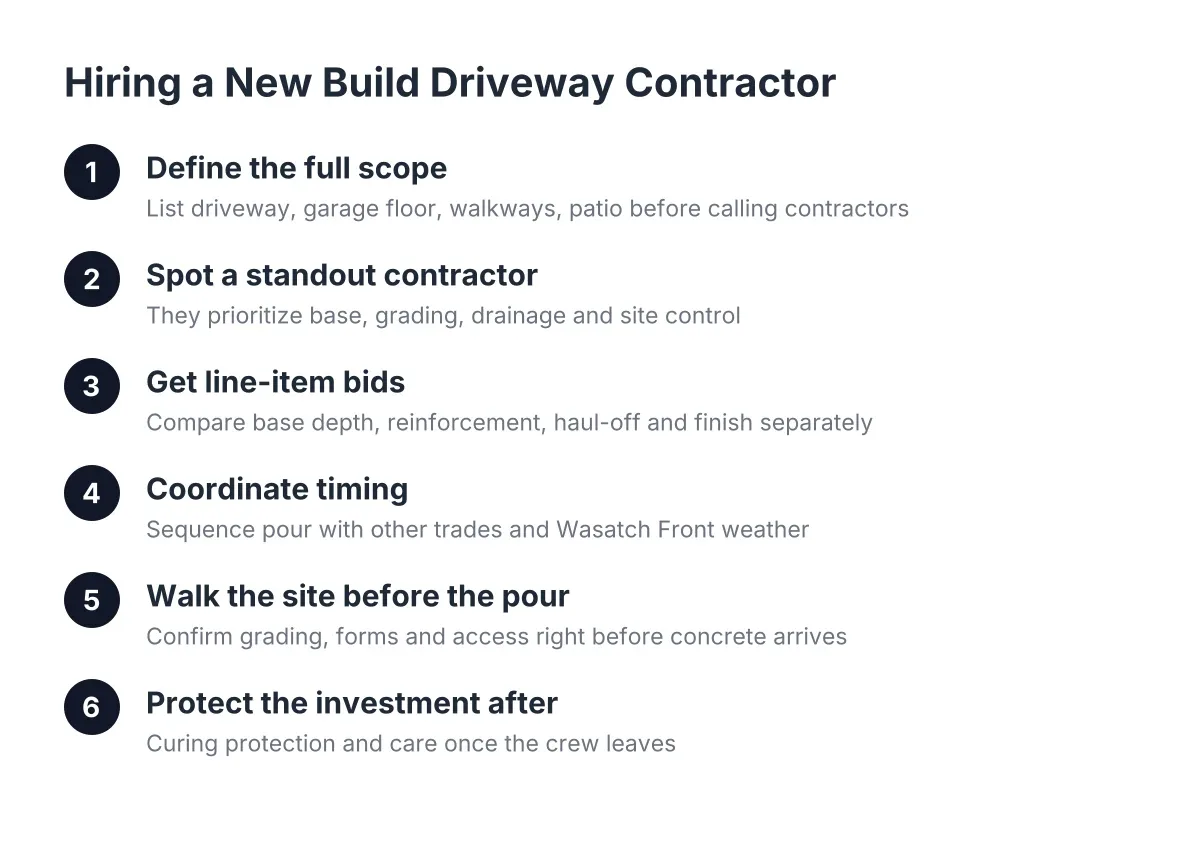
When you compare concrete driveway contractors, ask each one how they handle base prep, air entrainment, and joint layout for this climate. A contractor who gives specific answers about Wasatch Front soil and winters is a safer bet than one who only talks price. For reference, a concrete driveway averages about $6,400 nationwide according to HomeAdvisor, though size, excavation, reinforcement, and finish all move that number.
Step 3: Seal the Slab Before Its First Winter
Sealing is the single most effective thing you can do to block freeze-thaw damage on an existing driveway. A penetrating sealer reduces how much water the concrete absorbs, which means less water to freeze and expand inside the slab.
Timing matters. Fresh concrete needs to cure fully before sealing, so follow your contractor's guidance on when the slab is ready. After that, plan to reseal on a regular cycle; every few years is a common rhythm for driveways that see snow, salt, and plow traffic.
Sealing is doubly important for decorative work. If you invested in a stamped concrete driveway or a stained finish, the sealer is what protects the color and texture from salt and sun. Suppose a homeowner in Sugar House pours a stamped, colored driveway in late summer. In that scenario, the smart move is sealing it before the first snow, then keeping salt off it entirely for the first winter, a key part of freeze-thaw driveway prevention. Skip that, and the color can dull and the stamped surface can pit within a season or two.
Step 4: Change What You Put on the Driveway in Winter
Rock salt is cheap, and it is also the fastest way to wreck a concrete surface in a freeze-thaw climate. The pattern of freeze-thaw cracks plus salt pitting shows up first in the areas people salt most: near the garage door, along the walkway edge, and where cars park overnight.
Here is a better winter routine:
- Shovel early and often. Removing snow before it gets packed down and refreezes does more than any chemical.
- Use sand or kitty litter for traction instead of melting ice chemically.
- If you need a de-icer, skip rock salt (sodium chloride) and choose a product labeled safe for concrete. Avoid any de-icer on concrete less than a year old.
- Rinse the driveway in spring to wash off residual salt, including salt dragged in on your car's undercarriage from treated roads.
For rental properties, write this into your snow removal plan. A tenant or a snow service dumping rock salt on an entry walk all winter can do more damage in one season than years of normal use. Spelling out shoveling and approved de-icers in the lease or vendor agreement protects the flatwork you paid for.
Step 5: Fix Drainage So Water Never Sits on the Slab
Freeze-thaw damage needs water. Cut the water, and you cut the damage. Walk your property during the next snowmelt and watch where the water goes.
Common problems to fix:
- Downspouts that dump onto the driveway or along its edge
- Clogged gutters overflowing onto the slab
- Grading that lets snowmelt pool against the concrete instead of draining away
- Sprinklers that spray the driveway edge through fall freezes
Fixing drainage is also what keeps a repair permanent. A crack repair or a releveled sidewalk section will fail again if the water problem underneath it never gets solved. Spring snowmelt along the Wasatch Front is heavy, so this step pays for itself.
Step 6: Repair Cracks to Stop Freeze-Thaw and Water Damage
Repair freeze-thaw cracks as soon as you spot them, because every open crack is a direct path for water and salt to reach the base under your slab. Sealed early, a hairline crack stays a cosmetic issue. Ignored, it lets water undermine the base, and small cracks turn into heaving and broken panels.
Crack repair done right follows a few rules. The crack must be cleaned and prepped first; sealant applied over a dirty or unprepared crack sinks in, fails to bond, and can start pulling away within the first year. The sealant also needs to cure fully, and working in direct hot sun can cause bubbling and a rough finish. A light dusting of dry sand over fresh sealant blends the repair into the surrounding concrete and keeps debris from sticking while it dries.
Know when repair stops making sense. One or two clean cracks are a repair job. Spider cracking spread across the whole surface usually means the slab itself has failed, and replacement is the honest answer. Patching a failed slab buys a season or two at most. If you are unsure which side of that line your driveway sits on, have a concrete contractor look at it in person; heaving, widespread spalling, and base failure are hard to judge from the surface alone.
Step 7: Put the Driveway on a Yearly Inspection Schedule
Prevention is a habit, not a one-time fix. Each spring, after the last freeze, walk the driveway and look for new cracks, pitting, or sections that moved over the winter. Each fall, before the first freeze, confirm the sealer is still shedding water; if water soaks in and darkens the slab instead of beading, it is time to reseal.
For a small landlord with several properties, this takes one afternoon per season and prevents the expensive version of the problem: a code violation notice, a tenant trip-and-fall claim, or a full driveway replacement that could have been a crack repair. As of 2026, labor is a real constraint in this trade; among construction firms with open craft positions, 88% say those jobs are as hard or harder to fill than a year ago, according to the Associated General Contractors of America. Scheduling repairs in spring or fall, rather than during an emergency, gives you better odds of getting on a good crew's calendar.
Freeze-thaw cycles and road salt are facts of life in Salt Lake City. Your driveway's lifespan comes down to the choices above: a proper base and mix at the pour, a sealed surface, no rock salt, dry edges, and small cracks fixed early. Do those consistently, and a driveway here lasts decades instead of winters.
If you need concrete driveways, Salt Lake Valley Concrete can help.
Prefer to talk it through? Call (385) 433-4634 — a quick call is usually the fastest way to get a straight answer for your situation.