Spalling Concrete Repair: Causes, Solutions, and Prevention in Salt Lake City
If the surface of your driveway or patio is flaking, chipping, or crumbling in patches, you are looking at spalling. Understanding spalling concrete repair causes is the first step in deciding whether you need a patch, a full resurfacing, or a new slab. This guide walks through why concrete spalls in the Salt Lake Valley, how to tell minor flaking from serious failure, which repair options hold up, and how to keep the fix from failing again next winter.
Spalling shows up a lot along the Wasatch Front. Our winters put concrete through repeated freeze-thaw cycles, and snowmelt keeps surfaces wet for weeks at a time. Add deicing salt and older slabs that were never sealed, and you get driveways that shed their top layer a little more every spring. The good news: most spalling is a surface problem, and surface problems can usually be fixed without tearing out the slab.
What Spalling Is and How to Recognize It
Spalling is the breakdown of the top layer of a concrete surface. The slab itself may be sound, but the finished surface flakes off, pops loose in small chips, or wears down to expose the rock aggregate underneath. Homeowners often describe it as the driveway "peeling" or "crumbling."
You can usually spot spalling by these signs:
- Shallow flaking or scaling across the surface, often in patches
- Small round pits where the top layer popped off, sometimes called pop-outs
- Exposed gravel or aggregate where the smooth finish used to be
- Rough, dusty texture that gets worse each winter
- Edges of driveway joints or sidewalk slabs crumbling away
Spalling is different from cracking. A crack runs through the slab; spalling stays on the surface. The two often show up together on an aging driveway, and they get treated differently. Crack repair fills and seals a break in the slab. Spalling repair restores the surface itself.
Why Concrete Spalls: Causes of Spalling and How Repair Depends on Them
The causes of spalling concrete determine the right repair, so diagnosis comes first. Spalling happens when water, salt, or a weak surface layer breaks down the top of the slab, and each of those problems calls for a different fix. A contractor who treats every spalled driveway the same way is guessing.
Here are the causes that matter most for Salt Lake City concrete.
Freeze-thaw damage
Concrete is porous. Water soaks into the surface, and when it freezes, it expands. That expansion pushes the top layer apart from the inside. One freeze does little. Dozens of freeze-thaw cycles each winter, which is normal along the Wasatch Front, slowly pry the surface loose. This is the most common cause of spalling on driveways and sidewalks in the Salt Lake Valley, and it is why unsealed slabs here age faster than their actual years.
Deicing salts
Salt makes freeze-thaw damage worse. It draws more moisture into the concrete, increases the number of freeze cycles at the surface, and can attack the cement paste chemically. Driveways and sidewalks that get heavy salt every winter often spall first near the garage apron and along the path where people walk, because that is where the salt gets spread.
Poor finishing or curing when the slab was poured
Some spalling is baked in from day one. If a crew finishes the surface while bleed water is still rising, or adds water to the surface to make troweling easier, the top layer ends up weak. If the slab dries out too fast instead of curing properly, same result. A weak top layer can look fine for a few years, then start scaling once winters and salt go to work. If your driveway started spalling early in its life, this is the likely cause.
Water and drainage problems
Slabs that stay wet spall faster. Downspouts that dump onto the driveway, sprinklers that spray the patio every morning, and low spots where snowmelt pools all keep moisture in the concrete longer. In the Salt Lake Valley, spring snowmelt and seasonal drainage are a real factor; a slab that sits wet through March takes more freeze-thaw damage than one that drains and dries.
Corroding rebar or wire mesh
In reinforced slabs, water that reaches the steel causes rust. Rust expands, and that expansion pushes chunks of concrete off from below. This type of spalling is deeper and more serious than surface scaling. You may see rust stains or exposed metal in the damaged area. When the steel is corroding, a cosmetic overlay will not stop the problem underneath.
Is Spalling a Cosmetic Problem or a Structural One?
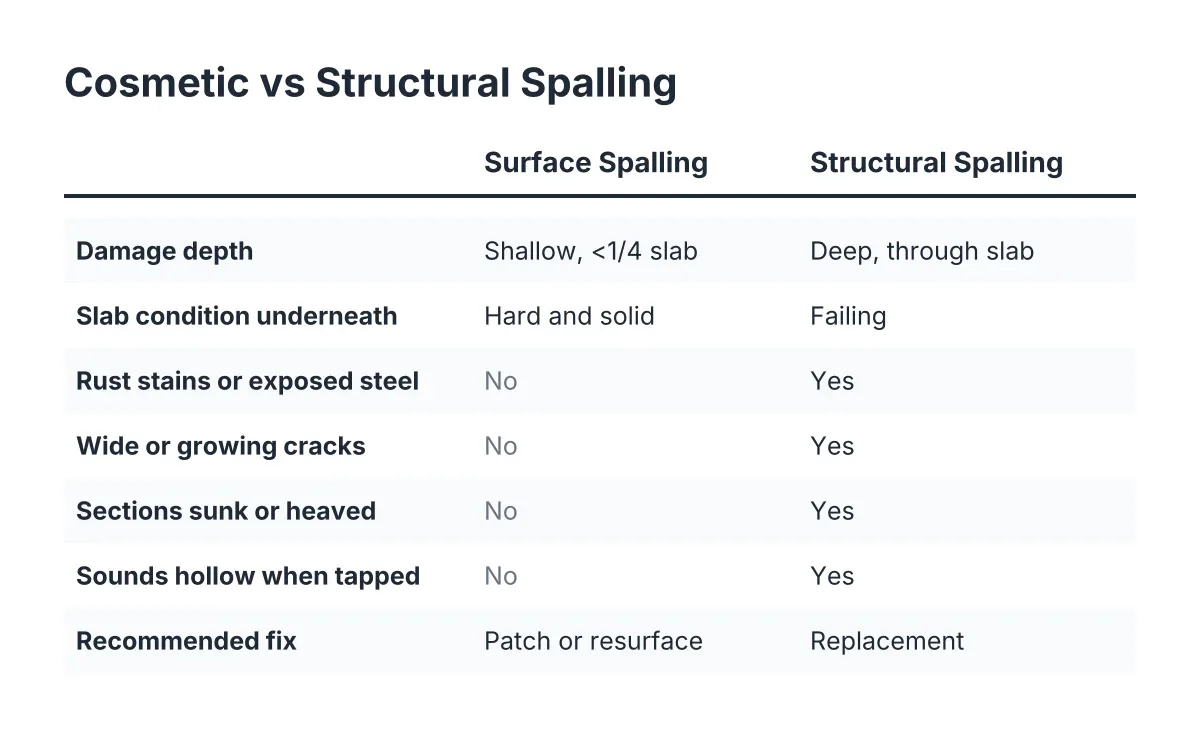
Most spalling on residential driveways and patios is cosmetic, meaning the slab underneath is still structurally sound. The surface looks bad and gets worse each winter, but the concrete is doing its job. Structural spalling, driven by corroding steel or a failing slab, is less common in residential flatwork but does require replacement rather than resurfacing.
Here is a practical way to tell the difference. Surface spalling is shallow, usually less than a quarter of the slab's thickness, and the concrete under the flaking is hard and solid. Structural problems come with deeper symptoms: wide cracks that keep growing, sections that have sunk or heaved, rust stains, or spots that sound hollow when you tap them.
The combination matters too. A driveway with spalling plus spider cracking spread across the whole surface is usually past the point where a patch or overlay makes sense. The surface and the slab are both failing, and resurfacing over that is covering a problem rather than fixing it. On the other hand, a slab with solid edges, no settling, and spalling confined to the surface is an ideal candidate for repair or resurfacing.
If you are not sure which situation you have, get a concrete contractor to look at it before you pay for anything. An honest assessment costs you a site visit; the wrong repair costs you the repair plus the replacement you needed anyway.
Repair Options for Spalled Concrete, Compared
Once you know the cause and the depth of the damage, you can match it to a repair. There are three main paths, and each fits a different situation.
Patching for small, isolated spalls
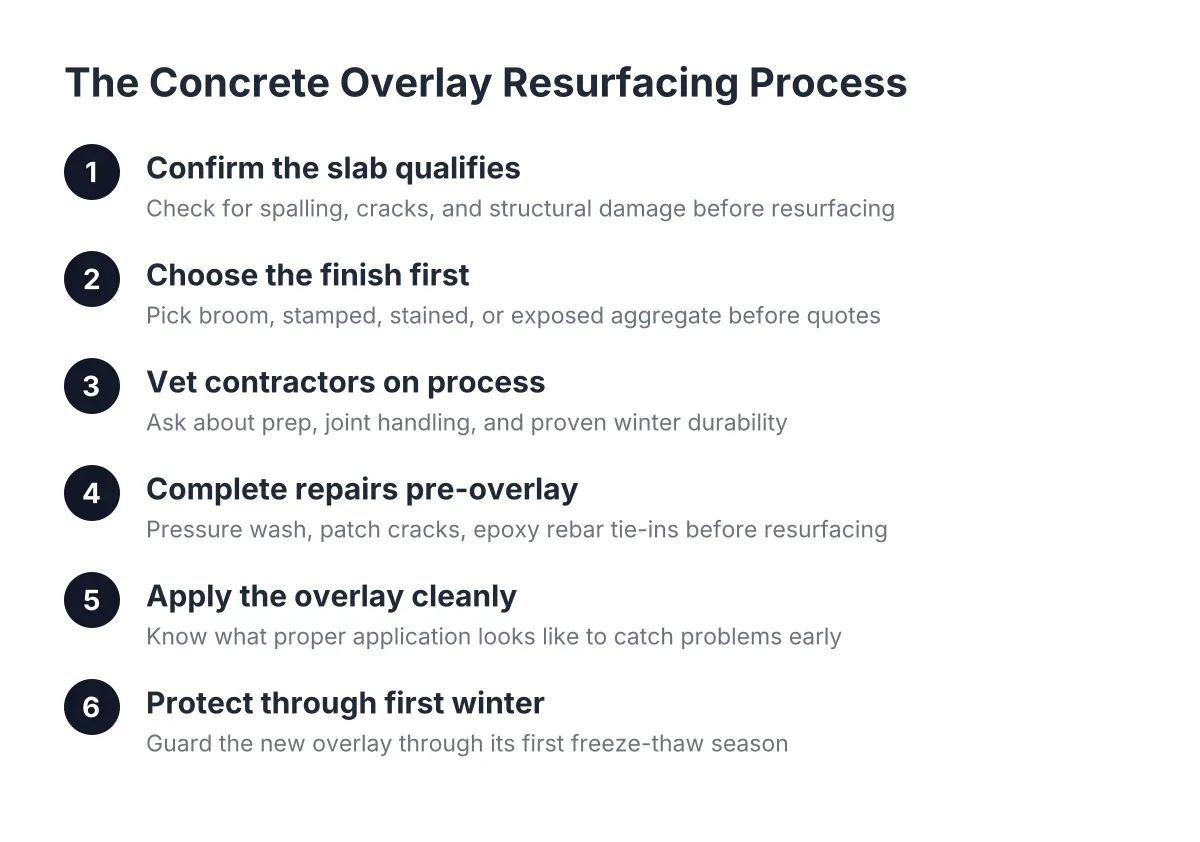
If spalling is limited to a few spots, a patch repair makes sense. The failed material gets chiseled or ground out down to sound concrete, the area gets cleaned of all dust and loose debris, and a repair material gets troweled in and finished to match. Preparation is most of the job here. Repair material only bonds to clean, solid concrete; skip the prep and the patch pops out within a season or two.
The material matters as much as the prep. Standard cement patches do not bond well to existing concrete on their own. Modern bonding repair products are made for exactly this job and hold far better on surface repairs. This is one of the quiet differences between a patch that lasts and one that fails, and it is worth asking any contractor what product they plan to use and why.
The trade-off with patching is appearance. A patch rarely matches the surrounding concrete perfectly, especially on an older, weathered driveway. If the slab has one or two bad spots, most homeowners accept the color difference. If it has twenty, resurfacing gives a better result.
Resurfacing for widespread surface spalling
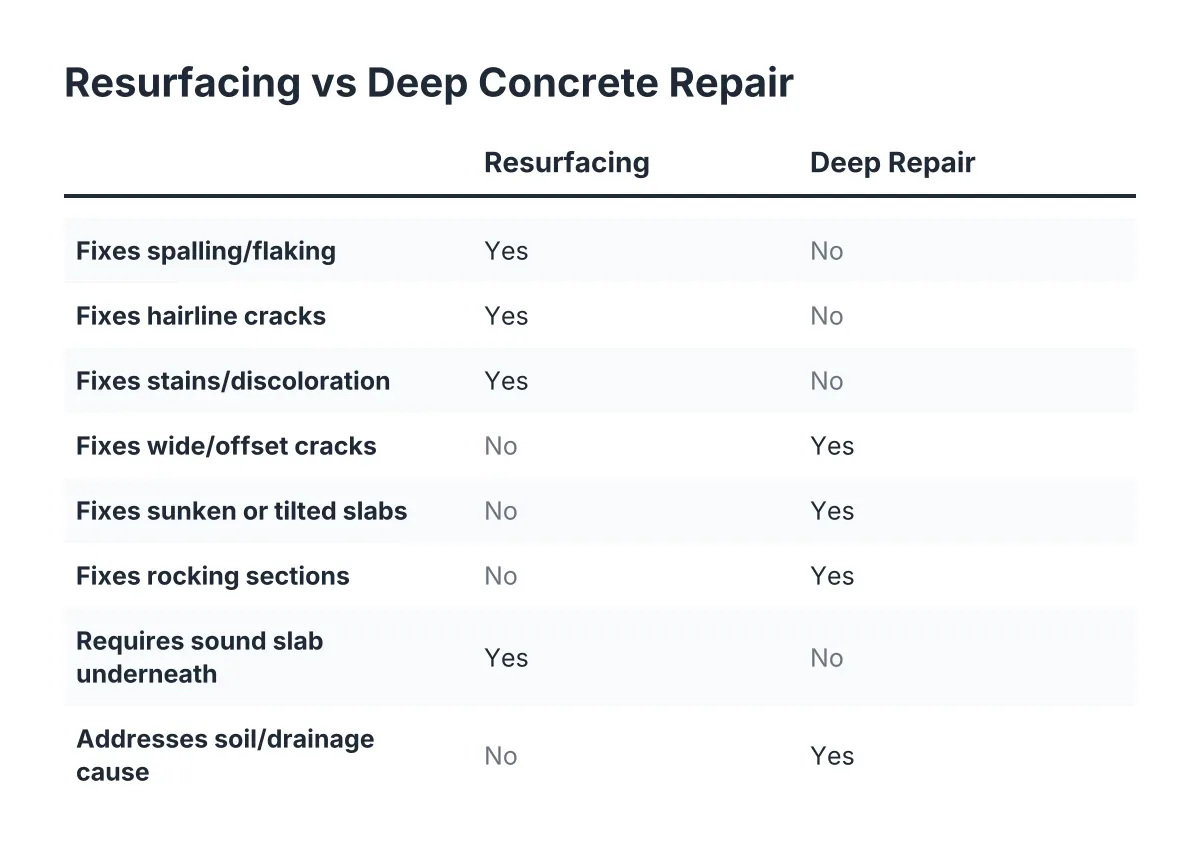
When spalling covers large areas but the slab underneath is sound, resurfacing is usually the right call. The crew cleans and profiles the existing surface, repairs any cracks and deep spots first, then applies a polymer-modified overlay across the whole slab. The result is a new wear surface, a uniform appearance, and a chance to upgrade the look with a broom finish, color, or a stamped texture.
Resurfacing costs a fraction of replacement because the existing slab stays in place. There is no demolition, no haul-off, no excavation, and no new full-depth pour. For a homeowner searching for concrete repair and resurfacing in the Salt Lake City area, this is the option that restores the whole surface without replacement money. It is also why outdoor concrete resurfacing has become the standard fix for weathered but structurally sound driveways and patios.
The honest limitation: an overlay is only as good as the slab under it. Resurfacing does not fix settling, heaving, or active structural cracks. Those problems telegraph through the new surface, usually within a year or two. Any contractor who quotes resurfacing without checking the slab's condition first is quoting the wrong job.
Replacement when the slab itself has failed
Replacement is the right answer when the damage goes beyond the surface. Deep spalling from corroding rebar, widespread spider cracking, major settling, or a slab poured badly enough that the whole surface is weak all point to tear-out and repour. It costs the most, but it resets the clock entirely, and a new slab can be poured with air-entrained concrete, proper curing, and drainage planned for Salt Lake Valley conditions from the start.
For context on new-pour costs, a concrete driveway averages closer to $6,400 according to HomeAdvisor, and a typical concrete patio around 288 square feet runs about $11 per square foot according to Concrete Network. Your actual number depends on slab size, excavation, reinforcement, finish type, and site access, which is why estimates vary from one property to the next.
How to Choose Between Patch, Resurface, and Replace
A simple decision path covers most residential situations:
- Check the slab first, not the surface. Look for settling, heaving, wide or growing cracks, and rust stains. If the slab is failing, replacement is on the table and surface repairs are wasted money.
- Measure how widespread the spalling is. A few isolated spots point to patching. Flaking across most of the surface points to resurfacing.
- Identify the cause. Freeze-thaw and salt damage on a sound slab can be resurfaced and then protected with sealer. Spalling from corroding steel or a bad original pour usually cannot be fixed from the top.
- Fix the water problem before the concrete problem. If a downspout or sprinkler caused the damage, redirect it first, or the new surface fails the same way.
- Weigh appearance against budget. Patches are cheapest but visible. Resurfacing costs more but looks new. Replacement costs the most and solves everything, including problems you did not have.
Suppose a homeowner in Sugar House has a 25-year-old driveway with surface scaling across about half of it, worst near the garage where salt gets tracked in all winter. The slab sits level, the cracks are hairline, and the concrete under the flaking is hard. In that scenario, resurfacing is the likely recommendation: repair the hairline cracks, overlay the whole driveway, and seal it before the next freeze. Replacement would cost several times more and buy nothing that scenario needs.
Now change one detail. Suppose the same driveway also has spider cracking spread across the full surface and one section that dropped an inch where water pools. That slab is telling you it is done, and an overlay would just be an expensive way to hide it for a couple of years. That is the kind of judgment call where experienced concrete resurfacing contractors earn their fee: knowing when the slab can carry a new surface and when it cannot.
Why Crack Repair Comes Before Any Spalling Fix
Cracks and spalling feed each other, so cracks get handled first in any repair plan. Every open crack lets water under and into the slab. That water drives the freeze-thaw cycle that causes more spalling, and under the slab it can erode the base and cause settling. Sealing cracks properly cuts off that water and protects everything else you spend on the surface.
Proper crack repair means preparation, and the preparation differs by crack type. Hairline cracks get opened up wider before filling; the crack has to look worse before it can be fixed, because sealant needs a groove to grip. Larger cracks get cut with a V-shaped groove to remove loose concrete and give the filler clean walls to bond to. Sealant squeezed over an unprepared crack sinks in, fails to bond, and peels out within a season.
Timing and conditions matter too. Sealant applied to a slab baking in direct summer sun can bubble and cure badly. Small details like working in the right conditions separate repairs that last from repairs that get redone. If you see a crew prepping cracks carefully and paying attention to surface temperature, that is a good sign about everything else they will do.
Preventing Spalling After the Repair
Repair without prevention is a subscription, not a fix. In Salt Lake City, the same winters that caused the damage will test the repair, so prevention is worth taking seriously.
The habits that protect a repaired or resurfaced slab are not complicated:
- Seal the surface, and reseal on schedule. A penetrating sealer blocks the water absorption that drives freeze-thaw spalling. On an exterior slab here, plan to reseal every few years rather than treating it as one-and-done.
- Go easy on deicing salt, especially the first winter. New overlays and patches are most vulnerable early. Sand gives traction without the chemical attack.
- Fix drainage. Extend downspouts off the slab, adjust sprinklers that hit the concrete, and deal with low spots where snowmelt pools.
- Shovel promptly. Snow that sits and melts into the surface by day and refreezes at night is the freeze-thaw cycle in miniature.
- Seal new cracks when they are small. A hairline crack filled this fall does not become a water channel under the slab by spring.
For anyone comparing residential concrete resurfacing options in 2026, prevention is also a useful screening question. Ask each contractor what sealer they recommend for Wasatch Front winters, how soon the new surface can take deicer, and what maintenance they expect from you. Contractors who have a clear answer have watched their own work age through local winters. Contractors who shrug probably have not.
What a Good Local Assessment Looks Like
Spalling concrete repair causes vary enough that the diagnosis is where the real value sits. A contractor who looks at a flaking driveway for thirty seconds and says "tear it out" has not diagnosed anything, and neither has one who quotes an overlay without checking whether the slab is settling.
A thorough assessment of a spalled driveway or patio should cover the depth of the spalling, the soundness of the concrete underneath, the condition and cause of any cracks, how water moves on and around the slab, and whether reinforcement is involved. The soils along the Wasatch Front, a mix of clay and gravel that handles moisture unevenly, make the drainage and settling questions matter more here than in drier, more stable ground.
You should come out of an estimate knowing three things: what caused the spalling, which repair fits that cause, and what will keep it from coming back. If a quote cannot answer those three questions, get another opinion before you spend the money. Surface damage is fixable, usually for far less than replacement; the only expensive mistake is fixing the wrong problem.
If you need concrete repair and resurfacing, Salt Lake Valley Concrete can help.
Prefer to talk it through? Call (385) 433-4634 — a quick call is usually the fastest way to get a straight answer for your situation.