Concrete Overlay Resurfacing: How to Get a New Finish on an Old Slab
Your driveway or patio is structurally fine, but the surface is pitted, gray, and tired. Concrete overlay resurfacing puts a new finish over the old damaged slab without tearing anything out. Done right, it costs far less than replacement and can look like a brand-new decorative pour. Done wrong, it peels in one Salt Lake City winter.
This guide walks you through the concrete overlay resurfacing process step by step, from checking whether your slab qualifies to picking a finish and getting it through its first freeze-thaw season. You are already past the research stage. Here is how to make the project succeed.
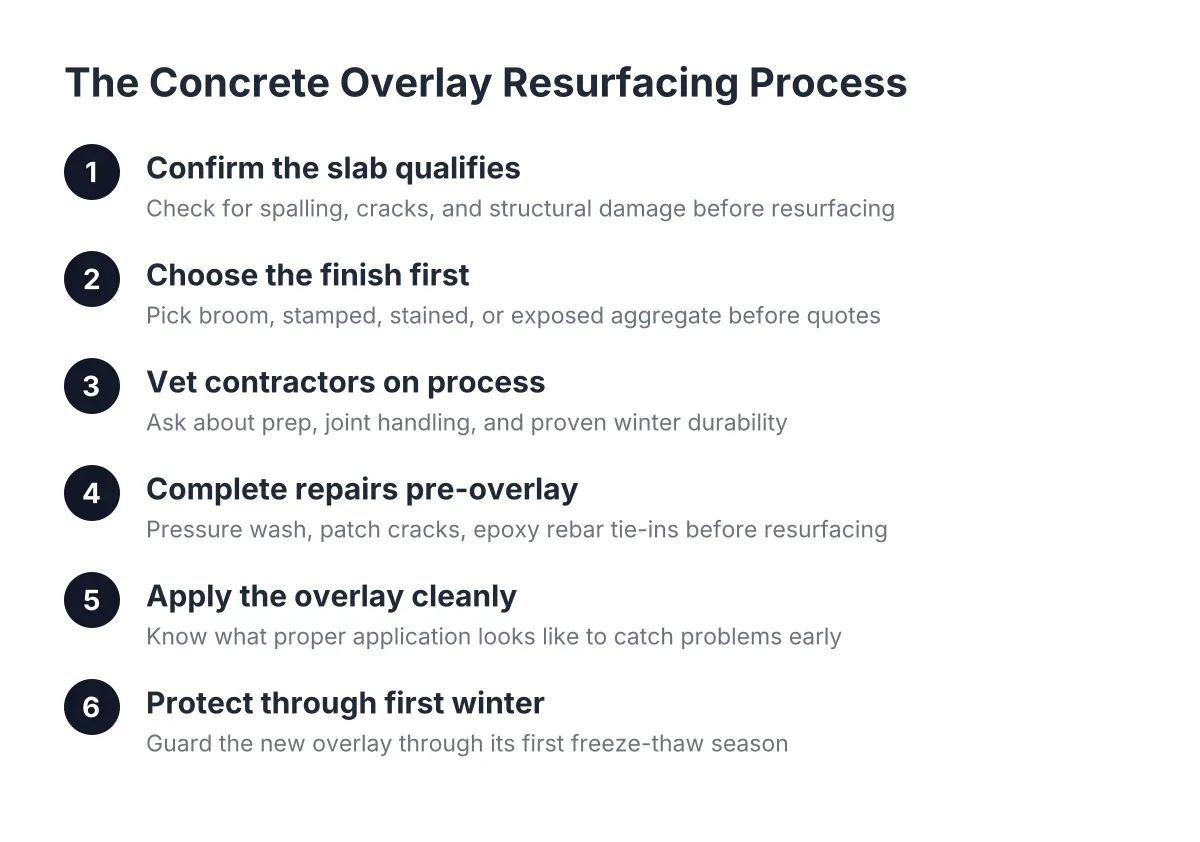
Step 1: Confirm Your Slab Can Take a New Overlay
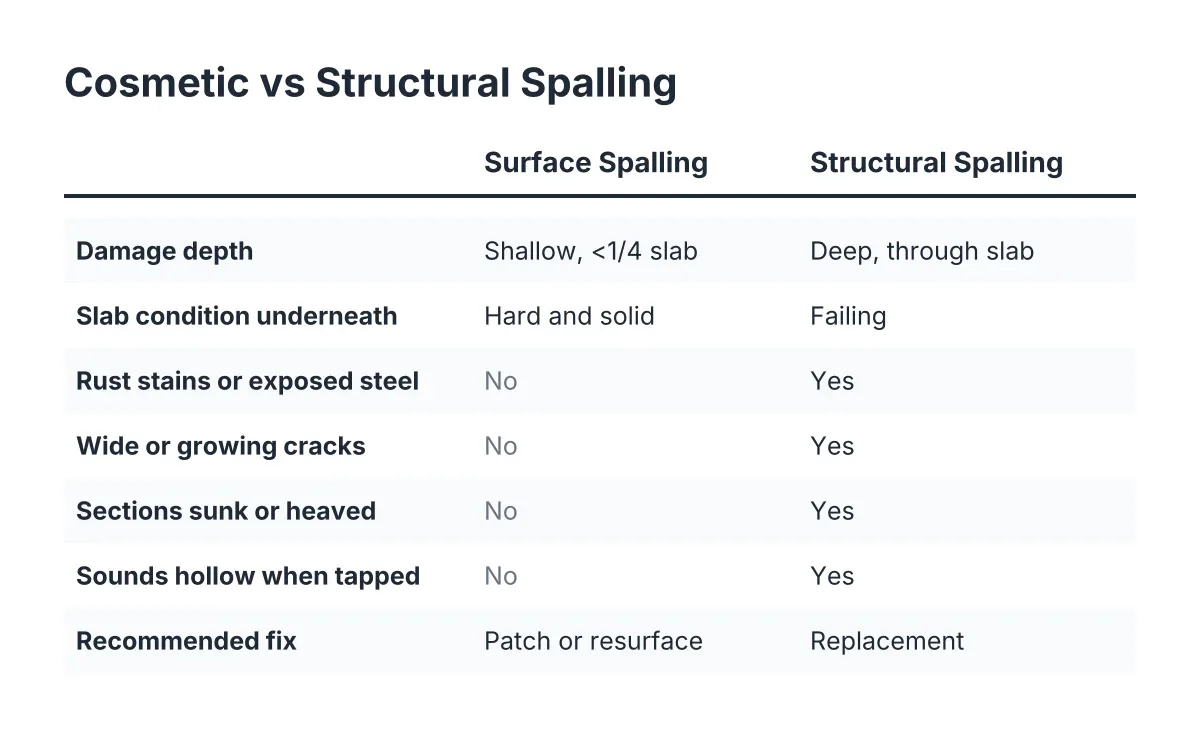
An overlay is only as good as the concrete under it. Resurfacing material bonds to the old slab, so the old slab has to be sound. Walk the surface and look for these:
- Surface spalling and pitting: flaking, pockmarks, or a scaly top layer. Good overlay candidate.
- Hairline and shallow cracks: fixable with crack repair before the overlay goes down.
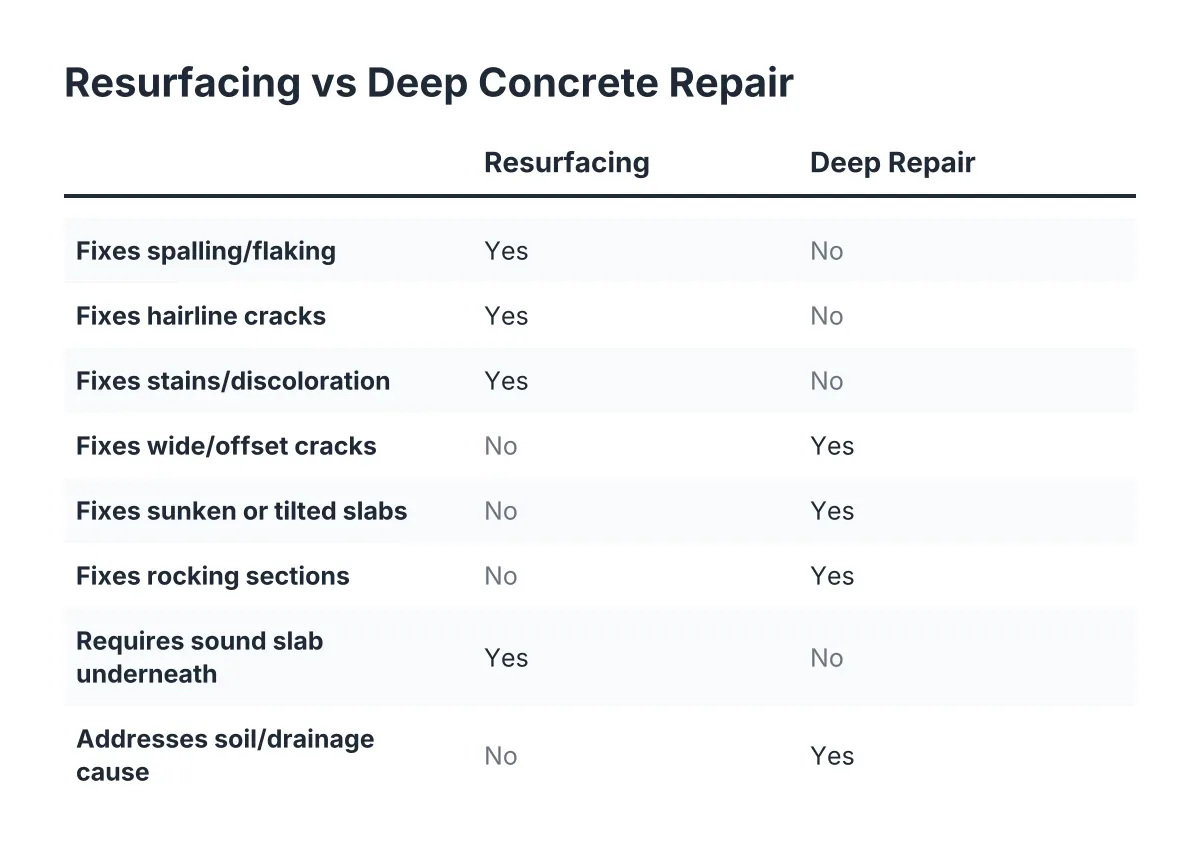
- Wide, moving cracks or sunken sections: a sign the base has failed. An overlay over a moving slab will crack in the same places.
- Crumbling edges or heaving at joints: along the Wasatch Front, clay-and-gravel soils and hard freeze-thaw cycles can shift slabs. If sections rock or sit at different heights, resurfacing is the wrong fix.
As a rough rule, surface damage means resurface; structural damage means repair or replace. If you are unsure which camp your driveway falls in, have a concrete contractor look at it before you spend anything. An honest assessment at this stage saves you from paying twice.
Step 2: Choose the Finish Before You Get Quotes
Decide what you want the new surface to look like before contractors show up. The finish drives the price, the timeline, and which companies can do the work. Your main options for concrete overlay resurfacing on a new finish:
- Broom finish: the classic textured gray surface. Least expensive, and the broom texture improves slip resistance when the surface is wet, which matters on a snowy Salt Lake City driveway.
- Stamped overlay: pattern and texture pressed into the overlay, so a plain patio can look like slate, flagstone, or brick without demolition.
- Stained or colored overlay: integral color or stain applied to the new surface. This is the fix for the "every driveway on the street is the same boring gray" problem.
- Exposed aggregate look: decorative texture with built-in traction, popular for driveways and walkways.
For example, suppose a homeowner in Sugar House has a 1990s patio that is pitted but level. In that scenario, a stamped and colored overlay can give them the custom look they wanted from a full decorative pour, at a fraction of the demolition and replacement cost. The concrete overlay resurfacing process allows patching and resurfacing a sound slab, which is consistently cheaper than tearing it out; for context, HomeAdvisor puts an average new concrete driveway at about $6,400, which is the bill you are avoiding.
If decorative work matters to you, say so up front. Searching for decorative concrete resurfacing instead of general flatwork help will surface companies that actually stamp and stain, not just pour plain gray.
Step 3: How the Concrete Overlay Resurfacing Process Works With Contractor Vetting
Not every concrete company does overlay work well. The concrete overlay resurfacing process involves thin-layer finish work; it punishes sloppy prep more than a standard pour does. In 2026, skilled finishers are stretched thin across the industry, so the good crews book ahead. When you compare concrete resurfacing contractors, ask these three questions:
- How will you prep the old surface? The right answer involves cleaning, repairing cracks and spalls first, and dampening the old concrete before the new material goes on so the dry slab does not pull moisture out of the fresh mix and weaken the bond.
- How do you handle joints? Overlay material should never run across expansion joints or control joints. A pro tapes them off and keeps them working. A contractor who plans to bury the joints is planning your next set of cracks.
- Can I see local overlay work that has been through a winter or two? Photos of fresh pours prove nothing about freeze-thaw durability. Ask for addresses or photos of jobs that have survived Salt Lake winters and road salt.
A fair quote should itemize prep, crack repair, the overlay system, the finish type, and sealing. If one bid is far below the others, prep is usually what got cut, and prep is the whole game.
Step 4: Get the Repairs Done Before the New Surface Goes On
Resurfacing day is the last step, not the first. A good crew fixes the slab before covering it. Expect this sequence:
- Pressure washing or grinding to remove dirt, old sealer, and loose material.
- Crack repair on anything beyond hairline width.
- Patching spalled and pitted areas so the overlay goes over a uniform base.
- On larger repairs where new concrete ties into old, drilling and epoxying rebar to connect the sections. Skipping that tie-in invites a hairline crack right at the joint later.
Therefore, if a contractor plans to pour the overlay the same hour they arrive, with no prep visit or cleaning pass, keep shopping. In addition, confirm who handles hose bibs, downspout runoff, and sprinklers near the work area. Water running across curing overlay material is a common and avoidable failure.
Step 5: Know What a Clean Overlay Application Looks Like
You do not need to do the work, but knowing what good looks like helps you catch problems while they are still fixable. On application day, watch for these signs of a careful crew:
- Joints and edges taped off, with tape pulled before the material fully dries and edges blended so lines stay crisp.
- Material applied in thin, even lifts. Polymer-modified resurfacers get sticky and hard to work when troweled on too thick, and visible ripples in the finished surface mean exactly that.
- Stamps or texture applied at the right set time, not rushed.
- Weather respected. Overlay material has temperature limits, so along the Wasatch Front most of this work happens spring through fall.
This is honest work with real limits. An overlay refreshes the surface; it does not stop a slab from moving if the soil under it is the problem. If your contractor finds base failure during prep, deep repair or partial replacement is the better spend, and a straight-shooting company will tell you so.
Step 6: Protect the New Overlay Through Its First Winter
A new overlay resurfacing job earns its keep over years, and the first Salt Lake City winter is the test. Give it a fair start:
- Keep foot traffic off for the window your contractor specifies, and vehicles off longer. Ask for both numbers in writing.
- Confirm the surface gets sealed, and ask when it should be resealed. Sealer is the main defense against freeze-thaw moisture and road salt.
- Skip harsh deicing salts the first winter. Use sand for traction instead.
- Shovel with a plastic-edged blade, not a steel scraper, on stamped or stained finishes.
- Keep snowmelt and downspouts draining away from the slab so water does not pool and refreeze on the surface.
The Payoff: A Custom Look Without the Demolition Bill
Concrete overlay resurfacing turns an old, damaged slab into a new surface that can match your landscaping and your home's style, whether that is a clean broom finish or a stamped and stained patio built for entertaining. The homeowners who get the best results follow the order above: confirm the slab is sound, pick the finish first, hire for prep quality, and protect the surface through winter one.
If your driveway, patio, or sidewalk in the Salt Lake Valley is pitted or spalling but still solid underneath, Salt Lake Valley Concrete can walk the slab with you, tell you plainly whether an overlay or a deeper repair fits, and give you a clear estimate with the cost drivers spelled out. Reach out when you are ready to look at it together.
If you need concrete repair and resurfacing, Salt Lake Valley Concrete can help.
Prefer to talk it through? Call (385) 433-4634 — a quick call is usually the fastest way to get a straight answer for your situation.