Concrete Resurfacing Contractors Terms Explained: A Plain-English Glossary
If you are getting quotes to fix a worn driveway or patio in Salt Lake City, the paperwork can read like a foreign language. This concrete resurfacing contractors glossary translates the terms you will see in estimates, hear on site visits, and find in fine print. Use it to read a quote line by line, ask sharper questions, and spot a thin answer before you sign anything. Every entry here is written to stand on its own, so you can jump straight to the word that confused you.
- Resurfacing: a new top layer over old concrete
- Overlay: the material that resurfacing applies
- Spalling: flaking or chipping surface damage
- Delamination: a layer separating from the slab
- Crack Repair: filling or sealing cracks before they spread
- Surface Preparation: cleaning and roughing up old concrete
- Grinding: machine-smoothing the old surface
- Bonding Agent: glue that helps new concrete stick to old
- Control Joint: planned grooves that steer cracking
- Freeze-Thaw Damage: winter damage from water in the slab
- Slab: the flat concrete itself
- Flatwork: the trade term for driveways, patios, and sidewalks
- Stamped Overlay: a resurfaced top with a pattern pressed in
- Sealer: a protective coat over finished concrete
- Cure Time: how long new concrete needs before use
- Scope of Work: the written list of what a quote includes
- Mobilization: the cost of getting crew and equipment to you
Damage and Condition Terms
These are the words a contractor uses to describe what is wrong with your concrete. Knowing them helps you understand whether resurfacing will work or whether the slab needs replacement.
Concrete Resurfacing: Spalling Damage
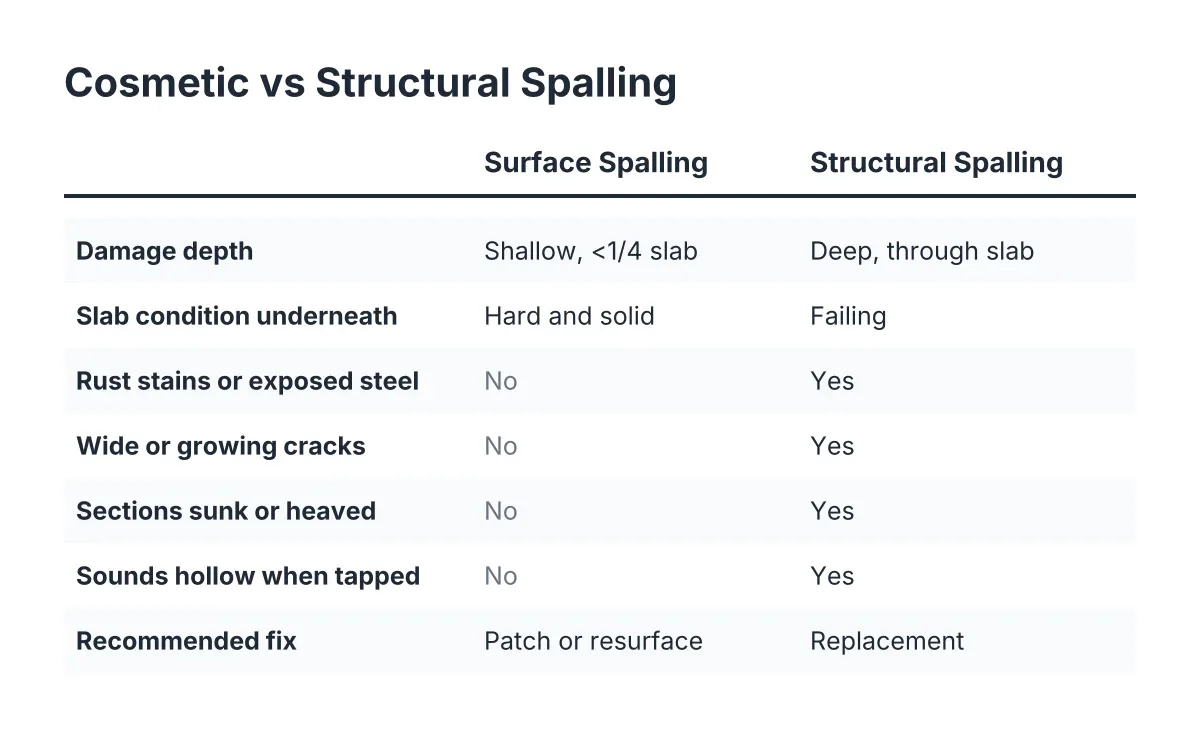
Spalling is surface damage where the top of the concrete flakes, chips, or pits away, often exposing the gravel underneath. Along the Wasatch Front, it usually comes from freeze-thaw cycles and deicing salt working on the surface. Spalling is often a good candidate for resurfacing because the damage sits on top, not deep in the slab. If a contractor points out spalling, ask whether the slab underneath is still solid.
Delamination
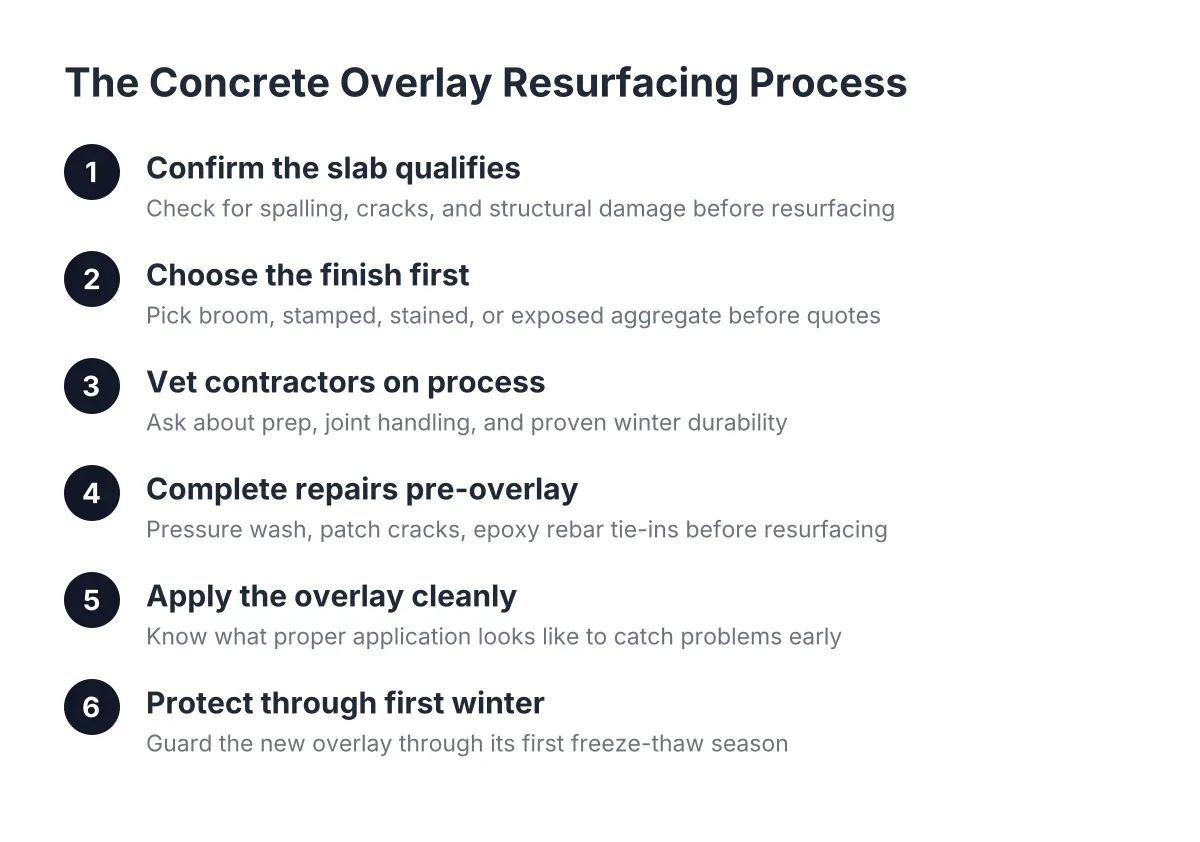
Delamination means a layer of concrete has separated from the layer below it, leaving a hollow spot that often sounds dull when tapped. It matters because any new overlay placed on a delaminated area will fail with it. A careful contractor will sound out the slab and remove loose sections before resurfacing. If a bid skips this step, the repair may not last.
Crack Repair
Crack repair means filling, routing, or sealing cracks in concrete so water cannot get in and make them worse. In Salt Lake City, water that enters a crack and freezes will widen it every winter, so repairs before the cold season pay off. Hairline cracks are usually cosmetic; wide, offset, or growing cracks can signal soil movement underneath. You can see how this fits into a larger project on our concrete repair and resurfacing service page.
Freeze-Thaw Damage
Freeze-thaw damage is the cracking, scaling, and flaking that happens when water soaks into concrete, freezes, expands, and breaks the surface apart. Salt Lake Valley winters bring repeated freeze and thaw swings, which is why local driveways and sidewalks wear faster than the same slab would in a mild climate. A contractor who mentions freeze-thaw damage is telling you why sealing and drainage matter, not padding the bill.
Resurfacing Process Terms
This is the heart of any concrete resurfacing contractors glossary: the steps and materials that turn a worn slab into a fresh surface. Reputable contractors will walk you through most of these on a site visit, and the order they happen in tells you a lot about the quality of the job.
Understanding Resurfacing for Contractors and Glossaries
Resurfacing is the process of applying a new, thin layer of concrete or polymer-modified material over an existing slab to restore its look and surface strength. It costs less than tearing out and repouring because the old slab stays in place as the base. Resurfacing only works when that base is structurally sound, so a contractor should inspect for deep cracks, heaving, and soft soil first. If the slab is badly broken or sinking, replacement is the honest recommendation.
Overlay
An overlay is the actual layer of material spread over old concrete during resurfacing, usually a cement mix blended with polymers that help it bond and flex. Overlays range from a thin skim coat to a thicker layer that can carry a stamped pattern or color. The thickness and type of overlay drive both the price and how the finished surface looks. Ask which overlay product the bid includes and why it fits your slab.
Surface Preparation
Surface preparation means cleaning, degreasing, and roughing up old concrete so a new overlay can grip it. It is the least visible part of the job and the most common reason overlays fail when skipped. Good prep can include pressure washing, grinding, and patching low spots before any new material goes down. When comparing quotes, a line item for prep is a good sign; its absence is a question to ask.
Grinding
Grinding is using a machine with abrasive discs to remove the top skin of old concrete, flatten high spots, and open the surface so new material can bond. It also strips old sealers and paint that would block adhesion. Grinding creates dust and noise for a short stretch, so a contractor may mention dust control or containment. On a resurfacing bid, grinding usually appears as part of surface preparation.
Bonding Agent
A bonding agent is a liquid or slurry applied to old concrete that helps the new overlay stick instead of peeling away. Think of it as primer for concrete. Some overlay products have bonding polymers mixed in; others need a separate coat first. If your quote mentions a bonding agent, that is a sign the contractor is following the overlay manufacturer's steps rather than cutting corners.
Control Joint
A control joint is a planned groove cut or tooled into concrete that tells future cracks where to form, in a straight hidden line instead of a random one. Concrete shrinks as it cures and moves with temperature, so some cracking is normal; joints manage it. In resurfacing, existing joints must be honored, meaning the new layer gets cut at the same lines. An overlay poured straight across old joints will crack along them anyway.
Cure Time
Cure time is the period new concrete or an overlay needs to harden and gain strength before you walk or drive on it. Foot traffic usually comes back sooner than vehicle traffic, and cool Wasatch Front weather slows curing down. Rushing this step is one of the fastest ways to ruin a new surface. Ask your contractor for the specific wait times for your project and season.
Finish and Appearance Terms
These words describe how the finished surface will look and how it stays that way.
Stamped Resurfacing Overlay for Concrete Contractors' Glossaries
A stamped overlay is a resurfacing layer thick enough to hold a pattern pressed into it while wet, giving old concrete the look of stone, brick, or tile. It is a decorative concrete option that avoids the cost of tearing out the slab and pouring new stamped concrete. Pattern, color, and overlay thickness all affect price, so ask to see samples or past local work. The base slab still has to be sound for the pattern to last.
Sealer
A sealer is a protective coating applied over finished or resurfaced concrete to block water, deicing salt, and stains. In Salt Lake City, sealer is the main defense against freeze-thaw damage, because it keeps water out of the surface before winter. Sealers wear off and need reapplying every few years depending on traffic and exposure. A quote that includes sealing tells you the contractor is thinking past the day the crew leaves.
Pricing and Paperwork Terms
These terms show up in the estimate itself. Understanding them is how you compare two bids fairly.
Slab
A slab is the flat, poured piece of concrete itself, whether it is a driveway, patio, sidewalk, or garage floor. Contractors price work by the slab's size, thickness, and condition, so the word shows up constantly in quotes. When a bid says "slab replacement" instead of resurfacing, it means full removal and a new pour, which costs more. Knowing which one you are being quoted prevents an apples-to-oranges comparison.
Flatwork
Flatwork is the trade term for any concrete poured flat and horizontal: driveways, patios, sidewalks, and slabs. If a concrete contractor says they do flatwork, they handle the everyday residential projects most Salt Lake City homeowners need. It is a scope word, not a quality word, so follow up with questions about finish, reinforcement, and drainage. Vertical work like walls and foundations is a separate specialty.
Scope of Work
A scope of work is the written section of an estimate that lists exactly what the contractor will do, with what materials, over what area. It is the single most useful part of any concrete quote, because two bids with different scopes are not the same price for the same job. Check whether prep, crack repair, joint cutting, and sealing appear in writing. Anything not in the scope is not included, no matter what was said on site.
Mobilization
Mobilization is the cost of getting the crew, equipment, and materials to your property and set up to work. Small jobs often carry a minimum charge because mobilization costs the same whether the slab is large or small. Site access matters too; a backyard patio with a narrow gate takes more labor to reach than an open driveway. If a small repair seems pricey per square foot, mobilization is usually the reason.
Using These Terms
With this concrete resurfacing contractors glossary in hand, you can read an estimate line by line and know what each item buys you. You can ask whether the bid includes surface preparation, how joints will be handled, and when the sealer goes on. Those questions take minutes to ask and tell you fast whether a contractor knows the Salt Lake Valley and its winters.
If you need concrete contractors, Salt Lake Valley Concrete can help.
Related guide: concrete resurfacing contractors — Complete Guide
Prefer to talk it through? Call (385) 433-4634 — a quick call is usually the fastest way to get a straight answer for your situation.